
Ingredients
Dough
- 500 gplain flour, plus more for dusting
- 250 mlhot water, just off the boil
- 1large egg
- 3 tbspmelted butter
- 1 tspsalt
Ruskie filling
- 700 gfloury potatoes, boiled and riced
- 250 gtwaróg (Polish curd cheese), crumbled
- 2onions, finely diced and fried in 40 g butter until deep gold
- 1 tspsalt
- plenty of white pepper
To finish
- 60 gbutter
- 1onion, sliced, or 100 g diced smoked bacon for skwarki
- 200 mlsoured cream (śmietana)
Directions
- Mound the flour, make a well and add the salt, egg, melted butter and most of the hot water. Bring it together with a fork, then knead 8–10 minutes to a soft, elastic, slightly tacky dough. Hot water is what keeps it pliable and stops it springing back.
- Wrap and rest 30 minutes at room temperature.
- Mash the potato with the twaróg while still warm, fold in the fried onion and all its butter, and season hard. The filling must taste faintly too salty on its own. Cool, then roll into 20 g balls.
- Roll the dough 2 mm thin on a floured board, a quarter at a time with the rest kept covered, and cut 8–9 cm rounds with a glass.
- Set a ball of filling on each round, fold to a half-moon and pinch the edge firmly from the middle outwards, pressing the air out as you go. Crimp into a rope pleat if you can. Do not wet or flour the edge: dry dough on dry fingers is what seals.
- Drop them in batches into a wide pan of well-salted, gently boiling water and stir once so they do not stick to the base.
- They sink, then rise. From the moment they float, cook 2–3 minutes, until the pinched seam turns translucent.
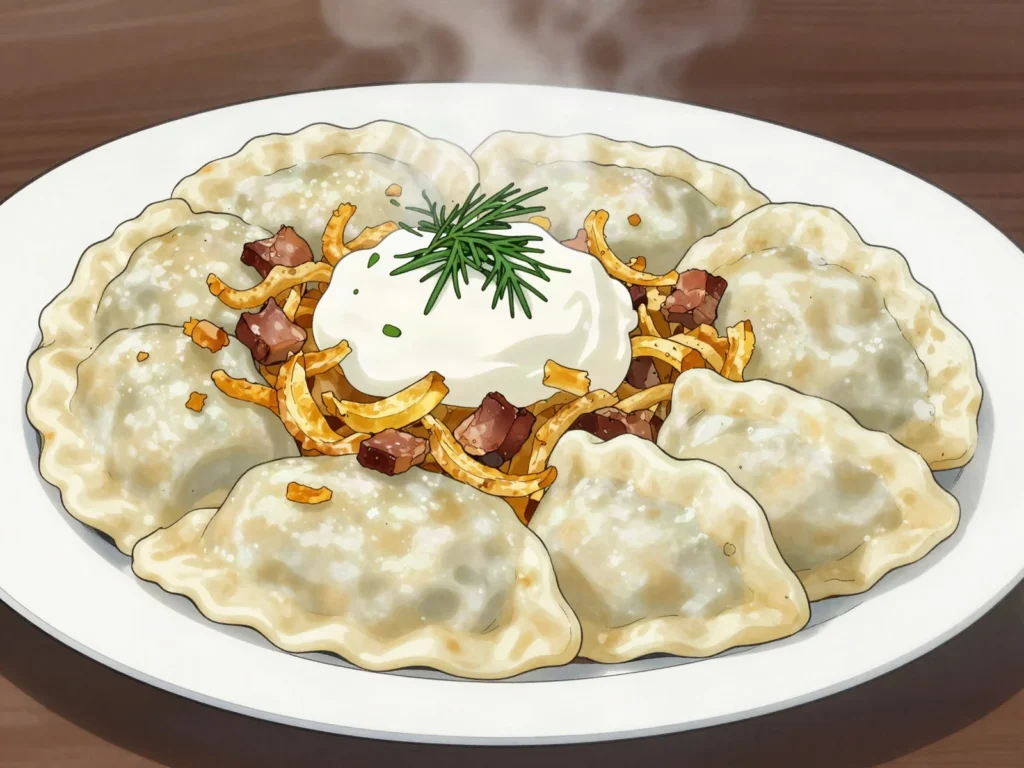
- Lift out with a spider, drain, and toss in melted butter. Serve boiled with soured cream, or fry the boiled pierogi in butter with onion or skwarki until one side is blistered and brown, which is what every Polish household does with leftovers.
Technique
- The dough is the difficult part. Too much flour makes it tough and it will fight you at the rolling pin, so keep it tacky and give it the full rest.
- Seal with dry fingers on dry dough. Water on the edge, against all instinct, makes the two sides slide apart in the pan.
- Freeze them raw on a floured tray until solid, then bag them and boil from frozen with an extra minute or two. Polish families make two hundred at a time this way.
- Ruskie means Ruthenian, not Russian: the filling comes from the old eastern borderlands, now western Ukraine.
Substitutions
- No twaróg: dry-pressed farmer’s cheese, or ricotta drained overnight in muslin, which is softer and less tangy so add a squeeze of lemon.
- No floury potatoes: any potato, riced while hot and never blitzed in a processor, which turns it to glue.
Variations
- Pierogi z kapustą i grzybami, sauerkraut and wild mushroom, the Christmas Eve filling.
- Pierogi z mięsem, filled with leftover braised meat and onion.
- Pierogi z jagodami, blueberry, served in summer with cream and sugar.
History
Documented in Poland since at least the 1300s, when Polish trade and pilgrimage routes brought stuffed-dough dishes into contact with similar foods across Central and Eastern Europe and Asia, though which direction the idea first traveled is not settled among food historians. Saint Hyacinth of Poland is credited in a much later, likely embellished legend with bringing pierogi back from a trip to Kyiv in the 1200s and feeding them to villagers during a famine, a story that cannot be verified but has stuck regardless. What is documented is that by the Middle Ages, pierogi were established enough in Polish cooking that guilds of pierogi-makers existed in some cities, and the dumplings split early into savory and sweet versions depending on the season and occasion.
Frequently asked questions
What is Pierogi?
Pierogi is a main from Poland: half-moon dumplings: potato-cheese ruskie, meat, cabbage, or berries. Documented in Poland since at least the 1300s, when Polish trade and pilgrimage routes brought stuffed-dough dishes into contact with similar foods across Central and Eastern Europe and Asia, though which direction the idea first traveled is not settled among food historians. Saint Hyacinth of Poland is credited in a much later, likely embellished legend with bringing pierogi back from a trip to Kyiv in the 1200s and feeding them to villagers during a famine, a story that cannot be verified but has stuck regardless. What is documented is that by the Middle Ages, pierogi were established enough in Polish cooking that guilds of pierogi-makers existed in some cities, and the dumplings split early into savory and sweet versions depending on the season and occasion.
How long does Pierogi take to make?
Pierogi takes 1 hr of preparation and 30 min of cooking. The recipe makes about 40 pierogi, serves 4–5. It is rated medium to make.
What can I substitute in Pierogi?
Yes, within limits. No twaróg: dry-pressed farmer’s cheese, or ricotta drained overnight in muslin, which is softer and less tangy so add a squeeze of lemon. No floury potatoes: any potato, riced while hot and never blitzed in a processor, which turns it to glue.
What is the most important thing to get right in Pierogi?
Mash the potato with the twaróg while still warm, fold in the fried onion and all its butter, and season hard. The filling must taste faintly too salty on its own. Cool, then roll into 20 g balls.