
Ingredients
Seasoned chicken
- 1.2 kgchicken thighs and drumsticks, jointed into pieces
- 3 tbspgreen seasoning (chadon beni, thyme, celery, garlic, spring onion, blended)
- 1 tbspWorcestershire sauce
- 1 tspsalt
- 1 tspblack pepper
- 1 tbspketchup
Pot
- 4 tbspneutral oil
- 100 gbrown sugar
- 400 gparboiled long-grain rice, rinsed
- 400 gpigeon peas, fresh or tinned and drained
- 400 mlcoconut milk
- 500 mlwater or light stock
- 1onion, chopped
- 2carrots, diced
- 200 gpumpkin, diced
- 1scotch bonnet, whole and unpierced
- 2 sprigsthyme
- 2 tspsalt
To serve
- Coleslaw
- Sliced avocado
- Pepper sauce
Directions
- Season the chicken with the green seasoning, Worcestershire, ketchup, salt and pepper and leave at least 2 hours, ideally overnight in the fridge.
- Heat the oil in a heavy iron pot over medium heat, add the brown sugar and leave it alone. It will melt, foam, then darken – wait until it is the colour of dark treacle and just starting to smoke.
- Add the drained chicken pieces immediately and stir hard to coat. They will hiss and lacquer dark brown. Cook 8–10 minutes, turning, until deeply caramelised on all sides.
- This browning is the whole dish. Too pale and pelau tastes flat and sweet; too dark and the sugar turns acrid and bitter, and you must start again.
- Add the onion and thyme, cook 3 minutes, then the rice and pigeon peas and stir 2 minutes so every grain is coated in the dark glaze.
- Pour in the coconut milk and water, add the carrot, pumpkin, salt and the whole scotch bonnet. Bring to a boil, then cover tightly and drop to the lowest heat.
- Cook undisturbed 25 minutes, then check – the liquid should be gone and the rice tender with the vegetables collapsed into it. Add a splash of hot water if it is still firm and give it 5 minutes more.
- Lift out the pepper, rest covered off the heat for 10 minutes, fluff with a fork and serve with coleslaw, avocado and pepper sauce.
Technique
- Burning the sugar is a real technique with a narrow window – about 15 seconds between perfect and ruined. Have the chicken drained and standing by before you start.
- Parboiled rice is used deliberately: it holds its shape through a long braise where basmati would go to mush.
- Pelau is a beach and lime dish, cooked in one pot over a fire, and it is expected to be a little sticky and clumped, not fluffy like a pilaf.
Substitutions
- No pigeon peas? Black-eyed peas or red kidney beans are both used, though the grassy pigeon-pea flavour is missed.
- Beef pelau is equally traditional; use chuck cut in 3 cm cubes and add 20 minutes of simmering before the rice goes in.
Variations
- Pelau with salted pigtail added to the pot for extra depth.
- A vegetarian pelau built on pumpkin, chickpeas and pigeon peas, browned with sugar in the same way.
History
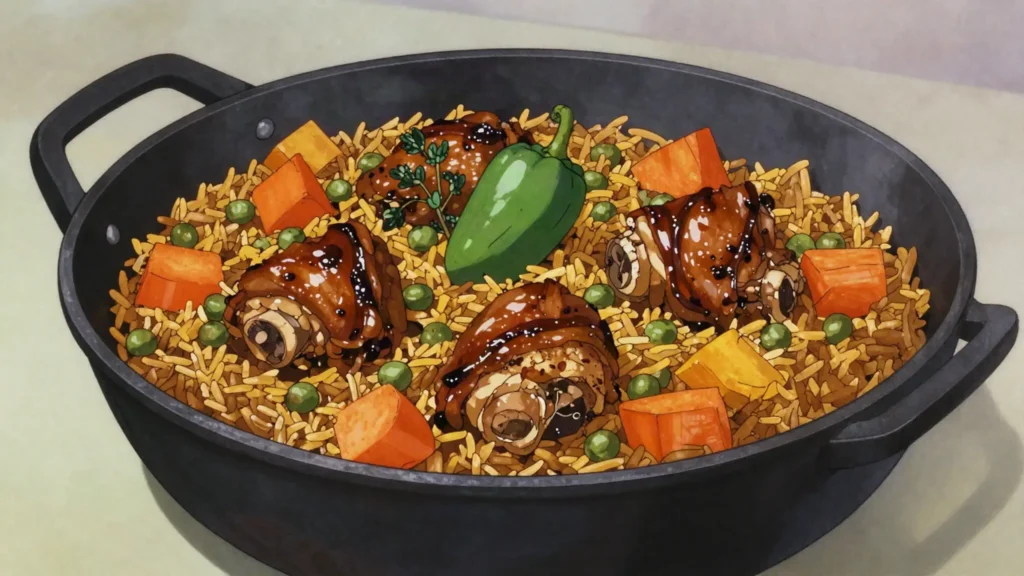
A one-pot dish of rice, pigeon peas and meat, most often chicken, browned first in caramelised sugar to give the dish its distinctive dark colour before the rice and remaining ingredients are added, developed across several Caribbean islands with roots tracing to a blend of West African, Indian and Creole culinary influences carried and combined during the colonial and post-emancipation Caribbean period. The browning technique itself, caramelising sugar until nearly burnt before adding meat to sear in that dark colour and flavour, is considered an essential, defining step distinguishing pelau from simpler rice-and-pea dishes elsewhere in the region. It remains a popular dish for large gatherings and celebrations across the several English-speaking Caribbean islands where it is eaten, cooked in large batches in a single big pot.
Frequently asked questions
What is Pelau?
Pelau is a main from Dominica: one-pot rice with pigeon peas and chicken. A one-pot dish of rice, pigeon peas and meat, most often chicken, browned first in caramelised sugar to give the dish its distinctive dark colour before the rice and remaining ingredients are added, developed across several Caribbean islands with roots tracing to a blend of West African, Indian and Creole culinary influences carried and combined during the colonial and post-emancipation Caribbean period. The browning technique itself, caramelising sugar until nearly burnt before adding meat to sear in that dark colour and flavour, is considered an essential, defining step distinguishing pelau from simpler rice-and-pea dishes elsewhere in the region. It remains a popular dish for large gatherings and celebrations across the several English-speaking Caribbean islands where it is eaten, cooked in large batches in a single big pot.
How long does Pelau take to make?
Pelau takes 30 min of preparation and 1 hr of cooking. The recipe makes 6 servings. It is rated medium to make.
What can I substitute in Pelau?
Yes, within limits. No pigeon peas? Black-eyed peas or red kidney beans are both used, though the grassy pigeon-pea flavour is missed. Beef pelau is equally traditional; use chuck cut in 3 cm cubes and add 20 minutes of simmering before the rice goes in.
What is the most important thing to get right in Pelau?
This browning is the whole dish. Too pale and pelau tastes flat and sweet; too dark and the sugar turns acrid and bitter, and you must start again.