
Ingredients
The quark dough
- 500 gquark
- tvaroh, well drained
- 300 gplain flour
- 2eggs
- 50 gsemolina
- 1/2 teaspoonsalt
- plus flour, to dust
The fruit
- 12small plums
- or apricots, whole and stoned
- or strawberries
- a sugar cube per fruit, optional
To top
- 200 gquark
- or grated curd cheese
- 100 gbutter, melted
- icing sugar, to dust
To cook
- a wide pot of water
- a pinch of salt
Directions
- Set the quark in a sieve over a bowl. Let it drain for an hour or more. Press it gently to help it along. Discard the whey that comes out. Twist the halves and lift the stone out. It holds together well enough to wrap. Put the drained quark in a bowl. Add the eggs and the salt to it.
- Mix them all together thoroughly. Adding the dry is the next step. Add the flour and the semolina. Bring it together into a soft dough. Judging the dough takes a feel. Add extra flour only as needed. Cover the dough and let it rest. Give it about thirty full minutes. Wash all the fruit and dry it. Wet fruit makes the dough slippery.
- Press the halves back together. Take one small piece of dough. Flatten it into a disc in your palm. Roll or press it out fairly thin. Thick dough gives a stodgy dumpling.
- Set a fruit in the middle of the disc. Work the dough up evenly all round. Do not bunch it all at the top. Pinch the dough closed at the top. Pinch it firmly and completely. Check every seal before cooking. Rolling them smooth is worth doing.
- Roll each one smooth between your palms. Dust your hands with flour for it. Set them out on a floured tray. Keep them from touching each other. Flour the whole tray generously. Do not stack any of them at all.
- Bring a wide pot of water to a boil. Add a good pinch of salt to it. Use a wide pot with plenty of water. They need room to move freely. Cook them all in separate batches. Bring it down to a gentle simmer. The dough is delicate and soft.
- Keep it at a bare simmer throughout. Cooking them takes a few minutes. Let them simmer for about eight minutes. They float within a couple of minutes. Turn them gently once as they cook. Use a slotted spoon very gently. Judging them takes a proper test. Lift one out and cut it right open. The dough should be cooked through.
- Lift them out with a slotted spoon. Let them all drain very briefly. Let them drain for a short moment. Do not leave them sitting though. Prick each one once with a fork. Steam builds inside the dumpling. That stops them from going soggy.
- Set the dumplings on warm plates. Scatter grated quark over them. Pour the melted butter over that. Dust icing sugar over everything. Serving them is always done immediately. Serve them hot straight from the pot. They do not keep at all well after. Make only what you will eat now.
Technique
- The dough must seal completely: any gap lets water in and the fruit juice out, and both ruin the dumpling. Work the dough up evenly around the fruit rather than bunching it at the top, pinch it firmly closed, then roll each one smooth between floured palms to close the seam — and check every seal before they go in.
- Simmer them gently rather than boiling: a rolling boil knocks the soft dough apart, and a bare simmer is the whole cooking technique. They float within a couple of minutes but floating does not mean cooked — give them several minutes after that so the fruit inside heats through, turning them once since the floating side sits out of the water.
- Drain the quark well before making the dough, setting it in a sieve for an hour and pressing gently: quark holds a lot of whey and wet quark gives a sloppy dough, which is the commonest mistake.
Substitutions
- Potato dough and yeasted dough are the two other traditional doughs; the quark dough given here needs no rising and gives a soft delicate dumpling.
- A sugar cube pushed in where the stone was sweetens the fruit and melts into a little syrup — optional but traditional.
Variations
- These are eaten as a main course at lunch rather than as a dessert, which belongs to a whole category of Czech sweet main dishes.
- Prick each cooked dumpling once with a fork to let the steam escape, which stops them going soggy.
- Top them quark first, then melted butter, then icing sugar — the butter soaks into the quark and the sugar sits on top — and be generous, since the topping is half the point.
History
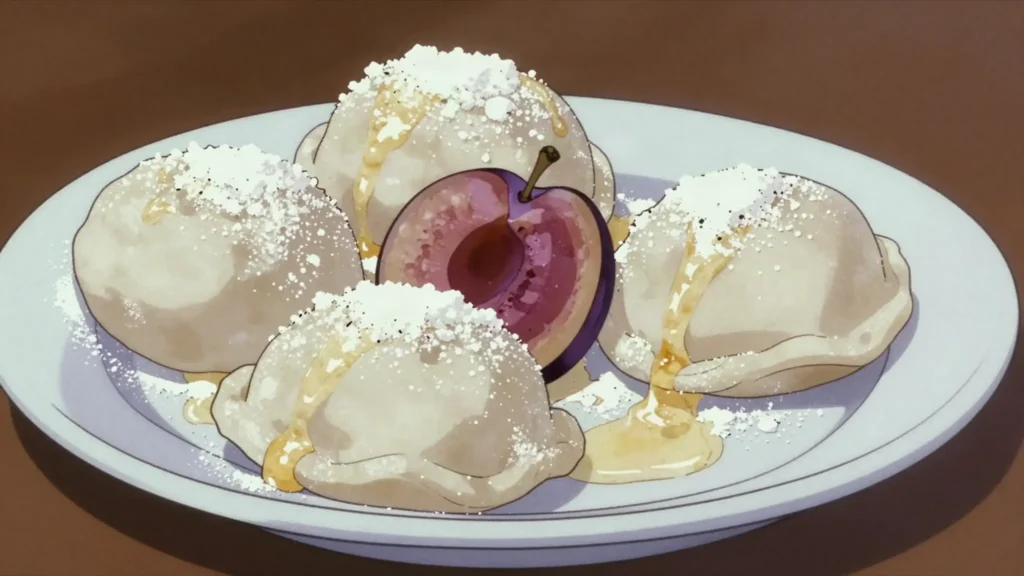
Fruit dumplings filled with plums or apricots and topped with curd, butter and sugar, eaten as a summer main course.
Frequently asked questions
What is Ovocné knedlíky?
Ovocné knedlíky is a dessert from Czechia: fruit-stuffed dumplings showered with quark, butter, sugar. Fruit dumplings filled with plums or apricots and topped with curd, butter and sugar, eaten as a summer main course.
How long does Ovocné knedlíky take to make?
Ovocné knedlíky takes 40 minutes plus resting of preparation and 10 minutes of cooking. The recipe makes about 12 dumplings. It is rated hard to make.
What can I substitute in Ovocné knedlíky?
Yes, within limits. Potato dough and yeasted dough are the two other traditional doughs; the quark dough given here needs no rising and gives a soft delicate dumpling. A sugar cube pushed in where the stone was sweetens the fruit and melts into a little syrup — optional but traditional.
What is the most important thing to get right in Ovocné knedlíky?
Set a fruit in the middle of the disc. Work the dough up evenly all round. Do not bunch it all at the top. Pinch the dough closed at the top. Pinch it firmly and completely. Check every seal before cooking. Rolling them smooth is worth doing.