The stone fruit of late summer — purple, red, yellow, green — eaten fresh, baked into cakes and tarts, made into jam and slivovitz, and dried into the prune that thickens and sweetens stews from Morocco to Poland.
Where it comes from
Two lines of plums meet in the world’s orchards: the European plum, domesticated somewhere between the Caucasus and the Caspian, which gave the damson, the greengage and the prune plum; and the Japanese plum, actually Chinese, which gave the large, juicy, round red and yellow plums of the supermarket. Central and Eastern Europe made the European plum a staple — in Bavarian Zwetschgendatschi, Polish powidła and, distilled, in the Balkan šljivovica and Hungarian pálinka.
Prunes are plums dried, and only some varieties dry well — the small, oval, dense, high-sugar prune plums of France (Agen), California and the Balkans. Dried, they become a savoury ingredient as much as a sweet one: in Moroccan lamb tagines, in Persian khoresh, in the Polish and Jewish tzimmes, in the French stuffing for rabbit and pork, and in Scotland’s cock-a-leekie soup. The damson, small and sour, is for jam and gin.
Varieties
- Victoria and other dessert plums — Large, oval, red-purple, sweet and juicy; the English eating and cooking plum.
- Greengage (Reine Claude) — Small, round, green-gold, intensely sweet and honeyed; the finest eating plum.
- Damson — Small, oval, blue-black, very sour; for jam, cheese, gin and pickles.
- Zwetschge / prune plum — Small, oval, dark blue, firm and dry-fleshed; for baking (it holds its shape), drying and distilling.
- Mirabelle — Small, round, yellow; sweet and perfumed, from Lorraine. For tarts and eau-de-vie.
- Prune (Agen, California) — The dried plum; soft, dark, sweet, faintly winey. Stoned or not.
In the kitchen
Plums for cooking should be firm and slightly under-ripe — they hold together in a tart and their acidity balances the sugar. Halved, stoned and laid cut side up on a yeast dough or a frangipane, they need nothing else. A compote is halved plums, sugar and a little water for ten minutes.
Prunes need soaking in warm water, tea or wine unless the dish is a long braise, where they soften and dissolve into the sauce. They belong with lamb, pork, rabbit and duck; with almonds and cinnamon in Morocco; with Armagnac in Gascony. Prune purée sweetens and moistens dark cakes.
Choosing and keeping
Plums ripen off the tree: buy firm and let them soften at room temperature for a day or two, then refrigerate. Ripe plums should yield and smell sweet at the stem. They bruise easily and keep only a few days once soft.
Prunes keep a year sealed and dry; soft, plump prunes are better than hard ones. Damsons and prune plums freeze well halved and stoned.
Dishes with plum
 SuanmeitangChilled smoked-plum and osmanthus infusion, sour-sweet; the classic summer cooler.
 KololakLarge pounded meatballs poached in broth, sometimes filled with dried fruit.
 Butter ChickenTandoori chicken in silky tomato-butter-cream gravy, Delhi classic
 Pío quintoRum-soaked sponge cake layered with custard and dusted with cinnamon
 SafouViolet African plum roasted until buttery, eaten with roast maize
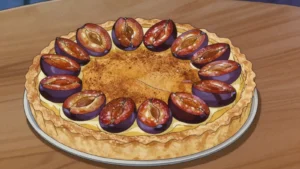 QuetschentaartShortcrust tart of purple quetsch plums, autumn favourite.
 Ttu lavashsour fruit leather of pressed plums or apricots, torn off in sheets
 Kharchobeef soup with rice, sour plum and walnuts
Plums and prunes is tagged on 92 dishes from 63 countries in the atlas. These notes are written from general knowledge and carry no per-fact citation — see About.