
Ingredients
The leaves
- 1 kgcassava leaves
- young and tender
- pounded, or 500 g frozen pounded
The pot
- 2onions, chopped
- 5garlic cloves, crushed
- 150 mlred palm oil
- 300 gsmoked fish
- soaked and flaked
- 4 tablespoonsgroundnut paste
- or ground groundnut
- 1hot chilli, chopped
- about 500 ml water
- salt
Sometimes added
- a little dried shrimp
- 1stock cube
- a few aubergines
To serve
- with chikwangue
- or rice
- or plantain
Directions
- Pound the leaves thoroughly first. This is exactly what is done traditionally. Pick only the young tender leaves. Discard any tough or yellowed ones. Wash the leaves in several changes of water. Fill a bowl and lift the leaves out. Repeat it until no grit settles. Put the leaves in a large mortar. Pound them steadily with the pestle. They should break down completely.
- Pound it thoroughly rather than briefly. A kilogram of leaves takes real work. Rinse the smoked fish under cold water. Cover it with warm water in a bowl. Leave it for about thirty minutes. Drain the soaked fish thoroughly. Flake it and check it for bones. They do not soften in cooking at all.
- Put the pounded leaves in a large pot. Add all of the measured water to them. Bring it up to a gentle simmer. Simmering them takes a long time. Cover the pot and lower the heat.
- Let them simmer for a full hour. An hour is the bare minimum here. Stir it every fifteen minutes or so. Add hot water if it starts to dry. A dry pot catches and burns quickly. Keep them just covered throughout. Heat the palm oil in a separate pan. Warm it gently rather than fiercely. It should not smoke at any point. Add the chopped onions in to it. Cook them for a good eight minutes.
- Add the crushed garlic to them. Add the chopped chilli as well. Cook them for two more full minutes. Add the fried base to the leaf pot. Stir it through the pot thoroughly. Add all the flaked smoked fish. Stir it through all of the leaves. Put the groundnut paste in a bowl. Add hot water a little at a time.
- Whisk it into a smooth loose cream. Thick paste added dry sits in lumps. Stir the loosened paste into the pot. Season the pot with a little salt. Let it simmer for another forty minutes. Stir it every ten minutes or so. It burns and turns bitter if it does. Stir right into the corners of the pot.
- Keep the heat low and quite steady. Judging it takes a look and a taste. Oil rising clear is a good sign. It should taste rich and savoury. Cook it on for longer if it does. Taste it and adjust the salt as needed. Taste it before adding any more. Serving it is always done hot. Spoon it out into a serving bowl. Serve chikwangue alongside it. It keeps three days refrigerated.
Technique
- Cassava leaves contain cyanogenic compounds and both steps of the traditional method are safety steps rather than matters of texture. Pounding ruptures the cells thoroughly, bringing the compounds together with the enzyme that breaks them down, which whole leaves keep apart; the long cooking then drives the products off, which takes sustained heat rather than minutes. Neither alone is sufficient — pound thoroughly, then simmer at least an hour and a half, and two hours is safer and traditional.
- Frozen pounded cassava leaf is widely sold and has already been pounded, but it still needs the full long cooking — do not shorten that because it comes pre-pounded.
- Raw cassava leaf is bitter and long cooking reduces that considerably; the bitterness and the compounds go together, so a properly cooked pot is not bitter and bitterness means it needs longer.
Substitutions
- Frozen pounded cassava leaf saves the pounding, which is real work with a kilogram of leaves.
- Groundnut paste is standard rather than optional here; say clearly that it has gone in, since peanut allergy can be severe.
Variations
- The Ubangi basin spans several countries and this is the everyday green across that area, eaten most days rather than occasionally.
- Loosen the groundnut paste with hot water before it goes in, since dry paste sits in lumps that never disperse, and stir regularly since it catches and burns bitter.
- Red palm oil goes in generously as a flavour rather than just a fat, and burns at a lower temperature than many oils, so warm it gently.
History
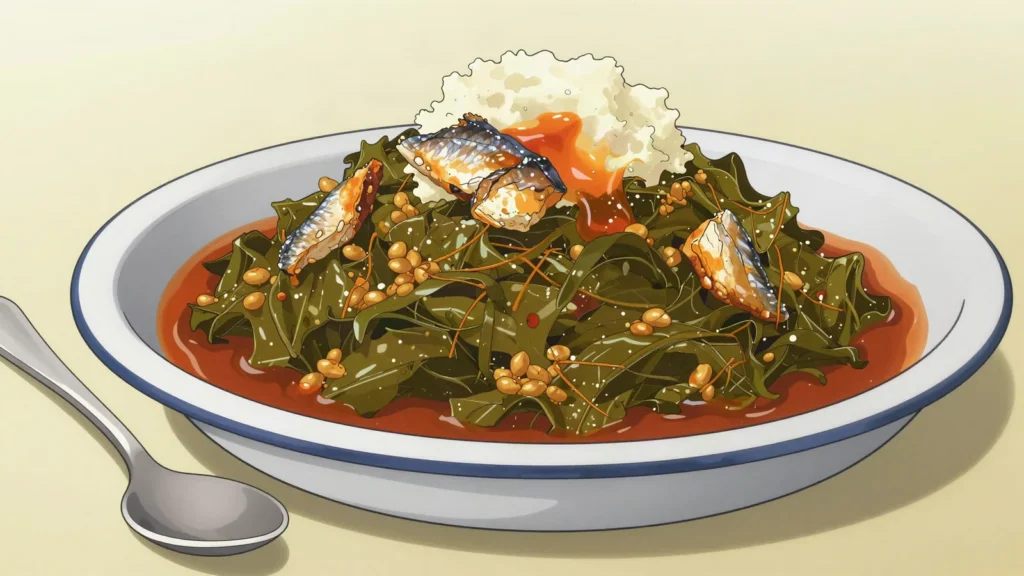
The everyday green of the Ubangi basin: cassava leaves are pounded in a mortar and simmered long to break down their bitterness.
Frequently asked questions
What is Ngunza?
Ngunza is a soup & stew from Central African Republic: pounded cassava leaves stewed with palm oil, groundnut and smoked fish. The everyday green of the Ubangi basin: cassava leaves are pounded in a mortar and simmered long to break down their bitterness.
How long does Ngunza take to make?
Ngunza takes 40 minutes of preparation and 2 hours of cooking. The recipe makes serves 8. It is rated medium to make.
What can I substitute in Ngunza?
Yes, within limits. Frozen pounded cassava leaf saves the pounding, which is real work with a kilogram of leaves. Groundnut paste is standard rather than optional here; say clearly that it has gone in, since peanut allergy can be severe.
What is the most important thing to get right in Ngunza?
Pound it thoroughly rather than briefly. A kilogram of leaves takes real work. Rinse the smoked fish under cold water. Cover it with warm water in a bowl. Leave it for about thirty minutes. Drain the soaked fish thoroughly. Flake it and check it for bones. They do not soften in cooking at all.