
Ingredients
The meat
- 1 kgchicken pieces
- or beef, cut into chunks
- on the bone if possible
- salt and black pepper
The peanut base
- 300 gsmooth peanut butter
- unsweetened
- or 300 g roasted peanuts
- ground fine
- about 500 ml hot stock
- to thin
The sauce
- 2onions, chopped
- 6garlic cloves, crushed
- 3cm ginger, grated
- 400 gtomatoes, chopped
- 2 tablespoonstomato paste
- 2hot chillies, chopped
- 3 tablespoonsoil
- about 1 litre water
To serve
- rice
- or gozo
- cassava or plantain
- greens alongside
Directions
- Keep adding the liquid gradually. It becomes smooth and glossy again. Stir it regularly right through. Use a heavy pot and a low heat. Chicken must be cooked right through.
- Check it rather than guessing. Season the meat with salt and pepper. Heat the oil in a heavy deep pot. Brown all the meat in small batches. Do not crowd the pot at any point. Brown every side of every piece. Add the chopped onion to the pot. Cook it for about twelve minutes. It should soften and turn golden.
- Add the garlic and the grated ginger. Give them about one full minute. Add the tomato paste and cook it out. Frying it for two minutes removes that. Stir it often so it does not catch. Add the chopped tomatoes and chilli. Cook them down for eight minutes. It should thicken up noticeably. Return all the meat to the pot. Add water to nearly cover the meat. It should nearly cover the meat.
- Leave room for that thickening. Bring it up to a gentle simmer. Cover it and leave it to cook. Chicken takes about forty minutes. Put the peanut butter in a bowl. Use a bowl larger than seems needed. Start with the peanut butter alone. Add hot stock a ladleful at a time. It seizes and goes stiff at first. Keep whisking it right through. Add each ladleful and whisk it smooth.
- Take a good few minutes over it. It should pour like thin cream. Strain it if any lumps remain. Stir the thinned peanut into the pot. Pour it in gradually while stirring. Stir it right through the sauce. Add stock if it goes too thick.
- Simmer it for about twenty minutes. That rising shows that it is done. Stir it every few minutes throughout. Keep it on a low and steady heat. It should barely bubble at the surface. Use a deep pot rather than shallow. Keep your face well away from it. It should read seventy-five degrees. Cook it for longer if there is. Taste it and then adjust the salt.
- Check the label before seasoning. Taste before adding much more. Add more chilli for more heat. Judging it takes a careful look. Oil should show at the surface. It should coat the meat entirely. Cook it down further if it is thin. Add more stock if it is too thick. Serving it is always done hot. Ladle it out over rice or gozo. It keeps three days refrigerated.
Technique
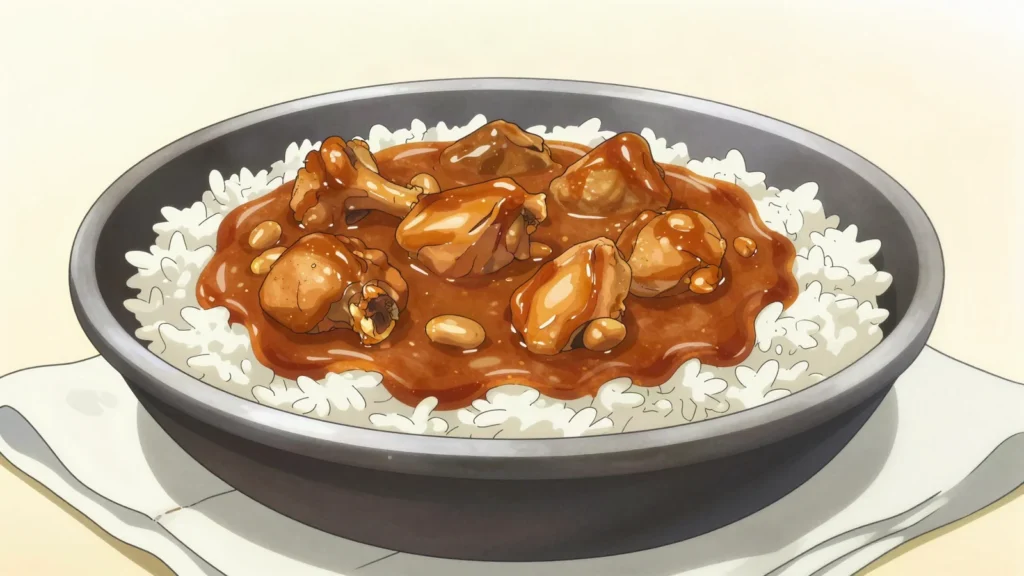
- This sauce is built entirely on peanuts, peanut allergy can be severe and even life-threatening, and nothing about it announces them — it simply looks like an ordinary brown stew coating the meat and rice. Say clearly what is in it.
- Thin the peanut butter separately in a bowl with hot stock added a ladleful at a time, whisking each smooth before the next, and only then add that mixture to the pot. Peanut butter added straight to the pot forms lumps that never fully break down. It seizes and goes stiff when the liquid first goes in, which is normal — keep whisking and it loosens.
- Peanut sauce catches on the pot base and burns very quickly, so use a heavy pot on a low steady heat, stir every few minutes and scrape the bottom. Thick sauce also spits as it simmers, so use a deep pot and keep your face well away.
Substitutions
- Ground roasted peanuts stand in for peanut butter; use an unsweetened one and check the label, since many are salted already.
- Beef stands in for chicken but takes considerably longer to become tender; chicken must reach seventy-five degrees at the thickest part with clear juices and no pink at the bone.
Variations
- Peanut oil rising to the surface in a slick is entirely normal and is the sign the sauce has properly cooked out — some cooks skim it and some do not, and both are genuinely done.
- Add only enough water to nearly cover the meat before the peanut goes in, since the peanut thickens the pot considerably and there must be room for that.
- Groundnuts came from South America and were carried to Africa by Portuguese traders on a trade that included the trade in people; they spread quickly and became a major crop, and peanut sauces now appear right across the continent in related but genuinely distinct versions.
History
Groundnuts, introduced from Brazil by Portuguese traders, became a Central African cash crop and the base of this everyday sauce.
Frequently asked questions
What is Sauce d’arachide?
Sauce d’arachide is a soup & stew from Central African Republic: peanut sauce with chicken or beef over rice or gozo. Groundnuts, introduced from Brazil by Portuguese traders, became a Central African cash crop and the base of this everyday sauce.
How long does Sauce d’arachide take to make?
Sauce d’arachide takes 30 minutes of preparation and 1 hour 15 minutes of cooking. The recipe makes serves 6. It is rated medium to make.
What can I substitute in Sauce d’arachide?
Yes, within limits. Ground roasted peanuts stand in for peanut butter; use an unsweetened one and check the label, since many are salted already. Beef stands in for chicken but takes considerably longer to become tender; chicken must reach seventy-five degrees at the thickest part with clear juices and no pink at the bone.
What is the most important thing to get right in Sauce d’arachide?
Keep adding the liquid gradually. It becomes smooth and glossy again. Stir it regularly right through. Use a heavy pot and a low heat. Chicken must be cooked right through.