
Ingredients
Bones
- 2 kgbeef leg and knuckle bones
- 500 gbeef marrow bones
Meat
- 700 gbeef brisket
Water
- 6litres, plus more for topping up
To serve
- somyeon noodles, cooked
- or steamed rice
- spring onions, finely sliced
- coarse salt
- ground black pepper
Alongside
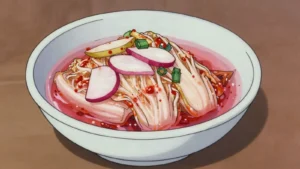
- kkakdugi, radish kimchi
- baechu kimchi
Equipment
- a very large stockpot
Directions
- Cover the bones in cold water and soak them for at least 6 hours, changing the water every hour or two. Soak overnight if you can, in the fridge. The water should run pale rather than pink by the end.
- Put the drained bones in a pot, cover with fresh water, bring it to a hard boil and boil for 10 to 15 minutes. Discard that water entirely and wash both the bones and the pot. This step throws away all the scum and impurities in one go, and skipping it means skimming for hours instead.
- Return the clean bones to the clean pot with 6 litres of fresh water. Now bring it to a rolling boil and keep it there. Boil it hard, not gently. This is the one stock that wants a vigorous boil, because agitation is what emulsifies the fat and collagen into the water.
- Boil for 4 hours, topping up with hot water as it reduces. Top up with hot water rather than cold, which would drop the temperature and interrupt the emulsion.
- Add the brisket after the first hour and simmer it for about 2 hours until tender. Take the brisket out as soon as it is tender and do not leave it in for the full cook, or it turns to dry threads. Cool the brisket, then slice it thinly across the grain and set it aside. After about 4 hours, pour off the broth into another pot and keep it.
- Add fresh water to the same bones and boil them again for another 3 or 4 hours. Korean restaurants extract the bones two or three times and combine the batches, because the first extraction alone is thin and the later ones carry the body.
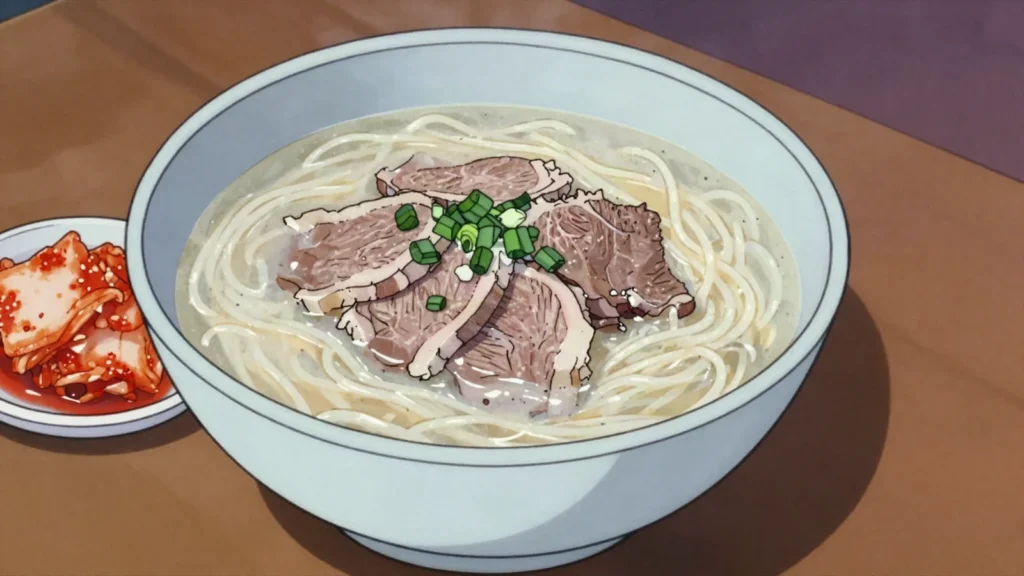
- Combine all the batches at the end. The finished broth should be opaque, milky white and faintly viscous, and it should feel slightly sticky on the lips from the collagen.
- Put noodles or rice in each bowl, lay slices of brisket over, and ladle the boiling broth on top. Serve it in stone or thick ceramic bowls if you have them, which keep it scalding. Set out coarse salt, pepper and sliced spring onion, and serve kkakdugi alongside.
Technique
- Gomtang is a related beef soup made with meat rather than bones and is clearer.
- The broth freezes well and is what most home cooks make in a large batch.
- Some old Seoul restaurants keep the pot going continuously.
Substitutions
- Beef knuckle and leg bones are essential; oxtail can be added for extra body.
- A pressure cooker shortens it considerably, though the colour is less good.
Variations
- With ox head meat, as in the most traditional versions.
- Gomtang, the clearer meat-based relative.
- Served with rice rather than noodles.
History
A milky white soup, made by boiling ox bones, particularly leg bones, for many hours or even a full day until the broth turns cloudy and rich, documented across South Korea for many centuries as a significant traditional dish, typically served simply with noodles, spring onion and seasoned individually at the table with salt to each diner’s preference. Its extremely long cooking time, required to properly extract collagen and marrow from the bones into the broth, reflects a broader Korean and wider East Asian culinary tradition of transforming bones and less costly cuts into deeply nourishing, flavourful dishes through patient, extended simmering. Seolleongtang remains a beloved traditional dish across South Korea, particularly valued as a warming, restorative meal.
Frequently asked questions
What is Seolleongtang?
Seolleongtang is a soup & stew from South Korea: milky ox-bone broth with brisket and noodles, seasoned at the table. A milky white soup, made by boiling ox bones, particularly leg bones, for many hours or even a full day until the broth turns cloudy and rich, documented across South Korea for many centuries as a significant traditional dish, typically served simply with noodles, spring onion and seasoned individually at the table with salt to each diner’s preference. Its extremely long cooking time, required to properly extract collagen and marrow from the bones into the broth, reflects a broader Korean and wider East Asian culinary tradition of transforming bones and less costly cuts into deeply nourishing, flavourful dishes through patient, extended simmering. Seolleongtang remains a beloved traditional dish across South Korea, particularly valued as a warming, restorative meal.
How long does Seolleongtang take to make?
Seolleongtang takes 30 min plus 6 hr soaking of preparation and 8 hr of cooking. The recipe makes 8 servings. It is rated medium to make.
What can I substitute in Seolleongtang?
Yes, within limits. Beef knuckle and leg bones are essential; oxtail can be added for extra body. A pressure cooker shortens it considerably, though the colour is less good.
What is the most important thing to get right in Seolleongtang?
Cover the bones in cold water and soak them for at least 6 hours, changing the water every hour or two. Soak overnight if you can, in the fridge. The water should run pale rather than pink by the end.