
Ingredients
The octopus
- 1.5 kgoctopus
- cleaned
- Octopus cyanea where reef-caught
- water, for the first boil
The coconut
- 600 mlthick coconut cream
- freshly squeezed
The pot
- 2onions, sliced
- 4garlic cloves, crushed
- 2tomatoes, chopped
- 300 gisland cabbage
- or other leafy greens, shredded
- salt and black pepper
To serve
- with yam, taro or cassava
- or with rice
Directions
- Cook it long rather than briefly. An hour is safer than fifteen minutes. Turn the whole head inside out. Remove all of the innards entirely. Rinse it thoroughly afterwards. Discard the hard beak entirely. Cut the eyes out with a knife.
- Discard both of the eyes as well. Rinse the octopus under cold water. Rub all of the suckers properly clean. Rub them under cold running water. Reef-caught octopus needs real cleaning. Put the octopus in a large pot. Cover it over with cold water. Bring it up to a gentle simmer. Keep it barely bubbling throughout. Simmering it takes about an hour.
- Let it simmer for about an hour. A small one takes forty minutes. Simmer it on and then test again. Add twenty more minutes at a time. Draining it is straightforward enough. Lift the octopus out of the water. Let it cool enough to handle it. Cut the arms into thick pieces. Cut the head into thick strips.
- Cut them into bite-sized pieces. They do not shrink much further. Cut them larger rather than smaller. Heat a little oil in a wide pot. Add the sliced onions in to it. Cook them for a good eight minutes.
- Add the crushed garlic to them. Cook it for two more full minutes. Add the chopped tomatoes to the pot. Cook them down for about six minutes. Add the cut octopus to the pot. Turn it through the cooked base. Let it cook for about five minutes. Add the shredded greens to the pot.
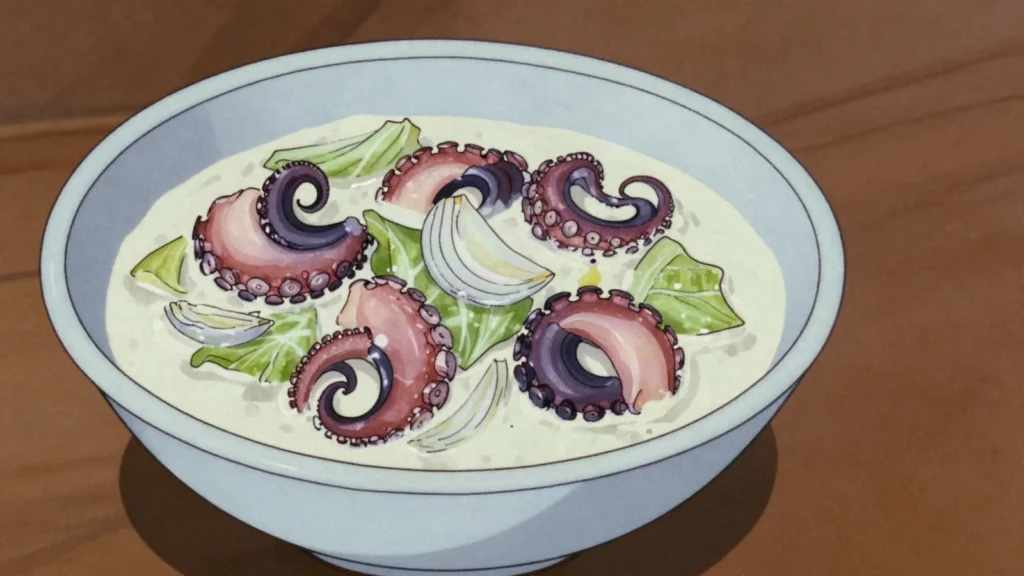
- Let them wilt right down into it. It wilts down in a few minutes. Pour the coconut cream over everything. Stir it through the pot gently. Let it warm through for five minutes. The cream must not boil at all.
- Take the pot off as soon as it is hot. Taste it and adjust the salt as needed. Add black pepper to it as well. It needs more salt than expected. Taste it properly right at the end. Serving it is always done hot. Spoon it out into a wide dish. Serve yam, taro or cassava alongside. It keeps two days refrigerated.
Technique
- Nawita is the Bislama word for octopus — the name of the animal, not of a prepared dish — and listing it as one is like listing poulpe as a French dish. The atlas keeps the entry as an octopus preparation while saying what the word actually means. It also describes simmering in coconut milk, where the documented Vanuatu preparations — bunya and octopus laplap — are earth-oven baked or steamed in leaf parcels rather than simmered on a stove. A stovetop version is a reasonable home method but is not what the sources describe.
- Octopus muscle goes rubbery with short cooking and becomes tender only with long cooking, with no middle ground: very brief cooking leaves it tender, a few minutes more makes it rubbery, and long cooking breaks the collagen down again. Most home cooking lands in the rubbery middle, so cook it long rather than briefly and test with a knife rather than trusting a clock.
- For reef-gleaned octopus two hazards are worth knowing. Ciguatoxin builds up in reef food chains, is not destroyed by cooking or freezing, and while reef fish are the main vector, toxic octopus has been reported in the Pacific; Vanuatu has active ciguatera outbreaks, and local knowledge of affected reefs is the real safeguard. Blue-ringed octopus lives on Vanuatu reef flats and carries heat-stable tetrodotoxin present in mantle tissue and ink, though the dominant exposure route is a bite while handling a live animal rather than eating one. Both concern gleaning your own rather than buying.
Substitutions
- The atlas says the octopus is tenderised by pounding, which is well documented for Greek and Japanese practice but which no source describes for Vanuatu; the atlas records that as unverified.
- Island cabbage is the Vanuatu green and wilts in a few minutes; tougher leaves need longer.
Variations
- Octopus cyanea is the reef-gleaned species recorded from Vanuatu, where a species is named at all.
- Turn the head inside out to clean it, push the beak out from where the arms meet, and rub the suckers clean under running water, since reef-caught octopus holds sand and grit.
- The coconut cream goes in at the end and must not boil, since hard boiling splits it into oil and grain.
History
Reef octopus is speared at low tide across Vanuatu and pounded on stones before cooking to soften it.
Frequently asked questions
What is Nawita?
Nawita is a main from Vanuatu: octopus tenderised, then simmered in coconut milk with island greens. Reef octopus is speared at low tide across Vanuatu and pounded on stones before cooking to soften it.
How long does Nawita take to make?
Nawita takes 40 minutes of preparation and 1 hour of cooking. The recipe makes serves 6. It is rated medium to make.
What can I substitute in Nawita?
Yes, within limits. The atlas says the octopus is tenderised by pounding, which is well documented for Greek and Japanese practice but which no source describes for Vanuatu; the atlas records that as unverified. Island cabbage is the Vanuatu green and wilts in a few minutes; tougher leaves need longer.
What is the most important thing to get right in Nawita?
Cook it long rather than briefly. An hour is safer than fifteen minutes. Turn the whole head inside out. Remove all of the innards entirely. Rinse it thoroughly afterwards. Discard the hard beak entirely. Cut the eyes out with a knife.