
Ingredients
Huni
- 200 gvalhoamas or hikimas (Maldive smoke-dried tuna), scraped clean and shredded very fine, or 200 g flaked tinned tuna in brine, well drained
- 1whole mature coconut (about 300 g flesh), freshly grated on a hunigondi scraper
- 1large red onion (150 g), sliced paper-thin then chopped fine
- 2–4githeyo mirus (small hot chillies), deseeded if you like and minced
- 10curry leaves, shredded
- 2limes, juiced (about 4 tbsp)
- 1 tspfine salt, plus more to taste
- ½ tspfreshly ground black pepper
Roshi
- 300 gplain flour
- 60 gfreshly grated coconut
- 1 tspsalt
- 2 tbspcoconut oil
- about 180 ml warm water
To serve
- 1 litrestrong black tea, unsweetened
- 1lime, cut into wedges
Directions
- Rub the flour, grated coconut, salt and oil together, then add the warm water a little at a time until you have a soft, slightly tacky dough. Knead 5 minutes, cover and rest 20 minutes.
- Meanwhile shred the dried tuna. Hold the hard block against the fine side of a grater or shave it with a knife, then pound the shavings briefly in a mortar so the fibres separate into fluff rather than splinters.
- Put the shredded tuna, grated coconut, onion, chilli and curry leaves in a wide bowl.
- Add the salt, pepper and half the lime juice, then mix with your hand, squeezing and rubbing the mixture against the side of the bowl for a full 3–4 minutes. The onion and chilli must be crushed into the coconut until the whole mass turns damp, pinkish and glossy with coconut oil.
- Taste and correct with the remaining lime juice and more salt. It should be salty, sour and hot in that order, and it should hold together when pressed in the palm.
- Divide the rested dough into 8 balls, roll each into a 15 cm disc on a lightly floured board.
- Cook the roshi on a dry, very hot tawa or heavy frying pan, about 1 minute a side, until blistered brown in patches and puffed; stack them under a cloth so they steam soft.
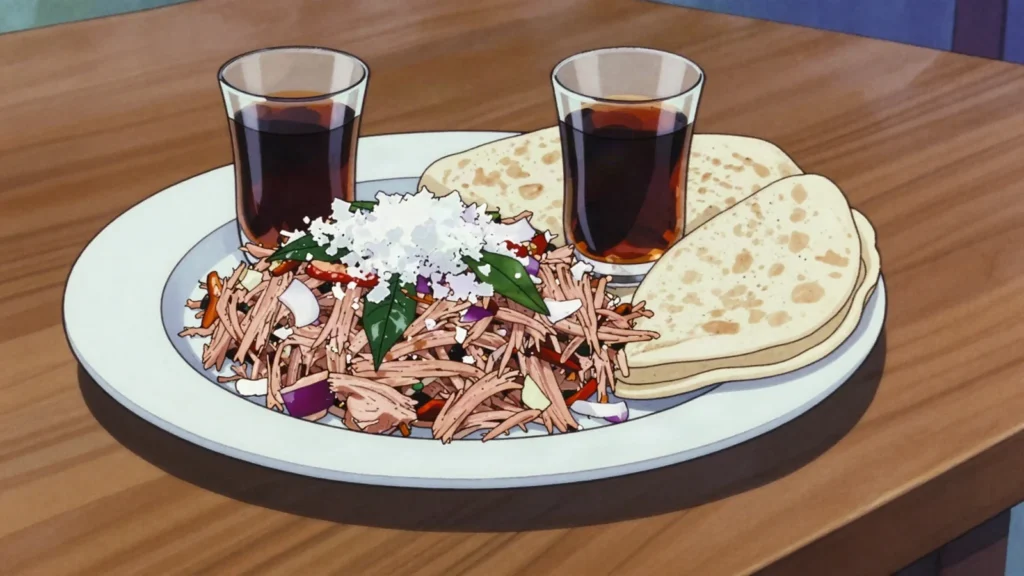
- Serve the huni at room temperature in a mound, with hot roshi and black tea. Tear the bread, scoop, and eat with the fingers.
Technique
- The hand-mixing is the recipe. A spoon leaves you with a salad of separate ingredients; the squeezing releases the coconut oil and the onion juice, which bind everything into one moist mass.
- Freshly grated mature coconut is essential. Desiccated coconut is dry and sweetish and will drink the lime juice; if you must use it, soak 150 g in 100 ml warm water for 15 minutes first.
- Mix mas huni only shortly before eating. Left to sit an hour, the salt draws water out of the onion and the texture goes wet and dull.
Substitutions
- No Maldive fish: use good tinned tuna, drained hard and dried in a dry pan for 2 minutes to concentrate it, and add ¼ tsp smoked salt to imitate the smoke.
- Roshi can be replaced by warm chapati, though the Maldivian version is softer and always contains coconut.
Variations
- Kulhi mas huni: a much hotter version, chilli-heavy and made with a higher ratio of onion, eaten with tea in the afternoon.
- Some islands stir in a spoon of coconut cream or a little grated raw papaya for sweetness against the chilli.
History
A mixture of shredded smoked tuna, grated coconut, onion, chili and lime, eaten most commonly for breakfast alongside roshi flatbread, reflecting the Maldives’ near-total dependence on the surrounding Indian Ocean for its primary protein source, since the small island nation has very limited land available for raising livestock. Tuna, smoked and dried using techniques documented in Maldivian fishing communities for generations, provided a preservable protein source in a hot climate without reliable refrigeration for much of the country’s history. Its no-cook preparation, the ingredients are simply mixed rather than cooked together, makes mas huni a particularly fast dish to prepare, well suited to a quick breakfast before the day’s fishing or other work begins.
Frequently asked questions
What is Mas Huni?
Mas Huni is a breakfast from Maldives: shredded smoked tuna with coconut, onion and chili, scooped with roshi. A mixture of shredded smoked tuna, grated coconut, onion, chili and lime, eaten most commonly for breakfast alongside roshi flatbread, reflecting the Maldives’ near-total dependence on the surrounding Indian Ocean for its primary protein source, since the small island nation has very limited land available for raising livestock. Tuna, smoked and dried using techniques documented in Maldivian fishing communities for generations, provided a preservable protein source in a hot climate without reliable refrigeration for much of the country’s history. Its no-cook preparation, the ingredients are simply mixed rather than cooked together, makes mas huni a particularly fast dish to prepare, well suited to a quick breakfast before the day’s fishing or other work begins.
How long does Mas Huni take to make?
Mas Huni takes 20 min of preparation and 20 min for the roshi of cooking. The recipe makes 4 servings. It is rated easy to make.
What can I substitute in Mas Huni?
Yes, within limits. No Maldive fish: use good tinned tuna, drained hard and dried in a dry pan for 2 minutes to concentrate it, and add ¼ tsp smoked salt to imitate the smoke. Roshi can be replaced by warm chapati, though the Maldivian version is softer and always contains coconut.
What is the most important thing to get right in Mas Huni?
Meanwhile shred the dried tuna. Hold the hard block against the fine side of a grater or shave it with a knife, then pound the shavings briefly in a mortar so the fibres separate into fluff rather than splinters.