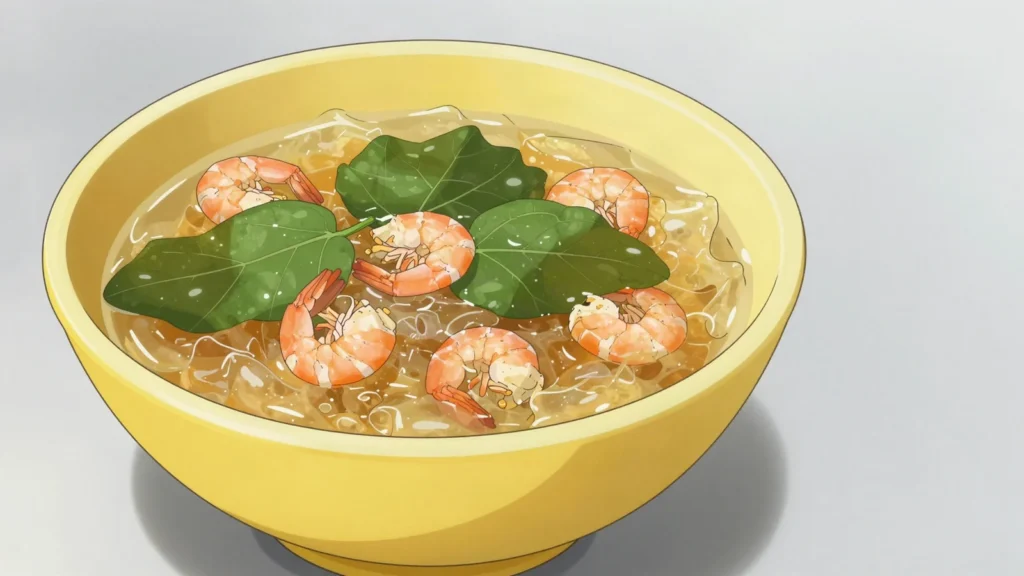

Ingredients
Tucupi
- 1.5 litrestucupi, the yellow liquid from bitter cassava, bottled
- 4 clovesgarlic
- 2chicory leaves, chicória do Pará
- a few leaves of alfavaca
- salt
Goma
- 150 ggoma de tapioca, cassava starch
- 500 mlwater
Jambu
- 2large bunches jambu, Acmella oleracea
Shrimp
- 200 gdried salted shrimp, camarão seco
To finish
- yellow chilli sauce, pimenta de cheiro
To serve
- in a cuia, a gourd bowl, scalding hot, no spoon
Directions
- Pour the tucupi into a large pan with the garlic, chicory and alfavaca, and season it. Bring it to a boil and then simmer it, uncovered, for at least an hour. Keep it uncovered so vapour escapes rather than condensing back into the pot.
- Taste it and adjust the salt, and expect it to be sour, garlicky and herbal. It should taste distinctly acidic, which is the character of tucupi.
- Bring a pan of salted water to the boil and blanch the jambu leaves for 3 to 5 minutes. Blanch it separately and discard that water, which reduces the numbing slightly and takes off the raw grassiness. Drain the jambu and set it aside. Now soak the dried shrimp in warm water for 20 minutes, then drain them.
- Taste one before you use them, and soak them again if they are still fierce. Slake the tapioca starch in cold water until completely smooth. Bring the mixture to a simmer, stirring constantly, until it thickens and turns translucent and glossy.
- Cook it until it is clear rather than milky, which means the starch has fully gelatinised. It should be a thick, slippery, almost jelly-like liquid.
- Keep it warm and stir it, since it thickens further as it stands. Put a ladle of the hot goma in the bottom of each cuia. Add a handful of blanched jambu and a few dried shrimp.
- Pour the boiling hot tucupi over the top. It must be genuinely scalding when it is served. Add chilli sauce to taste, and the vendors ask how much you want. Serve it immediately, with no spoon. Holding a scalding cuia in both hands takes some getting used to, which is part of the ritual.
Technique
- Bottled tucupi is sold in Brazilian shops and is still boiled before use.
- Jambu is also called paracress and the tingling is entirely expected.
- Tacacazeiras set up in the late afternoon rather than at mealtimes.
Substitutions
- Bottled tucupi, which is what almost everyone uses.
- There is no substitute for jambu or tucupi; the dish is those two things.
Variations
- With more chilli, which is common.
- With extra jambu, for a stronger tingle.
- Pato no tucupi, the duck dish built on the same broth.
History
A soup made from tucupi, a fermented and boiled liquid extracted from wild manioc, combined with dried shrimp and jambu, a leaf native to the Amazon that produces a distinctive tingling, numbing sensation on the tongue when eaten, documented across Brazil’s northern Amazon region, particularly the city of Belém, as a traditional dish with roots tracing to Indigenous Amazonian culinary tradition well before European contact. Its use of jambu, an ingredient with essentially no equivalent outside the Amazon region, gives tacacá a flavour and sensory experience genuinely unique among Brazilian regional dishes, reflecting the specific biodiversity and Indigenous culinary knowledge of the Amazon. Tacacá remains closely tied to the Amazon region’s distinct Indigenous-influenced culinary identity within Brazil.
Frequently asked questions
What is Tacacá?
Tacacá is a soup & stew from Brazil: amazonian tucupi broth with jambu leaves and dried shrimp; tongue-tingling. A soup made from tucupi, a fermented and boiled liquid extracted from wild manioc, combined with dried shrimp and jambu, a leaf native to the Amazon that produces a distinctive tingling, numbing sensation on the tongue when eaten, documented across Brazil’s northern Amazon region, particularly the city of Belém, as a traditional dish with roots tracing to Indigenous Amazonian culinary tradition well before European contact. Its use of jambu, an ingredient with essentially no equivalent outside the Amazon region, gives tacacá a flavour and sensory experience genuinely unique among Brazilian regional dishes, reflecting the specific biodiversity and Indigenous culinary knowledge of the Amazon. Tacacá remains closely tied to the Amazon region’s distinct Indigenous-influenced culinary identity within Brazil.
How long does Tacacá take to make?
Tacacá takes 30 min of preparation and 1 hr of cooking. The recipe makes 4 servings. It is rated medium to make.
What can I substitute in Tacacá?
Yes, within limits. Bottled tucupi, which is what almost everyone uses. There is no substitute for jambu or tucupi; the dish is those two things.
What is the most important thing to get right in Tacacá?
Pour the tucupi into a large pan with the garlic, chicory and alfavaca, and season it. Bring it to a boil and then simmer it, uncovered, for at least an hour. Keep it uncovered so vapour escapes rather than condensing back into the pot.