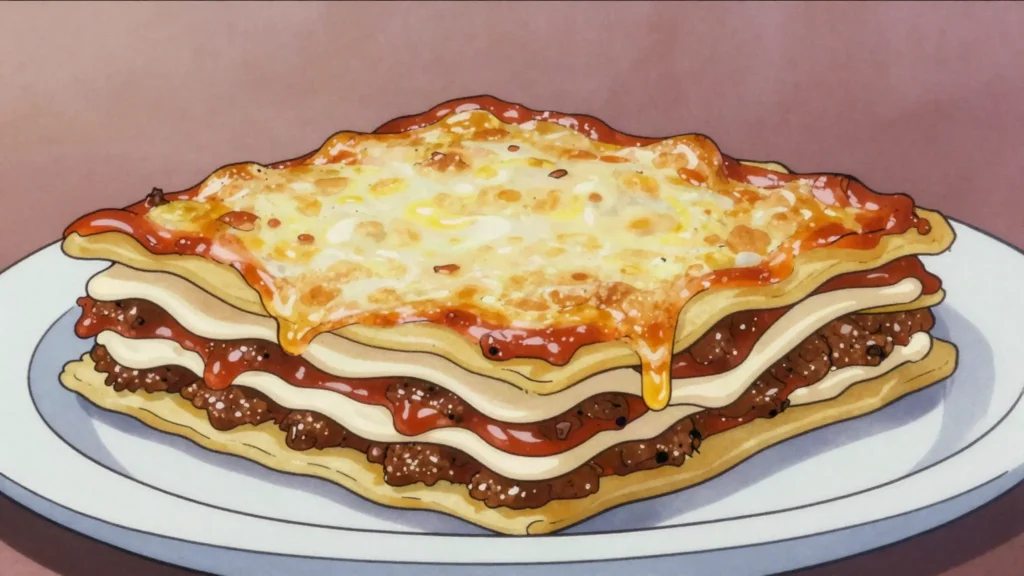

Ingredients
Green pasta
- 400 gplain flour
- or type 00 flour
- 3eggs
- 150 gcooked spinach
- squeezed very dry
- a pinch of salt
Ragù
- 300 gbeef, coarsely minced
- 150 gpancetta, chopped
- 1onion, finely chopped
- 1carrot, finely chopped
- 1celery stick, finely chopped
- 3 tablespoonstomato purée
- or 400 g passata
- 200 mldry white wine
- 300 mlbeef stock
- 200 mlwhole milk
- 3 tablespoonsolive oil
- or butter
- salt and black pepper
Béchamel
- 80 gbutter
- 80 gplain flour
- 1 litrewhole milk
- a pinch of grated nutmeg
- salt
To assemble
- 150 gParmigiano Reggiano
- grated
- butter, for the dish
Directions
- Heat the oil in a large heavy pot. Add the chopped pancetta to it. Cook it until the fat runs out. Give it about five minutes there. Add the onion, carrot and celery. Cook them slowly over a low heat. Give them a good fifteen minutes. Add the coarsely minced beef to it. Break it up with a wooden spoon. Cook it until it has lost its raw colour. Both are done and both give good results.
- Pour in all of the white wine. Let it bubble and reduce away. Give it about five full minutes. Stir in the tomato purée or passata. Pour in all of the beef stock. Season it with salt and black pepper. Bring it all up to a bare simmer. Cover it partly and lower the heat right down.
- Let it simmer very gently indeed. Give it at least three full hours. Stir it every half hour or so. Add a little stock or water if it dries. It should stay moist rather than sticky. Pour the milk in for the last hour. Let it cook gently into the sauce. It should be thick rather than soupy. Cook the spinach and drain it. Squeeze it as dry as you possibly can. Wet spinach makes an unworkable dough.
- Chop it very finely or blend it. Put the flour on a work surface. Make a well in the middle of it. Beat the eggs and pour them in. Add the chopped spinach to the well. Add a good pinch of salt to it. Bring it together into a firm dough. Kneading it takes real effort.
- Knead it for a good ten minutes. It should become smooth and elastic. Add flour if it is at all sticky. Wrap it up and let it rest there. Give it at least thirty minutes. Divide the dough into several pieces. Roll each one out very thin indeed. Take it down to the second thinnest setting. Cut the sheets to fit your dish.
- Lay them out on floured cloths. Do not stack them without flour. Bring a large pot of salted water to a boil. Drop the sheets in a few at a time. Give them about a minute each. Lift them into a bowl of cold water. It also stops the sheets sticking together.
- Lay them flat on cloths to drain. Melt the butter in a heavy pot. Stir in the flour to make a paste. Cook it for two or three minutes. Cook it until it smells faintly nutty. Do not let it colour at all here. Add the milk a ladle at a time. Whisk hard after each addition.
- Let it come together before adding more. A little at a time keeps it smooth. Whisk rather than stir throughout. Let it simmer gently for ten minutes. Stir it constantly as it cooks. Add the nutmeg and season it well. Judging the bechamel takes a look. Keep it looser than seems right. Butter a deep baking dish well.
- Spread a thin layer of ragu in the base. A little sauce underneath stops sticking. Lay a layer of pasta sheets over it. Spread ragu thinly over the pasta. Spoon the bechamel over the ragu.
- Scatter grated Parmigiano over that. Repeat until everything is used. Six thin layers is a good target. Spread each of the layers thinly. Do not end with a bare pasta layer. Heat the oven to one hundred and eighty degrees.
- Bake it for about forty minutes. It should be bubbling and browned on top. Let it stand for twenty minutes. That lets the layers settle and firm. Cut it into generous thick squares. Lift them out with a wide slice. Serve more Parmigiano at the table. It keeps three days refrigerated.
Technique
- The Accademia Italiana della Cucina deposited a ragù recipe with the Bologna chamber of commerce in nineteen eighty-two, setting out what it considered the classic version; it has been revised since, and it carries no legal force over cooking, since Bolognese cooks vary from it constantly.
- Bolognese ragù is a slow meat sauce rather than a tomato sauce with meat in it: only a small amount of tomato goes in as a seasoning, the finished sauce is brown rather than red, and white wine is traditional rather than red, which surprises people. Milk goes in for the last hour, may look curdled at first and smooths out as it cooks.
- Bolognese lasagne uses green spinach pasta, lasagne verdi, where yellow egg pasta is used elsewhere; the spinach adds very little flavour and is largely colour and tradition, but it must be squeezed genuinely dry or the dough is unworkable.
Substitutions
- Yellow egg pasta works, though green spinach pasta is what Bologna specifies.
- Coarsely minced or hand chopped beef keeps texture where fine mince goes pasty.
Variations
- Some cooks brown the meat hard and others follow the gentler traditional method.
- Red wine is used in some kitchens though white is traditional.
- Six thin layers is the target rather than a few thick ones.
History
Layers of flat pasta sheets, alternated with a slow-cooked meat ragù, béchamel sauce and Parmigiano-Reggiano cheese, then baked until golden and bubbling, developed in Bologna, in the Emilia-Romagna region of northern Italy, an area widely recognized within Italy for its particularly rich culinary tradition built on fresh egg pasta and slow-cooked meat sauces. Its layered structure, requiring separately prepared components, pasta, ragù and béchamel, assembled and baked together, distinguishes lasagne from simpler pasta dishes and reflects the more elaborate, labor-intensive cooking style historically associated with Bologna’s cuisine, considered among the richest and most refined regional culinary traditions in all of Italy. Lasagne alla bolognese remains one of Italy’s most internationally recognized baked pasta dishes.
Frequently asked questions
What is Lasagne alla bolognese?
Lasagne alla bolognese is a main from Italy: baked pasta sheets with ragù, béchamel, Parmigiano. Layers of flat pasta sheets, alternated with a slow-cooked meat ragù, béchamel sauce and Parmigiano-Reggiano cheese, then baked until golden and bubbling, developed in Bologna, in the Emilia-Romagna region of northern Italy, an area widely recognized within Italy for its particularly rich culinary tradition built on fresh egg pasta and slow-cooked meat sauces. Its layered structure, requiring separately prepared components, pasta, ragù and béchamel, assembled and baked together, distinguishes lasagne from simpler pasta dishes and reflects the more elaborate, labor-intensive cooking style historically associated with Bologna’s cuisine, considered among the richest and most refined regional culinary traditions in all of Italy. Lasagne alla bolognese remains one of Italy’s most internationally recognized baked pasta dishes.
How long does Lasagne alla bolognese take to make?
Lasagne alla bolognese takes 1 hour 30 minutes of preparation and 4 hours of cooking. The recipe makes serves 8. It is rated hard to make.
What can I substitute in Lasagne alla bolognese?
Yes, within limits. Yellow egg pasta works, though green spinach pasta is what Bologna specifies. Coarsely minced or hand chopped beef keeps texture where fine mince goes pasty.
What is the most important thing to get right in Lasagne alla bolognese?
Let it simmer very gently indeed. Give it at least three full hours. Stir it every half hour or so. Add a little stock or water if it dries. It should stay moist rather than sticky. Pour the milk in for the last hour. Let it cook gently into the sauce. It should be thick rather than soupy. Cook the spinach and drain it. Squeeze it as dry as you possibly can. Wet spinach makes an unworkable dough.