
Ingredients
The meat
- 1.2 kgsmoked cane rat (agouti), jointed into 6 pieces
- 2 tbspgroundnut oil
- 1large onion, chopped
- 3 clovesgarlic, crushed
- 1 tspsalt
Sauce
- 400 gpalm-nut cream (sauce graine), or 150 g smooth peanut butter
- 2tomatoes, blended
- 1scotch bonnet, whole
- 1aubergine, cubed
- 1stock cube
- 1 litrewater
To serve
- attiéké, boiled rice or foutou
Directions
- Scrub the smoked joints under running water to remove ash and surface soot, then cover with boiling water and leave 10 minutes to soften. Drain.
- Brown the pieces in the oil in a heavy pot with the onion and garlic, about 10 minutes, until the onion is dark and sweet.
- Stir in the palm-nut cream or peanut butter and cook it out for 5 minutes, stirring, until it loosens and the oil begins to separate. This step is what stops the sauce tasting raw and pasty.
- Add the blended tomato, water, aubergine, stock cube and salt, and drop in the whole scotch bonnet without breaking it — it perfumes the pot rather than making it fiery.
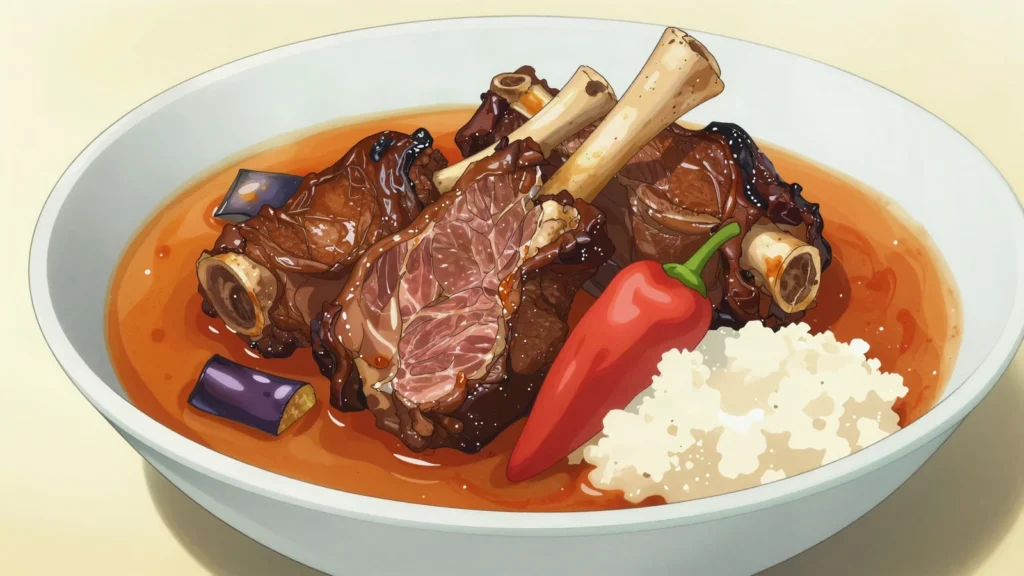
- Simmer uncovered for 1 hr 30 min, stirring occasionally, until the meat is tender enough to pull from the bone and the sauce has reduced and darkened, with a film of oil on top.
- Fish out the chilli before serving, unless someone wants it. Serve with attiéké or foutou.
- Bush meat must be thoroughly cooked through — take it well past the point where it is merely tender, and discard the poaching water from step 1 rather than using it in the sauce.
Technique
- Smoked agouti is very firm and salty. The initial soak is what makes it edible; skipping it gives a tough, over-seasoned result.
- Let the oil rise and stay on the surface. In West African palm-nut and groundnut sauces this is a sign the sauce is finished, not that it has split.
- Farmed cane rat (aulacodiculture) is the usual source in Côte d’Ivoire and Benin, and is what these recipes assume.
Substitutions
- Guinea fowl, rabbit or goat, all smoked, are cooked exactly the same way and are far easier to buy.
- Tinned palm-nut cream is what most cooks use; extracting it from fresh palm nuts is an afternoon’s work.
Variations
- A peanut-based version (sauce arachide) rather than palm nut, common inland.
- Grilled over charcoal after the initial soak and served with pepper sauce, without the stew.
History
The greater cane rat is farmed and hunted across the forest belt; Ivorian and Beninese programmes promoted aulacodiculture as sustainable bush-meat farming.
Frequently asked questions
What is Agouti?
Agouti is a main from Côte d’Ivoire: smoked cane rat braised in palm-nut or peanut sauce, prized bush meat. The greater cane rat is farmed and hunted across the forest belt; Ivorian and Beninese programmes promoted aulacodiculture as sustainable bush-meat farming.
How long does Agouti take to make?
Agouti takes 30 min of preparation and 2 hr of cooking. The recipe makes 4 servings. It is rated medium to make.
What can I substitute in Agouti?
Yes, within limits. Guinea fowl, rabbit or goat, all smoked, are cooked exactly the same way and are far easier to buy. Tinned palm-nut cream is what most cooks use; extracting it from fresh palm nuts is an afternoon’s work.
What is the most important thing to get right in Agouti?
Add the blended tomato, water, aubergine, stock cube and salt, and drop in the whole scotch bonnet without breaking it — it perfumes the pot rather than making it fiery.