
Ingredients
Strained yoghurt
- 1 kgfull-fat plain yoghurt, goat’s or sheep’s if you can get it
- 1 tspsalt
For oil-packed balls
- ½ tspextra salt
- olive oil, to cover
- za’atar or dried mint, to roll them in
To serve
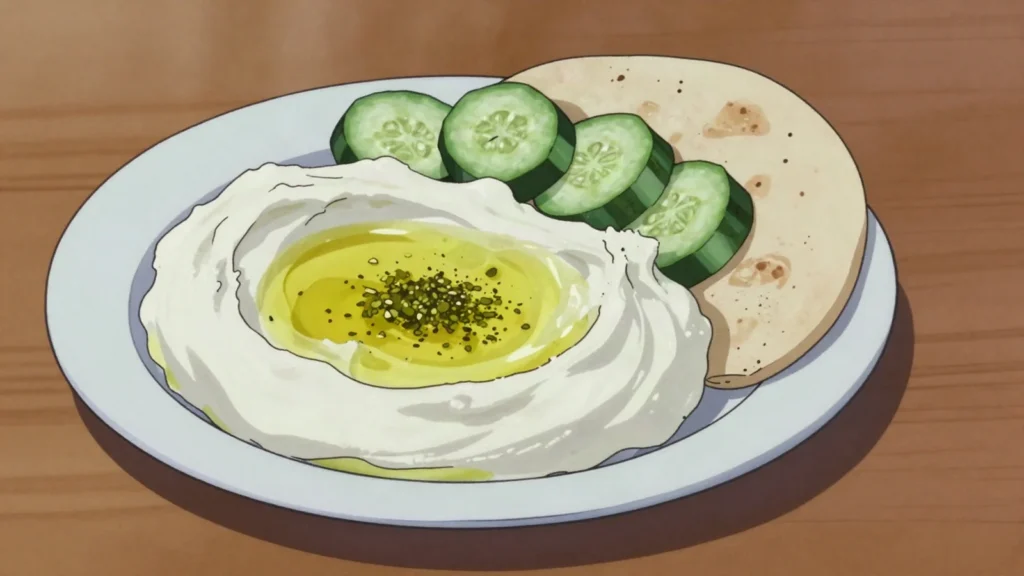
- olive oil, za’atar
- cucumber, tomato and olives
- warm flatbread
Directions
- Stir the salt through the yoghurt. Salting before draining rather than after pulls water out faster and seasons the curd evenly.
- Line a sieve with a double layer of muslin, tip in the yoghurt, gather the corners and tie them.
- Hang it over a bowl in the fridge. Twelve hours gives a thick spreadable labneh; twenty-four gives one firm enough to roll into balls.
- Never squeeze the cloth. Pressing forces solids through the weave and gives a grainy result instead of a silky one.
- For the spread, turn it into a shallow bowl, make a hollow with the back of a spoon, and flood it with olive oil and za’atar.
- For the keeping version, work in the extra salt and roll the drained curd into walnut-sized balls with wet hands. Lay them on a rack for a few hours until the surfaces are dry to the touch.
- Pack the dried balls into a jar and cover completely with olive oil. Keep refrigerated and fully submerged — the oil excludes air, but it is not a sterilant, and dairy under oil at room temperature is not worth the risk.
- They keep two months in the fridge. Lift them out with a dry spoon and serve with bread and olives.
Technique
- Salt first, never squeeze. Those two rules decide the texture.
- Dry the surface of the balls before they go under oil. Wet curd sealed under oil is where a jar goes wrong.
- Keep the whey — it is excellent in bread dough, in soup, or for cooking grains.
Substitutions
- Greek yoghurt, which is already partly strained and needs less time.
- Goat’s or sheep’s yoghurt, which is what the Levantine original uses and which is tangier.
Variations
- Rolled in za’atar, sumac, chilli or dried mint before going under oil.
- Thinned with cold water and salt into a drink, close to ayran.
History
Made from goat or sheep yoghurt; drying it into oil-covered balls preserved milk long before refrigeration.
Frequently asked questions
What is Labneh?
Labneh is a cheese & dairy from Jordan: strained yoghurt eaten with olive oil, za’atar and cucumber at breakfast. Made from goat or sheep yoghurt; drying it into oil-covered balls preserved milk long before refrigeration.
How long does Labneh take to make?
Labneh takes 10 min plus 24 hours draining of preparation and no cooking at all. The recipe makes makes about 500 g from 1 kg yoghurt. It is rated easy to make.
What can I substitute in Labneh?
Yes, within limits. Greek yoghurt, which is already partly strained and needs less time. Goat’s or sheep’s yoghurt, which is what the Levantine original uses and which is tangier.
What is the most important thing to get right in Labneh?
Stir the salt through the yoghurt. Salting before draining rather than after pulls water out faster and seasons the curd evenly.