A moderately hot, fruity, sun-dried red pepper from the Syrian–Turkish borderlands, coarsely crushed and lightly oiled — the finishing pepper of the Levant, with more flavour than fire.
Where it comes from
The pepper is named for Aleppo, the Syrian city whose souks traded it for centuries, though the peppers themselves were grown across the surrounding plains on both sides of what is now the Turkish border. It is a Capsicum annuum of moderate heat and thick, sweet flesh, allowed to ripen fully, then halved, seeded, sun-dried and crushed. Salt and a little oil are worked in to keep the flakes supple and to stop them fading.
The Syrian war largely ended production around Aleppo itself; most of what is sold under the name today is grown in Turkey, particularly around Gaziantep and Maraş, where the identical pepper has always been called Maraş biber. Urfa biber, from further east, is the same tradition taken darker — the peppers are wrapped at night during drying so that they partly ferment, and the result is near-black, smoky and raisiny.
Varieties
- Aleppo / Halaby — Bright brick-red flakes, fruity and moderately warm, slightly salted and oiled. The classic.
- Maraş biber — The Turkish name for the same pepper from Kahramanmaraş; what most ‘Aleppo pepper’ now is.
- Urfa biber — Dried by day and sweated by night. Dark purple-black, smoky, with a slow gentle heat and a taste of dried fruit and tobacco.
- Pul biber — The general Turkish table flake, often the same peppers crushed a little finer and hotter.
In the kitchen
Use it at the end. Scattered over hummus, labneh, eggs, grilled meat or a lentil soup it brings colour, a mild heat and a fruity, almost tomato-like depth; cooked long it loses most of that and becomes just a mild chilli.
It is generous by nature — a teaspoon over a plate, not a pinch. In a marinade for kebabs it is used by the tablespoon, with olive oil and lemon.
Choosing and keeping
Fresh Aleppo pepper is deep red and slightly moist and clumps a little from its oil; dry, dull or brown flakes are old. Keep it sealed in the fridge if you buy in quantity — the oil that keeps it supple will also go stale.
Genuine Syrian production is now rare, and ‘Aleppo’ on a label almost always means Turkish Maraş pepper. That is the same pepper from the same region and is not a compromise.
Dishes with aleppo pepper
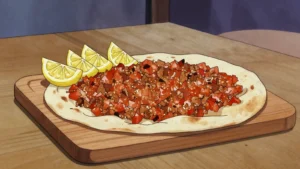 Lahm bi ajinthin Aleppo flatbread baked with minced lamb, pomegranate molasses and pepper
 MuhammaraAleppan dip of red pepper, walnuts and pomegranate molasses
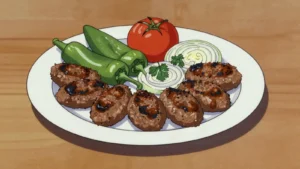 Koftegrilled minced-meat patties with onion and spices; countless regional styles
 Eetchbulgur cooked with tomato and pepper, eaten warm or cold
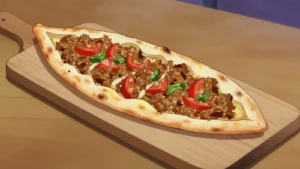 Pideboat-shaped flatbread baked with cheese, minced meat or sucuk
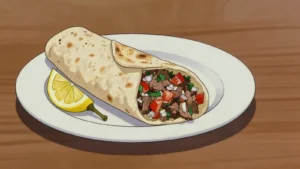 TantuniFinely chopped beef cooked on a hot iron plate, rolled in thin lavash.
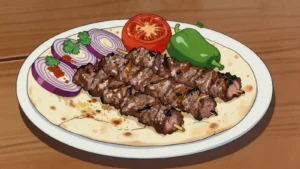 Adana kebabspicy hand-minced lamb skewer grilled over charcoal, served with sumac onions
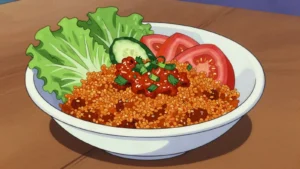 Kisirbulgur salad with pepper paste, pomegranate molasses and herbs
Aleppo pepper is tagged on 18 dishes from 5 countries in the atlas. These notes are written from general knowledge and carry no per-fact citation — see About.