
Ingredients
Fish
- 600 gvery fresh firm white fish fillet (walu, mahi-mahi or snapper), skinned and pin-boned
- 250 mlfresh lime juice, about 10 limes
- 1 tspsalt
Dressing
- 400 mlthick coconut cream, ideally the first pressing from 1 grated mature coconut
- 1red onion, very finely diced
- 2spring onions, thinly sliced
- 1tomato, deseeded and diced
- ½cucumber, deseeded and diced
- 1–2red chillies, finely chopped
- 1small piece ginger, grated (optional)
- juice of 1 more lime
- salt and black pepper
To serve
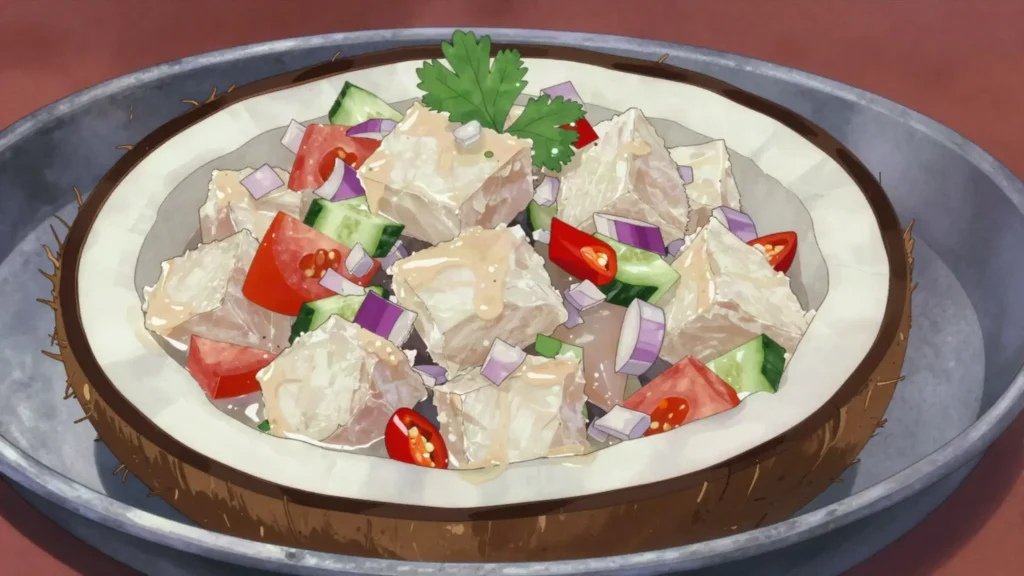
- 4half coconut shells
- coriander leaves
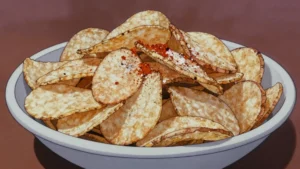
- taro or cassava crisps
Directions
- Buy the fish on the day you make the dish, from someone who can tell you when it landed. Kokoda is cured rather than cooked and there is nowhere for poor fish to hide.
- Cut the fillet into 1.5 cm cubes, trimming out any bloodline or dark flesh, which turns bitter in acid.
- Toss the cubes with the lime juice and salt in a glass or stainless bowl, never aluminium, making sure everything is submerged.
- Cover and refrigerate 1 ½ to 2 hours, stirring once. It is ready when the cubes are opaque white right through, firm to the touch and no longer glassy at the centre.
- Meanwhile make the coconut cream: grate the flesh of a mature coconut, add 100 ml warm water and squeeze it hard through muslin to extract the thick first pressing.
- Drain the fish in a sieve and discard the spent lime juice. Leaving it in makes the finished dish sour and grainy.
- Fold the drained fish together with the coconut cream, onion, spring onion, tomato, cucumber, chilli, ginger and the fresh lime juice. Season and chill 20 minutes.
- Spoon into coconut shells, scatter with coriander and serve cold with taro or cassava crisps.
Technique
- Draining off the curing juice before the coconut goes in is the step that separates kokoda from a curdled mess; acid and coconut cream do not sit together for long.
- First-pressing coconut cream is thicker and sweeter than tinned. If you use tinned, chill the tin and spoon off only the solid cream from the top.
- Kokoda is pronounced ko-kon-da and belongs to the same family as Tahitian poisson cru and Samoan oka.
- Food safety: acid firms the protein but does not kill parasites, so use sashimi-grade fish or freeze it at minus 20°C (-4°F) for 24 hours first.
Substitutions
- Any firm white fish will do; oily fish such as mackerel goes soft and greasy in coconut cream. Prawns can stand in but should be blanched for 30 seconds first.
Variations
- Cooks in the Lau group sometimes add finely grated green mango or a little raw taro for extra sharpness and texture.
- A chilli-heavy version with far more onion is the standard bar snack in Suva.
History
Raw fish marinated in citrus juice, typically lime, then mixed with coconut milk, onion, tomato and chili, closely related to Latin American ceviche in basic technique though developed independently in the Pacific, where marinating fresh reef fish in citrus and coconut has long been practical in a region with abundant fish, citrus and coconut but historically limited refrigeration. Coconut milk is the ingredient that most clearly distinguishes kokoda from Latin American raw-fish preparations, giving it a rounder, creamier flavour than the sharper, purely acid-forward taste of most ceviche. It remains closely associated with Fijian hospitality and celebration, commonly served to guests and at gatherings, often presented in a hollowed coconut shell rather than a conventional bowl.
Frequently asked questions
What is Kokoda?
Kokoda is a main from Fiji: raw fish cured in lime, dressed with coconut milk, chili and onion. Raw fish marinated in citrus juice, typically lime, then mixed with coconut milk, onion, tomato and chili, closely related to Latin American ceviche in basic technique though developed independently in the Pacific, where marinating fresh reef fish in citrus and coconut has long been practical in a region with abundant fish, citrus and coconut but historically limited refrigeration. Coconut milk is the ingredient that most clearly distinguishes kokoda from Latin American raw-fish preparations, giving it a rounder, creamier flavour than the sharper, purely acid-forward taste of most ceviche. It remains closely associated with Fijian hospitality and celebration, commonly served to guests and at gatherings, often presented in a hollowed coconut shell rather than a conventional bowl.
How long does Kokoda take to make?
Kokoda takes 25 min of preparation and 2 hr curing of cooking. The recipe makes 4 servings as a starter. It is rated easy to make.
What can I substitute in Kokoda?
Yes, within limits. Any firm white fish will do; oily fish such as mackerel goes soft and greasy in coconut cream. Prawns can stand in but should be blanched for 30 seconds first.
What is the most important thing to get right in Kokoda?
Buy the fish on the day you make the dish, from someone who can tell you when it landed. Kokoda is cured rather than cooked and there is nowhere for poor fish to hide.