
Ingredients
Cassava
- 1 kgcassava, sweet variety
- cold water, for soaking
- 1 tablespoonsalt
To fry
- oil, for deep frying
To season
- fine salt
- chilli powder, optional
- black pepper, optional
Equipment
- a mandoline or a sharp knife
- a deep pan
- a slotted spoon
- kitchen paper
Directions
- Peel away the whole pink layer under the bark. Never taste the raw root at any point. Cut the root into manageable lengths first. Stand each length up on the board.
- Slice the skin off downwards in strips. A vegetable peeler is not strong enough for it. Take off the whole pink layer beneath the bark. That core is fibrous and never softens.
- Put the slices in a bowl of cold water. Swirl them around with your hand. Pour it off and add fresh cold water. Repeat until the water stays fairly clear. Then leave them to soak for twenty minutes.
- Drain the slices thoroughly in a colander. Spread them out on clean tea towels. Pat them completely dry on both sides. Take your time over this step. Frying them needs the right heat. Pour oil into a deep pan to seven centimetres. Never fill a pan more than halfway with oil.
- Heat the oil to about 175C for frying. A slice should sizzle up immediately. Fry them for about three minutes. That slowing is the sign they are nearly done. Lift them out onto kitchen paper. Judging them takes a proper test.
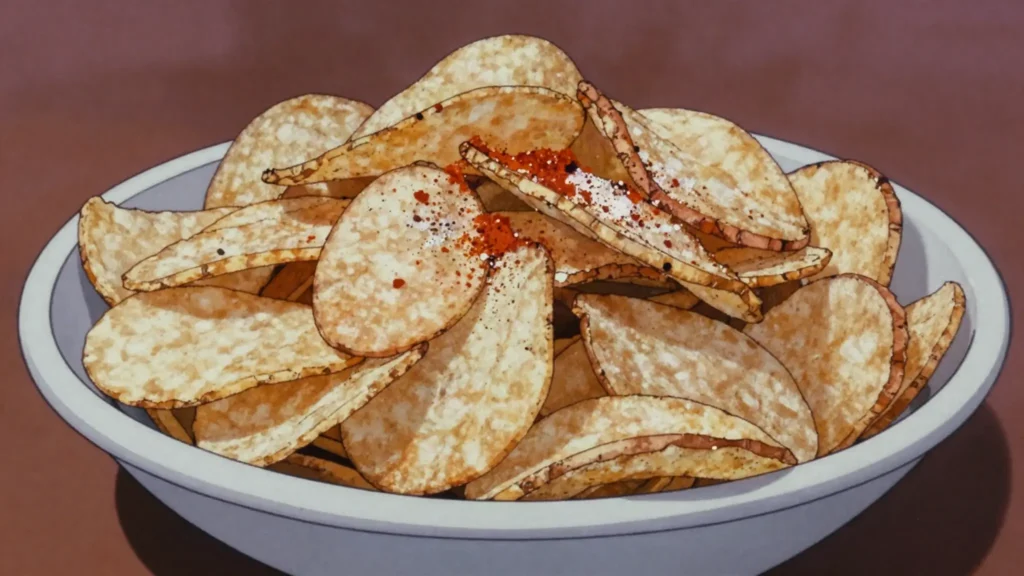
- Let one cool for a minute and then snap it. It should break with a clean crisp snap. Return them to the hot oil if so. Seasoning them is done immediately. Scatter fine salt over them while still hot. The salt clings to hot oily chips.
- Add chilli powder or pepper if you want them. Toss them in the bowl to coat evenly. Let them cool completely before storing. Warm chips in a bag go soft from their own steam. They keep three days in an airtight container.
Technique
- Cassava is the most widely grown root crop in Fiji and grows readily with little care.
- Cassava is starchier than potato, which gives a harder and crunchier chip and means the slices must be cut very thin.
Substitutions
- Taro and breadfruit are both fried into chips the same way in the Pacific.
- Frozen cassava, thawed and dried thoroughly, can be used at a pinch.
Variations
- Some makers season them with chilli powder or with curry powder.
- A thicker cut version is fried as chips rather than crisps.
- Breadfruit chips are sold alongside them at Fijian markets.
History
A cheap local answer to imported potato crisps, made from Fiji’s most widely grown root crop.
Frequently asked questions
What is Cassava Chips?
Cassava Chips is a snack from Fiji: thin cassava slices deep-fried crisp and salted; sold in market bags. A cheap local answer to imported potato crisps, made from Fiji’s most widely grown root crop.
How long does Cassava Chips take to make?
Cassava Chips takes 30 minutes of preparation and 20 minutes of cooking. The recipe makes serves 6. It is rated medium to make.
What can I substitute in Cassava Chips?
Yes, within limits. Taro and breadfruit are both fried into chips the same way in the Pacific. Frozen cassava, thawed and dried thoroughly, can be used at a pinch.
What is the most important thing to get right in Cassava Chips?
Peel away the whole pink layer under the bark. Never taste the raw root at any point. Cut the root into manageable lengths first. Stand each length up on the board.