Ingredients
The cassava version
- 1 kgcassava
- peeled, cored and grated
- 200 gsugar
- 300 mlthick coconut milk
- a pinch of salt
The flour version
- 300 gplain flour
- 150 gsugar
- 120 gbutter, melted
- 2eggs
- 250 mlcoconut milk
- 2 teaspoonsbaking powder
- 1 teaspoonvanilla
- 150 graisins, optional
To steam
- a pudding basin
- or a clean cloth
- string, to tie
- a large pot with a lid
To serve
- thick coconut cream
- poured over
- warm
Directions
- Peel it thoroughly and discard all the peel. Grate it rather than leaving it in pieces. Then steam it thoroughly and for long enough. Check it and top it up regularly. Set a timer to remind yourself. Top the pot up with boiling water. Thick coconut cream is poured over it. Cut the cassava into shorter lengths. Score the skin down each length. Cassava has a thick two-layer peel.
- Pull it right out and discard it. Check every single piece for it. Grate the cassava on the fine side. Grate all of the cassava finely. Fine grating gives a smooth pudding.
- Use the fine side of the grater. Keep it rather than draining it off. Mix the grated cassava with the sugar. Add the coconut milk and the salt. It stops it from tasting flat. Adjust with coconut milk if needed. Beat the butter and sugar together. Add the eggs in one at a time.
- Add the vanilla in along with them. Beat them until pale and light. Sift the flour and baking powder in. Add the coconut milk alternately. Alternate the dry and the liquid. Fold rather than beating it hard. Stop as soon as it comes together. Fold the raisins through at the end.
- Toss them in a little flour first. That stops them sinking to the bottom. Fold them in with a few turns only. Grease the whole basin thoroughly. Butter every part of the inside. Line the base with a disc of paper. Spoon the mixture into the basin. Fill it about three quarters full. Leave real room at the very top.
- Cover it with pleated paper and foil. Fold a pleat across the middle. Tie it firmly round the rim with string. Water must not get into it at all. Tie it tightly all the way round. Tie a string handle across the top. Reaching into a hot pot is dangerous.
- Use tongs rather than your hands. Spread flour thickly over the damp cloth. It also stops it sticking fast. Pile the mixture into the cloth. Tie it firmly with kitchen string. Leave room for the pudding to swell.
- Tie it loosely enough for that. But tightly enough that water stays out. Bring a large pot of water to a boil. It should come halfway up a basin. Check the level before you start. Cooking it takes about two hours. Let it steam for about two hours. A dense pudding needs real time.
- Check the water level every half hour. Two hours of boiling uses a lot of water. Top the pot up with boiling water. Cold water stops the cooking dead. Lift the basin out by its handle. Let the basin stand for ten minutes. That helps it turn out cleanly.
- Use thick dry cloths to hold it. Give it a firm shake if it sticks. Pour thick coconut cream over it. It soaks into the warm pudding. Steam it again briefly to reheat. It goes very firm when fully cold.
Technique
- The cassava version uses raw grated cassava, which contains cyanogenic glycosides: peel it thoroughly and discard the whole two-layer peel, grate it finely, and steam it the full two hours — grating helps the processing considerably and that long steam does the rest. Cassava that tastes bitter should not be used, and it is never eaten raw in any variety.
- Pleat the paper and foil cover across the middle before tying it on: that gives room for the pudding to rise, where a flat cover restricts it entirely. Tie it firmly all round so no water gets in, and tie a string handle across the top — reaching into a pot of boiling water to lift a basin is genuinely dangerous.
- Check the water level every half hour and top it up with boiling rather than cold water, since two hours of steaming uses a great deal and a dry pot ruins the pudding, cracks the basin and can damage the pot.
Substitutions
- The flour version is closer to a British steamed pudding and the cassava one denser and stickier; both are genuinely made.
- The traditional cloth method needs the cloth scalded, wrung out with tongs and floured thickly, which forms a skin that holds the shape; a greased basin is far easier and is the practical route.
Variations
- Fill the basin only about three quarters full, since the pudding rises as it steams and a full basin overflows.
- Keep the liquid released by the grated cassava rather than draining it off, since it holds starch and flavour.
- British steamed puddings came with colonial rule and Fiji adapted the form to local staples, cassava for flour and coconut cream for custard — the result is genuinely Fijian, and purini records the borrowed name directly.
History
A Fijian adaptation of British steamed pudding, cooked in a cloth or tin over a fire.
Frequently asked questions
What is Purini?
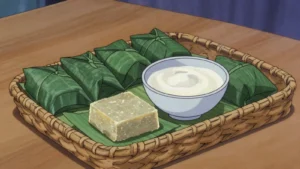
Purini is a dessert from Fiji: dense steamed pudding of cassava or flour, served with coconut cream. A Fijian adaptation of British steamed pudding, cooked in a cloth or tin over a fire.
How long does Purini take to make?
Purini takes 30 minutes of preparation and 2 hours of cooking. The recipe makes serves 8. It is rated medium to make.
What can I substitute in Purini?
Yes, within limits. The flour version is closer to a British steamed pudding and the cassava one denser and stickier; both are genuinely made. The traditional cloth method needs the cloth scalded, wrung out with tongs and floured thickly, which forms a skin that holds the shape; a greased basin is far easier and is the practical route.
What is the most important thing to get right in Purini?
Peel it thoroughly and discard all the peel. Grate it rather than leaving it in pieces. Then steam it thoroughly and for long enough. Check it and top it up regularly. Set a timer to remind yourself. Top the pot up with boiling water. Thick coconut cream is poured over it. Cut the cassava into shorter lengths. Score the skin down each length. Cassava has a thick two-layer peel.