
Ingredients
Kanda balls
- 250 gshelled squash or pumpkin seeds (ngoy), toasted and finely ground
- 300 gminced beef, or hand-chopped beef shoulder
- 1onion, grated
- 3garlic cloves, crushed
- 1 tspsalt
- ½ tspground black pepper
- 1egg, optional, to bind
- Banana or gnetum (koko) leaves, softened over a flame, for wrapping
Sauce
- 4 tbspred palm oil
- 2onions, sliced
- 4tomatoes, grated, or 400 g tinned chopped tomatoes
- 2 tbsptomato paste
- 1hot chilli, whole
- 1thumb ginger, grated
- 500 mlwater or light stock
- Salt
To serve
- Gozo or plain rice
Directions
- Toast the squash seeds in a dry pan over medium heat for 4–5 minutes until they smell nutty and start to pop, then grind them to a coarse, slightly oily meal in a mortar or spice grinder.
- Mix the ground seeds with the beef, grated onion, garlic, salt, pepper and egg; the paste should hold together when squeezed, like a firm stuffing.
- Roll into 12 walnut-sized balls, then wrap each in a softened leaf, or set them straight into a steamer basket lined with leaves.
- Steam over boiling water for 30–35 minutes until firm to the touch and cooked through; the seed paste sets and stops crumbling only once steamed.
- While they steam, heat the palm oil in a wide pot over medium heat until it thins and turns bright orange, about 2 minutes; do not let it smoke.
- Fry the onions for 6–8 minutes until soft, then add the ginger and tomato paste and cook 2 minutes.
- Add the grated tomato, the whole chilli and the water, season, and simmer uncovered for 25–30 minutes until the sauce darkens, thickens and the palm oil floats in a red slick on top.
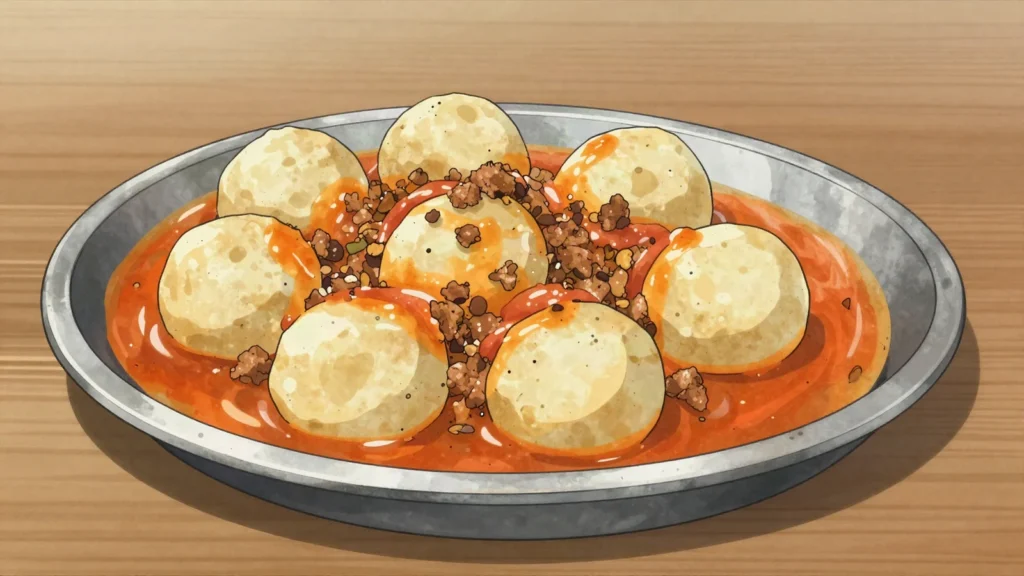
- Unwrap the balls, slide them into the sauce and simmer gently for 10 minutes so they drink up the sauce without breaking. Serve with gozo.
Technique
- Squash seed (called ngoy locally, and close to West African egusi) is the backbone of the dish. Grinding it while warm from the pan releases the oil and binds the balls.
- Steaming in leaves, rather than poaching, keeps the balls intact and gives the faint green tea-like perfume that identifies real kanda.
- Leave the chilli whole and lift it out when the heat is right; Central African sauces are warm rather than fiery, with pepper offered separately.
Substitutions
- Egusi (melon seed) flour substitutes directly for squash seed and is easier to find in African groceries.
- No leaves? Wrap in squares of baking parchment, or roll tightly in cling film rated for steaming and unwrap before saucing.
Variations
- Kanda ti nyma uses smoked game or beef; a coastal version replaces the meat entirely with smoked catfish.
- Some cooks skip the wrapping and drop the balls straight into the simmering sauce, accepting that some will dissolve and thicken it.
History
Grilled or roasted meat, most often goat, beef or chicken, seasoned simply and cooked over an open charcoal fire, developed in Central African Republic home and street cooking as a straightforward preparation that lets the quality of the meat itself remain the clear focus rather than being disguised by elaborate marinades or sauces. Its preparation reflects a broader Central African tradition of grilling meat over open flame for both everyday meals and social occasions, and kanda is commonly sold from street vendors and small roadside grills across the country’s towns and cities, functioning as both a casual snack and a more substantial meal depending on the portion. It remains a popular and widely available dish across the Central African Republic.
Frequently asked questions
What is Kanda?
Kanda is a main from Central African Republic: steamed squash-seed and minced-meat balls in tomato-palm sauce. Grilled or roasted meat, most often goat, beef or chicken, seasoned simply and cooked over an open charcoal fire, developed in Central African Republic home and street cooking as a straightforward preparation that lets the quality of the meat itself remain the clear focus rather than being disguised by elaborate marinades or sauces. Its preparation reflects a broader Central African tradition of grilling meat over open flame for both everyday meals and social occasions, and kanda is commonly sold from street vendors and small roadside grills across the country’s towns and cities, functioning as both a casual snack and a more substantial meal depending on the portion. It remains a popular and widely available dish across the Central African Republic.
How long does Kanda take to make?
Kanda takes 40 min of preparation and 1 hr 15 min of cooking. The recipe makes 4 servings. It is rated medium to make.
What can I substitute in Kanda?
Yes, within limits. Egusi (melon seed) flour substitutes directly for squash seed and is easier to find in African groceries. No leaves? Wrap in squares of baking parchment, or roll tightly in cling film rated for steaming and unwrap before saucing.
What is the most important thing to get right in Kanda?
While they steam, heat the palm oil in a wide pot over medium heat until it thins and turns bright orange, about 2 minutes; do not let it smoke.