
Ingredients
Fish
- 4whole river fish, about 400 g each, cleaned
- or 1 kg firm fish fillets
Seasoning
- 2onions, sliced
- 4tomatoes, chopped
- 6garlic cloves, crushed
- 3cm ginger, grated
- 2hot chillies, chopped
- 3 tablespoonsred palm oil
- juice of 2 lemons
- 2 teaspoonssalt
- black pepper
- a handful of parsley or basil
To wrap
- large banana or marantaceae leaves
- string or strips of leaf
- or foil, as a substitute
To serve
- cassava, boiled or as fufu
- rice
- plantain
Directions
- Scale and gut the fish if it has not been done. Rinse the cavity thoroughly under cold water. Score the flesh diagonally on both sides. Cut down to the bone but not through it. Rub the fish with lemon juice and salt. Let it stand for fifteen minutes. Rinse it well and then pat it dry. Put the onion, tomato, garlic and ginger in a bowl.
- Add the chopped chillies as well. Add the palm oil and the remaining lemon juice. Season it well with salt and pepper. Add all of the chopped fresh herbs. Mix everything together with your hands. Taste it and make it strongly seasoned.
- Trim out the thick central rib if needed. Wrapping them takes some care. Lay two leaves crosswise on the board. Spoon a layer of seasoning into the middle.
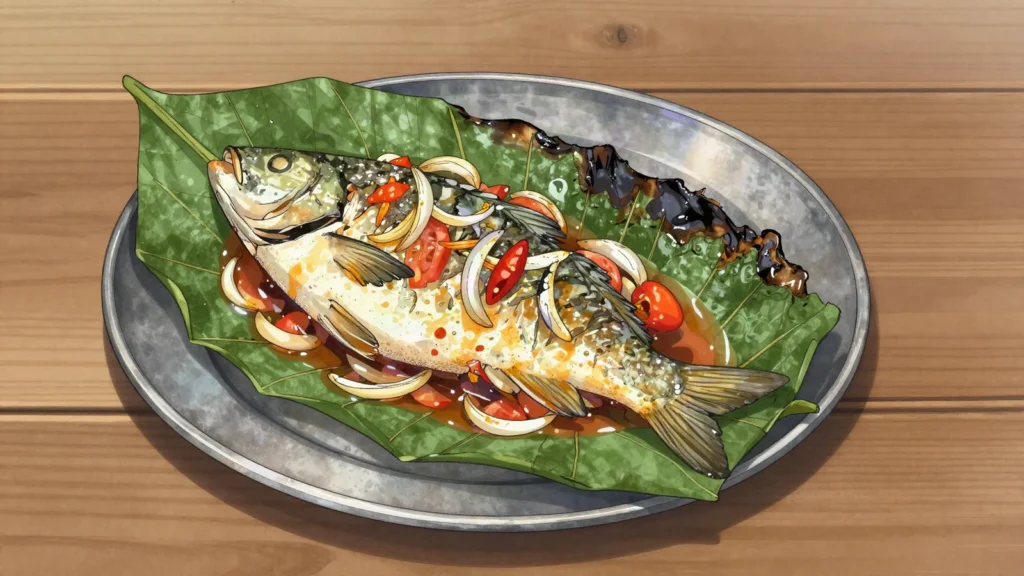
- Lay one whole fish on top of it. Spoon the rest over the top of the fish. Fold the leaves up over the fish. Fold both of the ends underneath it. Tie the parcel closed with string. The seal must be entirely complete. Steam escaping means dry fish.
- Let a wood or charcoal fire burn down to embers. There should be no flames left. Lay the parcels directly on the embers. Cover them with more embers if you like.
- Turn them over every ten minutes. They need about thirty to forty minutes. Set the parcels in a steamer over boiling water. Steam them for about forty minutes. Alternatively bake them at 200C for forty minutes.
- Stand back from the escaping steam. The flesh should flake away from the bone. Cut the string and fold the leaves back. Serve boiled cassava or fufu alongside. It does not keep well and is eaten fresh.
Technique
- Marantaceae leaves, sometimes called maranta or ngongo leaves, are the traditional wrapper across the Congo basin.
- They give an aroma that banana leaf does not quite match, though banana leaf is the usual substitute.
Substitutions
- Foil can be used where no leaves are available, though the leaf flavour is lost entirely.
- Chicken or meat can be cooked the same way in leaf parcels.
Variations
- Some cooks add ground melon seed or groundnut paste to the parcel.
- A version with more palm oil is richer and darker.
- Liboke is the Congolese name for essentially the same dish.
History
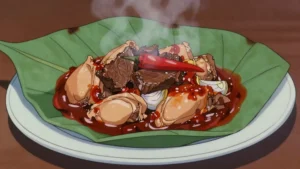
Fish or meat, seasoned and wrapped tightly in marantaceae leaves before being steamed or grilled, developed in Congolese cooking as a technique that both cooks and infuses the food with the leaf’s subtle aroma while keeping it moist throughout cooking, similar in underlying principle to other leaf-wrapped cooking techniques found across the wider Central African region. The specific leaves used for maboké are valued not only for their aroma but for their ability to hold up to heat without breaking down, making them a practical, natural cooking vessel well suited to outdoor or fire-based cooking without specialized equipment. Maboké remains a popular traditional cooking method across the Republic of the Congo, commonly used for fish given the country’s access to the Congo River and Atlantic coastline.
Frequently asked questions
What is Maboké?
Maboké is a main from Central African Republic: river fish seasoned and steamed in folded leaf parcels over embers. Fish or meat, seasoned and wrapped tightly in marantaceae leaves before being steamed or grilled, developed in Congolese cooking as a technique that both cooks and infuses the food with the leaf’s subtle aroma while keeping it moist throughout cooking, similar in underlying principle to other leaf-wrapped cooking techniques found across the wider Central African region. The specific leaves used for maboké are valued not only for their aroma but for their ability to hold up to heat without breaking down, making them a practical, natural cooking vessel well suited to outdoor or fire-based cooking without specialized equipment. Maboké remains a popular traditional cooking method across the Republic of the Congo, commonly used for fish given the country’s access to the Congo River and Atlantic coastline.
How long does Maboké take to make?
Maboké takes 30 minutes of preparation and 45 minutes of cooking. The recipe makes serves 4. It is rated medium to make.
What can I substitute in Maboké?
Yes, within limits. Foil can be used where no leaves are available, though the leaf flavour is lost entirely. Chicken or meat can be cooked the same way in leaf parcels.
What is the most important thing to get right in Maboké?
Lay one whole fish on top of it. Spoon the rest over the top of the fish. Fold the leaves up over the fish. Fold both of the ends underneath it. Tie the parcel closed with string. The seal must be entirely complete. Steam escaping means dry fish.