
Ingredients
Meat
- 500 gpork shoulder, cubed
Vegetables
- 2onions
- 2sweet peppers
- 2tomatoes
- 1aubergine
- 2courgettes
- 3potatoes
- 200 ggreen beans
- 200 gmushrooms
- 4 clovesgarlic
Seasoning
- 100 mloil
- 1 tbsppaprika
- 1 tspdried savoury
- 1bay leaf
- salt
- black pepper
- 200 mlwater or stock
Optional topping
- 2eggs
- 100 mlyoghurt
Directions
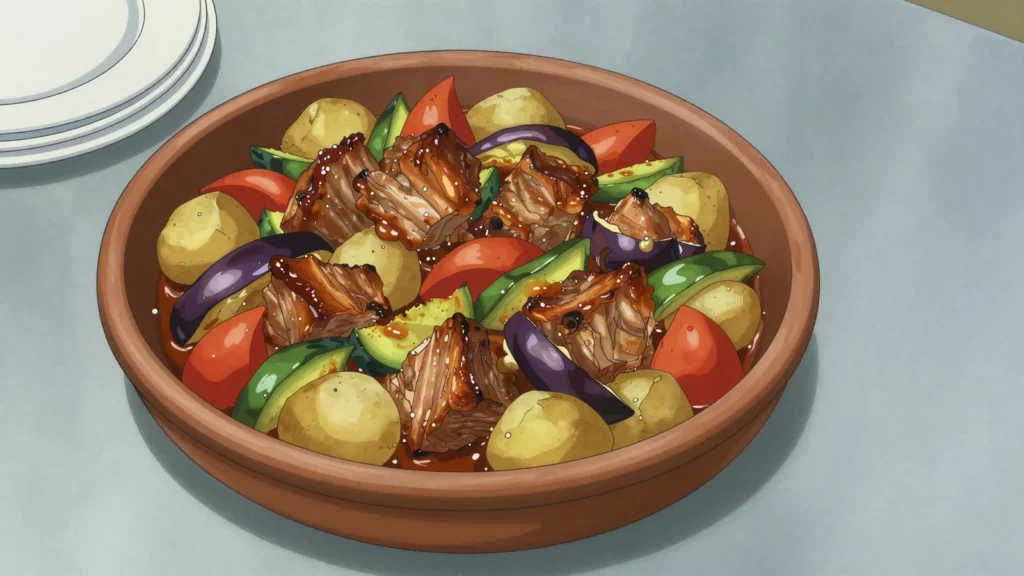
- The pot gives the dish its name. A gyuvech is a wide shallow unglazed earthenware vessel, and cooking in one is the whole method.
- If the clay pot is new, soak it in cold water for an hour before its first use, and never put a wet clay pot into a hot oven or a dry one over a flame.
- Brown the meat in a little of the oil and set it aside.
- Cut every vegetable into large chunks rather than dice.
- Cut them big. Everything cooks for well over an hour, and small pieces disintegrate into a purée when the dish should have distinct pieces you can still identify.
- Layer the vegetables and meat into the pot with the garlic, paprika, savoury and bay, seasoning as you go, and pour the rest of the oil over.
- Add only the 200 ml of liquid, which will look like far too little.
- Resist adding more water. The vegetables give up a great deal of their own, and a gyuvech is meant to bake almost dry so that the flavours concentrate rather than boil away.
- Cover with the lid, or seal the top tightly with foil.
- Bake at 160°C (320°F) for 2 hours.
- Long, low and sealed for most of it. That slow covered cooking is why the dish exists at all and why it tastes unlike the same ingredients in a saucepan.
- Take the lid off for the last 20 minutes to let the top colour.
- For the topping, beat the eggs into the yoghurt, pour it over at that point, and return it uncovered until set and golden.
- Let it stand 10 minutes and bring the pot to the table to serve from.
- Savoury, chubritsa, is the Bulgarian herb for this and belongs in it more than any other.
Technique
- The vegetables are seasonal and the list above is a suggestion rather than a rule.
- A meatless gyuvech is every bit as traditional as the pork one, and common through Lent.
- Unglazed clay breathes, which is what lets the dish cook nearly dry without catching.
Substitutions
- A heavy casserole with a tight-fitting lid.
- Dried summer savoury or thyme if you cannot find chubritsa.
Variations
- Kavarma, made in small individual clay pots.
- With rice added to the pot partway through.
- Monastery gyuvech, meatless and made with beans.
History
Named for the earthenware pot it bakes in, in which vegetables and meat cook slowly under a sealed lid.
Frequently asked questions
What is Gyuvech?
Gyuvech is a main from Bulgaria: slow oven stew named after its earthenware dish. Named for the earthenware pot it bakes in, in which vegetables and meat cook slowly under a sealed lid.
How long does Gyuvech take to make?
Gyuvech takes 30 min of preparation and 2 hr 20 min of cooking. The recipe makes 6 servings. It is rated easy to make.
What can I substitute in Gyuvech?
Yes, within limits. A heavy casserole with a tight-fitting lid. Dried summer savoury or thyme if you cannot find chubritsa.
What is the most important thing to get right in Gyuvech?
The pot gives the dish its name. A gyuvech is a wide shallow unglazed earthenware vessel, and cooking in one is the whole method.