
Ingredients
Traditional method
- 3 kgbitter cassava, peeled
- water, for grating
Spices
- 2cinnamon sticks
- 6whole cloves
- 1 teaspoonblack peppercorns
- 150 gbrown sugar
- 1 teaspoonsalt
Practical method
- 1 bottlecommercial casareep
- to be used as bought
Equipment
- a grater or a matapee press
- a heavy pan
- sterilised bottles
Directions
- Peel the bitter cassava thickly with a knife. Remove the whole pink layer under the bark. Grate the flesh to a fine wet pulp.
- Work outdoors or in a very well ventilated space. Never taste the pulp or the juice at any stage. Squeeze out as much liquid as you possibly can. The dry pulp left behind becomes cassava bread.
- Pour the pressed juice into a heavy pan. Set it over a high heat outdoors if you can. Bring it to a full rolling boil uncovered. Never put a lid on the pan at any point.
- Keep the area well ventilated throughout. Keep children and animals well away from it. Reducing it takes several hours.
- Let it boil hard and steadily. The liquid reduces slowly over hours. Skim off any foam that rises to the surface. Stir it occasionally as it thickens. It takes about three hours to reduce properly.
- Add the cinnamon, cloves and peppercorns. Add the brown sugar and the salt. Let it boil for another twenty minutes. Judging when it is done takes a look.
- Strain out all of the whole spices. Pour it into sterilised bottles while hot. Seal them and let them cool fully. Properly made casareep keeps for years.
Technique
- Bitter cassava juice contains cyanogenic glycosides that release hydrogen cyanide, and the raw juice is genuinely poisonous to drink.
- Hydrogen cyanide boils at about twenty-six degrees, well below water, so long hard uncovered boiling drives it off entirely.
- Commercial bottled casareep is what nearly all Guyanese households now buy, and making it from raw bitter cassava is not a common home practice.
Substitutions
- Commercial bottled casareep is the only sensible option for home cooks and is sold in Caribbean shops.
- There is no true substitute, though molasses with browning gives a superficially similar colour and nothing else.
Variations
- Different households season their casareep with different spice mixes.
- Some versions are sweeter and some are left almost unsweetened.
- The pressed cassava pulp left behind is baked into cassava bread.
History
An Amerindian technique: the poisonous juice of bitter cassava is boiled down until the cyanogens break off, leaving a preserving syrup.
Frequently asked questions
What is Casareep?
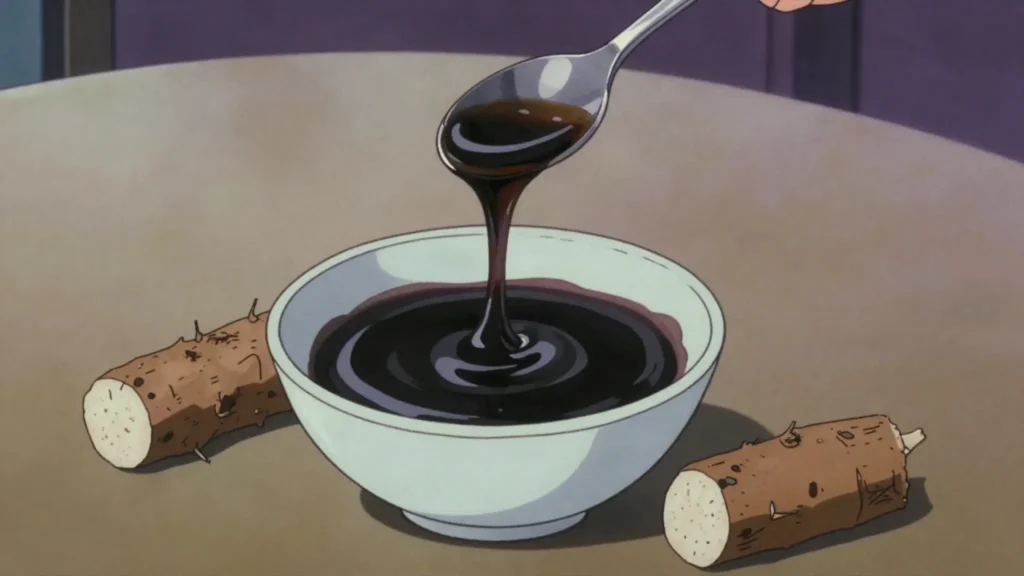
Casareep is a sauce & condiment from Guyana: black bitter-cassava syrup that flavours and preserves pepperpot. An Amerindian technique: the poisonous juice of bitter cassava is boiled down until the cyanogens break off, leaving a preserving syrup.
How long does Casareep take to make?
Casareep takes 1 hour of preparation and 3 hours of cooking. The recipe makes about 500 ml. It is rated hard to make.
What can I substitute in Casareep?
Yes, within limits. Commercial bottled casareep is the only sensible option for home cooks and is sold in Caribbean shops. There is no true substitute, though molasses with browning gives a superficially similar colour and nothing else.
What is the most important thing to get right in Casareep?
Peel the bitter cassava thickly with a knife. Remove the whole pink layer under the bark. Grate the flesh to a fine wet pulp.