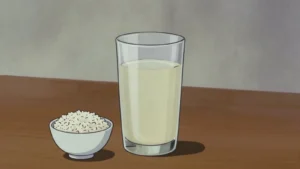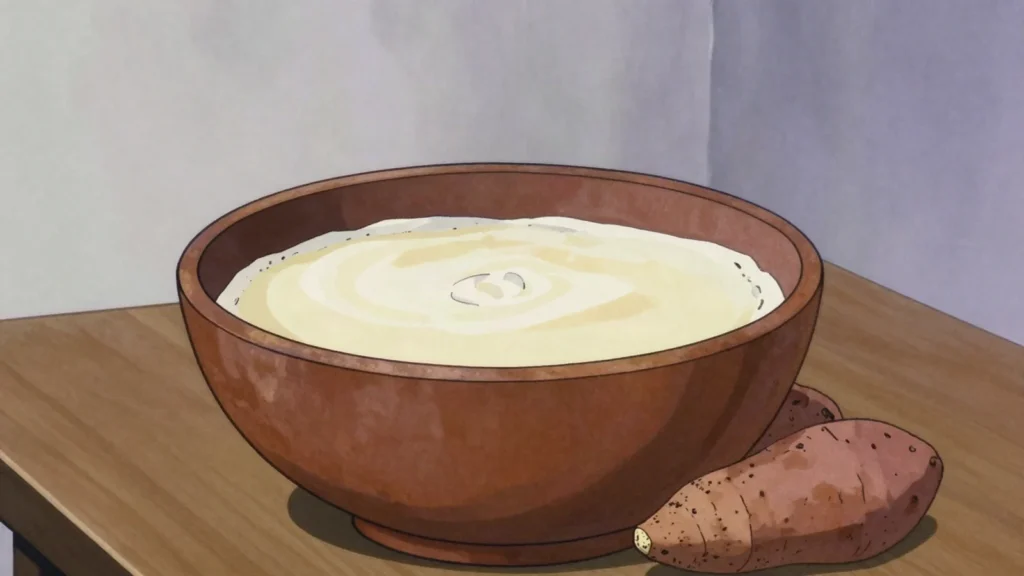

Amerindian cassava beer from the Guyanese interior — cloudy, sour and served from calabashes at village work parties and festivals. In the oldest practice the fermentation is started by chewing the cassava bread.
It is a community drink with a preparation specific to particular Indigenous groups, it produces alcohol, and cassava must be detoxified before any of it begins.
What goes into it
- cassava, made into bread
- water
- sometimes sweet potato
How it is made
Cassava bread is roasted, broken up and moistened, and a portion is chewed and returned to the mash so saliva supplies the enzyme that converts starch to sugar. The mash sits in a covered trough for several days while wild yeasts ferment it, and it is strained and drunk cloudy.
How long it takes: two to five days
How it is eaten
From a calabash at work parties, festivals and gatherings.
History
Brewed by Indigenous communities of the interior from roasted cassava bread and served at village work parties and festivals.
Frequently asked questions
What is Piwari?
Piwari is a wine & spirit from Guyana: amerindian cassava beer, cloudy and sour, drunk from calabashes. Brewed by Indigenous communities of the interior from roasted cassava bread and served at village work parties and festivals.
How is Piwari made?
Cassava bread is roasted, broken up and moistened, and a portion is chewed and returned to the mash so saliva supplies the enzyme that converts starch to sugar. The mash sits in a covered trough for several days while wild yeasts ferment it, and it is strained and drunk cloudy. It takes two to five days.
Can I make Piwari at home?
No, and the atlas gives no method for it. It is a community drink with a preparation specific to particular Indigenous groups, it produces alcohol, and cassava must be detoxified before any of it begins.
What goes into Piwari?
Cassava, made into bread, water, sometimes sweet potato.
How is Piwari eaten?
From a calabash at work parties, festivals and gatherings.