
Ingredients
Seafood
- 400 gprawns, shells kept
- 400 gwhite fish, in chunks
- 300 gsquid, in rings
- 300 gmussels or clams
- 200 gcrab meat, optional
Stock
- the prawn shells
- 1onion
- 1bay leaf
- 1 litrewater
Sofrito
- 2onions, chopped
- 1red pepper
- 1green pepper
- 6 clovesgarlic
- 4tomatoes
- 3 tbsptomato paste
- 4 tbspoil
Also
- 600 mlcoconut milk
- 200 mldouble cream
- 1 tspachiote
- 1 tspground cumin
- 2 tbspchopped coriander
- salt and pepper
To serve
- white rice
- patacones
- lime wedges
- hot sauce
Directions
- Peel the prawns and keep every shell and head. Fry the shells hard in a little oil until they turn deep pink and smell strongly, crushing them as they cook.
- Cover them with water, add the onion and bay, and simmer for fifteen minutes, then strain and press the solids. Do not simmer shellfish stock much longer than fifteen minutes, since it turns bitter beyond that point.
- Fry the onions and peppers in oil over a medium heat for ten minutes until soft. Add the garlic, then the tomato paste, and fry the paste for three or four minutes until it darkens. Frying the paste properly takes the raw metallic edge off it and deepens the colour of the whole dish.
- Add the chopped tomatoes and cook them down to a thick base. Achiote gives the warm orange colour that a cazuela should have, and it is used across the Colombian coast for exactly that. Let it reduce for ten minutes to concentrate the flavour before any dairy goes in.
- Add the coconut milk and cream and bring it back to a gentle simmer. Never let it boil hard once the coconut milk is in, since it splits into oil and curds and the sauce cannot be brought back.
- Keep it at the barest simmer from this point onward. Let it thicken gently for ten minutes, stirring occasionally. Add the fish and squid first and cook them for three minutes. Then the mussels or clams, covered, until they open.
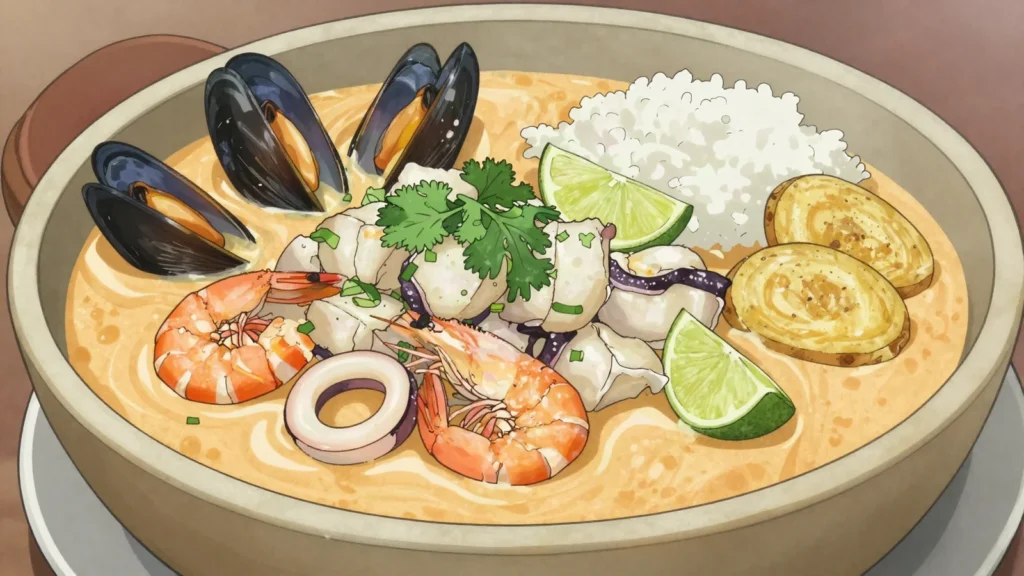
- Discard any mussels or clams that have not opened. A rich coconut and cream sauce needs acid to stop it tasting heavy and flat, and the lime is not optional. Stir in the chopped coriander off the heat. Serve it in the pot or in deep bowls, with white rice and patacones alongside. Serve lime wedges and hot sauce at the table.
Technique
- The name refers to the earthenware pot it is cooked in.
- The prawn shell stock is what gives it depth.
- It does not reheat well, since the seafood overcooks.
Substitutions
- Any mix of firm white fish and shellfish.
- Tinned coconut milk, using the thick part.
Variations
- Made with lobster, as a luxury version.
- Made without cream, which is lighter.
- With more tomato and less coconut, as in some inland versions.
History
A rich seafood stew, combining shrimp, fish, mussel and other shellfish in a creamy broth built from coconut milk or cream, tomato and coriander, documented across Colombia’s Caribbean and Pacific coastal regions as a significant traditional dish reflecting the country’s substantial coastal geography and its correspondingly strong seafood culinary tradition. Its rich, creamy broth, often thickened with coconut milk along Colombia’s Caribbean coast, reflects the strong African and Caribbean culinary influence found across that specific coastal region, brought through the significant African diaspora communities that settled there historically. Cazuela de mariscos remains a beloved dish across Colombia’s coastal regions, commonly served at seaside restaurants and family celebrations.
Frequently asked questions
What is Cazuela de mariscos?
Cazuela de mariscos is a soup & stew from Colombia: creamy coconut-milk seafood casserole from the Caribbean coast. A rich seafood stew, combining shrimp, fish, mussel and other shellfish in a creamy broth built from coconut milk or cream, tomato and coriander, documented across Colombia’s Caribbean and Pacific coastal regions as a significant traditional dish reflecting the country’s substantial coastal geography and its correspondingly strong seafood culinary tradition. Its rich, creamy broth, often thickened with coconut milk along Colombia’s Caribbean coast, reflects the strong African and Caribbean culinary influence found across that specific coastal region, brought through the significant African diaspora communities that settled there historically. Cazuela de mariscos remains a beloved dish across Colombia’s coastal regions, commonly served at seaside restaurants and family celebrations.
How long does Cazuela de mariscos take to make?
Cazuela de mariscos takes 40 min of preparation and 45 min of cooking. The recipe makes 6 servings. It is rated medium to make.
What can I substitute in Cazuela de mariscos?
Yes, within limits. Any mix of firm white fish and shellfish. Tinned coconut milk, using the thick part.
What is the most important thing to get right in Cazuela de mariscos?
Cover them with water, add the onion and bay, and simmer for fifteen minutes, then strain and press the solids. Do not simmer shellfish stock much longer than fifteen minutes, since it turns bitter beyond that point.