
Ingredients
Greens
- 800 gfrozen pounded cassava leaves (feuilles de manioc pilées), or 1 kg fresh cassava leaves, stripped and pounded to a paste
- 2 litreswater
- 1 tspsalt
Stew
- 150 mlred palm oil
- 2onions, chopped
- 4garlic cloves, crushed
- 3leeks, sliced
- 150 gsmoked fish (makayabu or smoked mackerel), soaked, boned and flaked
- 100 gdried ground prawns or crayfish (optional)
- 100 gsmooth peanut butter
- 2pili-pili chillies
- 1stock cube
- 1aubergine, diced (optional)
To serve
- steamed rice, chikwangue or fufu
- extra palm oil, to pour over
Directions
- If using fresh leaves, strip them from the stalks and pound them in a large mortar until they are a fine, uniform green paste. Frozen pre-pounded leaves from an African grocer are what nearly everyone uses and are entirely correct.
- Boil the leaves in the salted water, uncovered, for 45–60 minutes. This long boil is not optional: raw cassava leaves contain cyanogenic compounds, and thorough pounding and prolonged boiling are what make them safe.
- Meanwhile soak the smoked fish in warm water for 10 minutes, then pick out every bone and flake the flesh into large pieces.
- Add the palm oil, onion, garlic, leek and whole chillies to the pot of leaves and simmer another 30 minutes, stirring often.
- Loosen the peanut butter with a ladle of the cooking liquid until smooth, stir it in with the ground dried prawns, the crumbled stock cube and the aubergine if using.
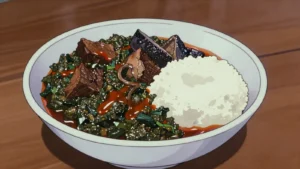
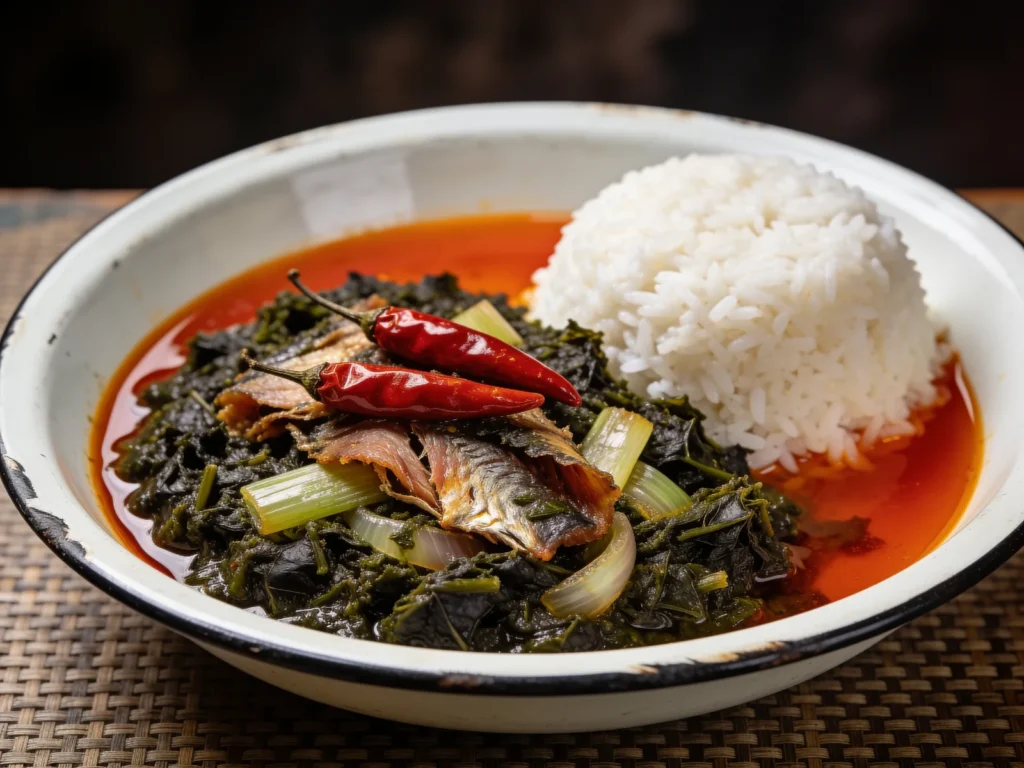
- Cook uncovered another 20–30 minutes, until the mixture is very thick and dark green-black and the palm oil floats clear on the surface.
- Fold the flaked fish in for the last 10 minutes only, so it stays in pieces rather than dissolving into the greens.
- Rest 10 minutes off the heat, taste for salt and heat, and serve mounded beside rice, chikwangue or fufu. Like all Congolese greens it is better the next day.
Technique
- Cassava leaves must be pounded and thoroughly boiled. Never eat them raw or briefly cooked; the long cook is a food-safety step and not just a matter of texture.
- Saka saka in Lingala and pondu in Kikongo are the same dish. It is eaten daily on both sides of the river and is as close to a national vegetable as Congo has.
- It should finish almost dry, bound by oil and peanut rather than swimming. If it is wet, keep cooking it uncovered.
- Smoked fish is added late for the same reason as everywhere else: long cooking turns it to threads and makes the whole pot taste flat.
Substitutions
- No cassava leaves: frozen pounded leaves are widely sold and are the practical answer. At a real push, very finely chopped collard or sweet potato leaves cooked the same way are milder and looser in texture.
- No palm oil: the dish genuinely loses its identity, so use it if you possibly can; groundnut oil plus 1 tsp paprika only mimics the colour.
- No smoked fish: smoked mackerel from a supermarket works well and is what many European kitchens use.
Variations
- Saka saka with more peanut and no fish, thicker and richer.
- A version with salted fish (makayabu) soaked overnight, sharper and saltier.
- Saka saka served with poulet moambé, which is the standard Sunday plate in Brazzaville.
History
Cassava leaves, pounded and cooked with palm oil, often combined with fish or meat, considered one of the Republic of the Congo’s most essential traditional dishes, closely related to similar cassava leaf preparations found across Central Africa under different regional names, including Rwandan isombe and Liberian cassava leaf stew, reflecting a broadly shared regional cooking tradition built around cassava leaf following the crop’s introduction from South America through earlier trade contact. Its preparation, requiring the leaves to be finely pounded before extended cooking, reflects the same labor-intensive traditional technique found across the wider cassava-leaf cooking tradition spanning much of Sub-Saharan Africa. Saka saka remains a staple dish across Congolese households, typically served over rice, cassava or plantain.
Frequently asked questions
What is Saka saka?
Saka saka is a soup & stew from Republic of the Congo: pounded cassava leaves cooked with palm oil, peanut and smoked fish. Cassava leaves, pounded and cooked with palm oil, often combined with fish or meat, considered one of the Republic of the Congo’s most essential traditional dishes, closely related to similar cassava leaf preparations found across Central Africa under different regional names, including Rwandan isombe and Liberian cassava leaf stew, reflecting a broadly shared regional cooking tradition built around cassava leaf following the crop’s introduction from South America through earlier trade contact. Its preparation, requiring the leaves to be finely pounded before extended cooking, reflects the same labor-intensive traditional technique found across the wider cassava-leaf cooking tradition spanning much of Sub-Saharan Africa. Saka saka remains a staple dish across Congolese households, typically served over rice, cassava or plantain.
How long does Saka saka take to make?
Saka saka takes 30 min of preparation and 2 hr of cooking. The recipe makes 6 servings. It is rated medium to make.
What can I substitute in Saka saka?
Yes, within limits. No cassava leaves: frozen pounded leaves are widely sold and are the practical answer. At a real push, very finely chopped collard or sweet potato leaves cooked the same way are milder and looser in texture. No palm oil: the dish genuinely loses its identity, so use it if you possibly can; groundnut oil plus 1 tsp paprika only mimics the colour. No smoked fish: smoked mackerel from a supermarket works well and is what many European kitchens use.
What is the most important thing to get right in Saka saka?
Boil the leaves in the salted water, uncovered, for 45–60 minutes. This long boil is not optional: raw cassava leaves contain cyanogenic compounds, and thorough pounding and prolonged boiling are what make them safe.