
Ingredients
Beef
- 400 gbeef, from a whole piece of lean rump or topside, from a butcher told what it is for
Seasoning
- 2 tbspsoy sauce
- 1 tbspsugar or Korean pear juice
- 1 tbspsesame oil
- 3 clovesgarlic, finely minced
- 1 tbsptoasted sesame seeds, crushed
- 1spring onion, finely chopped
- black pepper
To serve
- 1Korean pear, in fine matchsticks
- 4egg yolks, fresh or pasteurised
- pine nuts
- shredded nori
Equipment
- a very sharp knife
- a clean board
- a chilled bowl
To serve
- immediately, with soju
Directions
- Use a lean cut with a clear grain: rump, topside or eye of round. Trim away all the exterior surfaces, fat and sinew, and use only the interior. Now who should not eat it at all. Use a board and knife that have been washed and dried, and chill the mixing bowl. Work quickly and return the beef to the fridge if you are interrupted. Yukhoe is cut into thin strips rather than diced.
- Cut the trimmed beef into slices, then stack them and cut across into matchsticks about 3 to 5 mm wide. Cut along the grain rather than across it, which is the opposite of usual practice. Freezing the beef for 20 minutes first makes it far easier to cut cleanly.
- Use a genuinely sharp knife, since a dull one smears the meat rather than cutting it. Cut the pear into fine matchsticks and keep them in a little water with lemon so they do not brown.
- Crush the sesame seeds between your fingers or in a mortar as they go in, which releases far more aroma than whole ones. Season it at the very last moment. Salt and soy draw moisture out of raw meat within minutes, so a yukhoe seasoned early goes wet and slack.
- Mix it gently with your fingers or chopsticks rather than working it hard. Taste and adjust, and expect it to be savoury, nutty and faintly sweet.
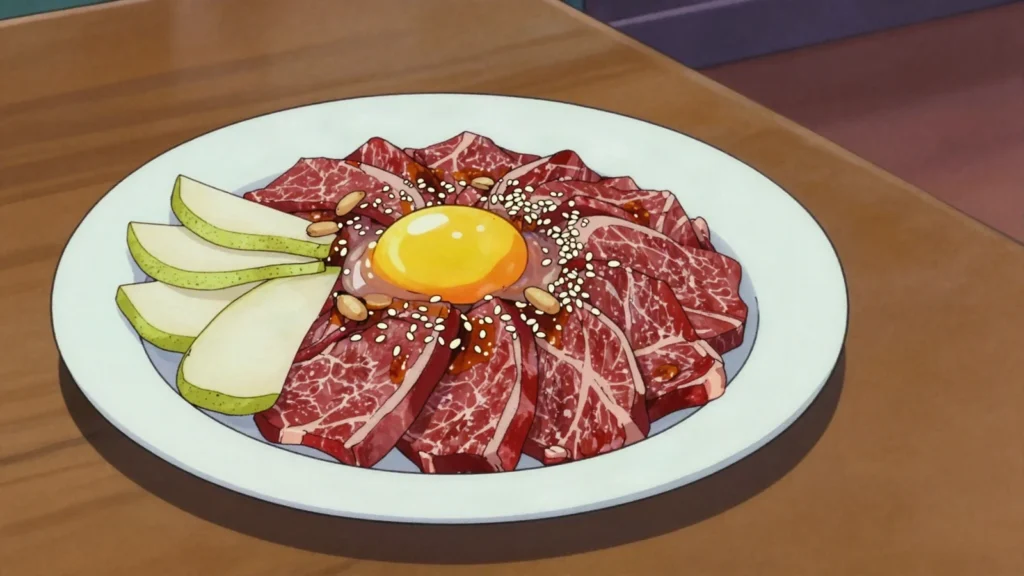
- Pile the pear matchsticks around the edge of a chilled plate and mound the beef in the centre. Make a small hollow in the top of the beef and settle a raw egg yolk into it. Scatter pine nuts and shredded nori over. Serve it immediately and eat it straight away. It deteriorates within minutes and it is both a safety point and a quality one.
- Break the yolk and mix everything together at the table, beef, pear and yolk. The yolk coats the strips and binds the whole thing, and the crisp cold pear against the soft seasoned beef is the contrast the dish is built on.
Technique
- Korean pear contains enzymes that tenderise meat, which is why it appears in bulgogi marinades too.
- It is cut into strips rather than diced, unlike steak tartare.
- Gwangjang Market in Seoul has an alley of yukhoe stalls.
Substitutions
- Any lean whole-muscle cut from a trusted butcher.
- Pasteurised egg yolk in place of fresh.
Variations
- Yukhoe bibimbap, served over rice.
- With a little gochujang for heat.
- Served alongside raw octopus, which some stalls do.
History
Raw beef dishes appear in Joseon-era texts; Seoul’s Gwangjang Market keeps an alley of yukhoe stalls that made it a modern favourite.
Frequently asked questions
What is Yukhoe?
Yukhoe is a main from South Korea: raw seasoned beef strips with pear, pine nuts and a raw egg yolk. Raw beef dishes appear in Joseon-era texts; Seoul’s Gwangjang Market keeps an alley of yukhoe stalls that made it a modern favourite.
How long does Yukhoe take to make?
Yukhoe takes 25 min of preparation and no cooking at all. The recipe makes 4 servings as a starter. It is rated medium to make.
What can I substitute in Yukhoe?
Yes, within limits. Any lean whole-muscle cut from a trusted butcher. Pasteurised egg yolk in place of fresh.
What is the most important thing to get right in Yukhoe?
Use a lean cut with a clear grain: rump, topside or eye of round. Trim away all the exterior surfaces, fat and sinew, and use only the interior. Now who should not eat it at all. Use a board and knife that have been washed and dried, and chill the mixing bowl. Work quickly and return the beef to the fridge if you are interrupted. Yukhoe is cut into thin strips rather than diced.