
Ingredients
Noodles
- 500 gfresh banh canh noodles, tapioca or tapioca and rice flour
- or 300 g dried
Broth
- 1 kgpork bones, or 1 whole crab plus pork bones
- 2 litreswater
- 1onion, charred
- 5cm ginger, charred
- 1 tbspsalt
To add
- 300 gpork hock or belly
- 200 gcrab meat, or 300 g prawns
- 150 gcha lua, Vietnamese pork sausage, sliced
- 2quail eggs per bowl, optional
Seasoning
- 2 tbspfish sauce
- 1 tspsugar
- 1 tspwhite pepper
- 2 tbspannatto oil, for colour
To finish
- spring onions
- coriander
- fried shallots
- black pepper
- a wedge of lime
- chilli
To serve
- hot, in deep bowls
Directions
- Add them to the pot with fresh water and simmer gently for two hours. Keep it at a bare simmer with barely a bubble breaking the surface, since a rolling boil emulsifies the fat and clouds everything.
- Skim the surface occasionally as it cooks. For the crab version, simmer a whole crab in the broth for the last thirty minutes and pick the meat out afterwards.
- Cook the noodles in a separate pot of boiling water rather than in the broth. Tapioca noodles release a great deal of starch, and cooking them in the broth turns it thick and cloudy within minutes.
- Season it with fish sauce, sugar and white pepper, tasting as you go. Stir in a spoonful of annatto oil for the orange colour that a banh canh cua should have. Many banh canh broths are lightly thickened with a little tapioca starch slaked in cold water.
- Add it gradually and stop while the broth still moves freely, since an over-thickened broth is gluey.
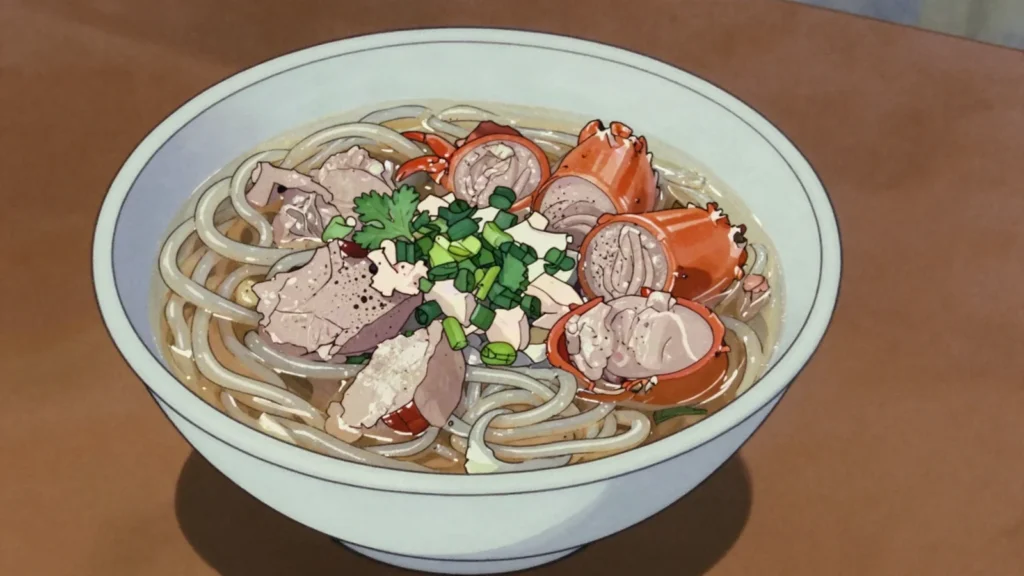
- Put a portion of noodles in each bowl, lay the pork, crab and sausage over, and ladle the hot broth on top. Assembling in the bowl keeps the noodles from sitting in liquid and going soft, and it is how it is served.
- Scatter spring onion, coriander and fried shallots over generously. Grind over plenty of black pepper, which is used more heavily in banh canh than in most Vietnamese soups. Serve lime and fresh chilli at the table for each person to add. Serve it immediately, while the noodles still have their bite.
Technique
- The tapioca noodles are the defining element and are quite unlike pho noodles.
- The broth is often lightly thickened, which pho never is.
- Banh canh cua and banh canh gio heo are the two main versions.
Substitutions
- Udon noodles, which are the nearest widely available substitute in texture.
- Prawns in place of crab, which is cheaper and easier.
Variations
- Banh canh cua, with crab.
- Banh canh gio heo, with pork hock.
- Banh canh ca loc, with snakehead fish, from central Vietnam.
Frequently asked questions
What is Banh Canh?
Banh Canh is a soup & stew from Vietnam: thick chewy tapioca noodles in pork or crab broth, slippery and rich.
How long does Banh Canh take to make?
Banh Canh takes 40 min of preparation and 2 hr of cooking. The recipe makes 4 servings. It is rated medium to make.
What can I substitute in Banh Canh?
Yes, within limits. Udon noodles, which are the nearest widely available substitute in texture. Prawns in place of crab, which is cheaper and easier.
What is the most important thing to get right in Banh Canh?
Cook the noodles in a separate pot of boiling water rather than in the broth. Tapioca noodles release a great deal of starch, and cooking them in the broth turns it thick and cloudy within minutes.