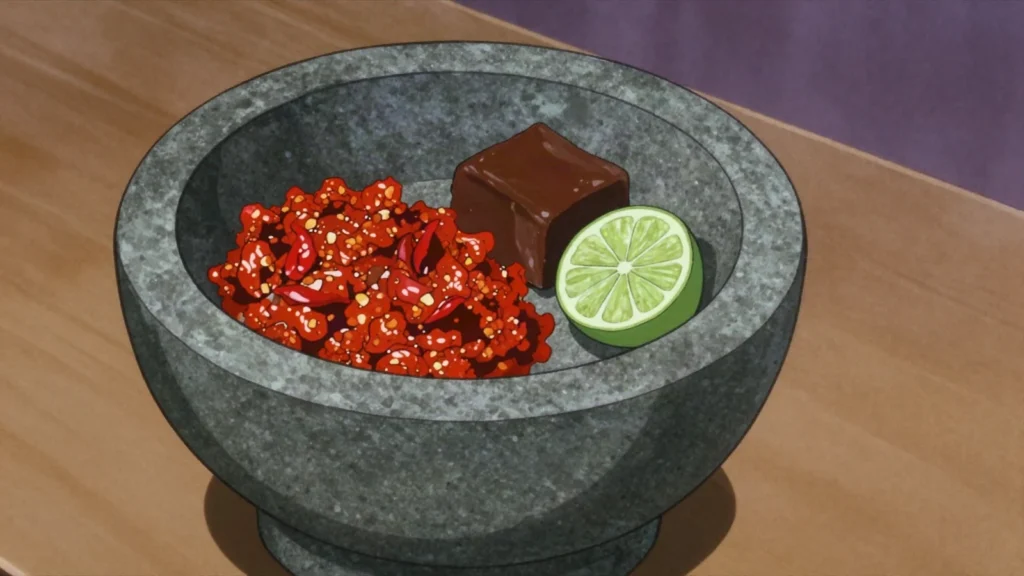

A pungent dark fermented shrimp paste, pounded into sambals and stews. Javanese indentured workers carried it to Suriname, and it remains the backbone of Javanese-Surinamese seasoning.
It is a long low-acid ferment of raw shellfish at ambient temperature, kept safe only by a salt ratio measured against the catch, and shellfish additionally concentrate biotoxins that fermenting does not destroy.
What goes into it
- tiny shrimp
- coarse salt, at a quarter or more of the weight
How it is made
The shrimp are salted heavily, left in the sun for a day or two to begin breaking down, then pounded and packed into vats and left to ferment for weeks to months. The mass is pounded and dried repeatedly until it is a dense dark block, which is cut as needed and toasted before use.
How long it takes: several weeks to months
How it is eaten
Toasted, then pounded into sambal with chilli and lime, or stirred into stews.
History
Carried from Java by indentured workers and still the backbone of Javanese-Surinamese seasoning.
Frequently asked questions
What is Trassi?
Trassi is a fermented & pickled from Suriname: pungent dark fermented shrimp paste, pounded into sambals and stews. Carried from Java by indentured workers and still the backbone of Javanese-Surinamese seasoning.
How is Trassi made?
The shrimp are salted heavily, left in the sun for a day or two to begin breaking down, then pounded and packed into vats and left to ferment for weeks to months. The mass is pounded and dried repeatedly until it is a dense dark block, which is cut as needed and toasted before use. It takes several weeks to months.
Can I make Trassi at home?
No, and the atlas gives no method for it. It is a long low-acid ferment of raw shellfish at ambient temperature, kept safe only by a salt ratio measured against the catch, and shellfish additionally concentrate biotoxins that fermenting does not destroy.
What goes into Trassi?
Tiny shrimp, coarse salt, at a quarter or more of the weight.
How is Trassi eaten?
Toasted, then pounded into sambal with chilli and lime, or stirred into stews.