
Ingredients
Beef
- 1.5 kgbeef round, muchacho redondo, in one piece
- 2 teaspoonssalt
- black pepper
Marinade
- 1 headof garlic, crushed
- 2onions, roughly chopped
- 1red pepper, chopped
- 2 tablespoonsWorcestershire sauce
- 1 teaspoondried oregano
- 3bay leaves
Caramel
- 150 gpapelon or panela, finely grated
- or 150 g dark brown sugar
- 3 tablespoonsoil
To braise
- 300 mlred wine
- 500 mlbeef stock
- 3tomatoes, chopped
- 2carrots, in rounds
- 1 tablespoontomato paste
To serve
- white rice
- fried ripe plantain
- black beans
Directions
- Trim any silverskin from the outside of the joint with a sharp knife. Pierce the meat all over with the point of a knife. Rub the whole joint generously with salt and black pepper. Put it in a deep dish with the onion, pepper and remaining garlic. Add the Worcestershire sauce, the oregano and the bay leaves. Turn the meat until it is coated on every side.
- Cover the dish and refrigerate it overnight. Turn it once during that time if you remember. Take it out an hour before cooking so it loses its chill. This is where most people go wrong and it needs attention. Heat the oil in a heavy casserole over a medium heat. Scatter the grated papelon evenly across the bottom of the pot. Let it melt without stirring it at all.
- Keep watching it as the colour deepens steadily. It must go far past golden and well into dark brown. Lift the joint out of its marinade and pat it dry. Keep every bit of the marinade for the braise. Lower the beef into the hot dark caramel carefully.
- Turn it with tongs so every surface takes on the colour. Give it about eight minutes, turning it steadily. Add the reserved marinade with all its vegetables to the pot. Stir in the tomato paste and cook it for two minutes. Add the chopped tomatoes and the carrot rounds.
- Pour in the red wine and let it bubble hard for three minutes. Add the stock until the liquid comes halfway up the meat. Bring the whole pot to a gentle simmer. Cover the pot with a tight lid and lower the heat right down.
- Let it cook very gently for about two and a half hours. Turn the joint every forty minutes so it colours evenly. Top it up with hot stock if the level drops too far. The meat should end up tender enough to pierce with no resistance.
- Lift the joint out onto a board and cover it loosely. Let it rest for at least twenty minutes before cutting. Slicing it hot squeezes the juices straight out. Blend the sauce smooth with a stick blender in the pot. Return it to the heat and let it reduce until glossy. It should coat the back of a spoon heavily.
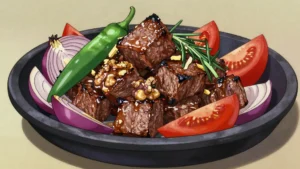
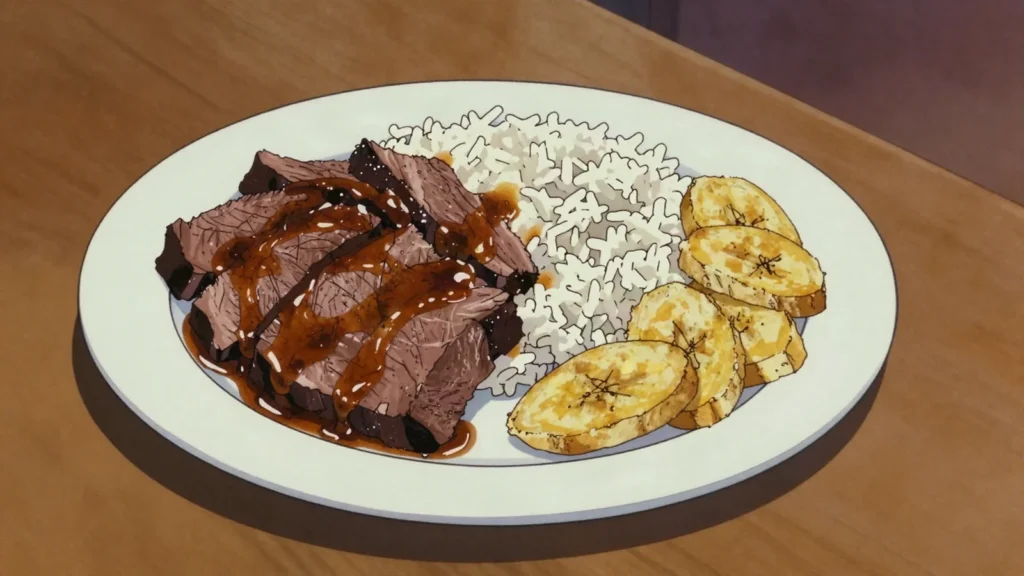
- Taste it carefully and adjust the salt. It should be savoury with only a faint sweetness behind it. Carve the beef across the grain as thinly as you can manage. Fan the slices out across a warm platter. Spoon the dark sauce generously over them. Serve white rice, fried sweet plantain and black beans alongside. It keeps for four days in the refrigerator.
Technique
- Papelon is unrefined whole cane sugar sold in hard blocks and is used across Venezuela in both savoury and sweet cooking.
- The near-burnt caramel is what distinguishes asado negro from other Latin American braises, and getting it dark enough is the whole skill of the dish.
Substitutions
- Panela, piloncillo or dark muscovado sugar can all replace papelon.
- Brisket or topside can be used, though neither slices as cleanly as eye of round.
Variations
- Some households add a splash of rum to the braising liquid.
- A version cooked with more tomato gives a redder and less black sauce.
- Leftover sliced beef is used as a filling for arepas the next day.
History
Caracas beef roast blackened with caramelised papelon sugar, sliced thin and served with rice as a Sunday dish.
Frequently asked questions
What is Asado negro?
Asado negro is a main from Venezuela: beef round braised glossy black in papelón caramel. Caracas beef roast blackened with caramelised papelon sugar, sliced thin and served with rice as a Sunday dish.
How long does Asado negro take to make?
Asado negro takes 30 minutes plus overnight marinating of preparation and 3 hours of cooking. The recipe makes serves 8. It is rated medium to make.
What can I substitute in Asado negro?
Yes, within limits. Panela, piloncillo or dark muscovado sugar can all replace papelon. Brisket or topside can be used, though neither slices as cleanly as eye of round.
What is the most important thing to get right in Asado negro?
Trim any silverskin from the outside of the joint with a sharp knife. Pierce the meat all over with the point of a knife. Rub the whole joint generously with salt and black pepper. Put it in a deep dish with the onion, pepper and remaining garlic. Add the Worcestershire sauce, the oregano and the bay leaves. Turn the meat until it is coated on every side.