
Ingredients
Rice
- 400 garborio or carnaroli rice
- 1.2 litreshot chicken or vegetable stock
- 1small onion, finely chopped
- 40 gbutter
- a large pinch of saffron threads, soaked in 2 tbsp hot water
- 80 gParmesan, grated
- 1 tspsalt
Ragù filling
- 250 gbeef mince
- 1small onion, finely chopped
- 1carrot, finely diced
- 2 tbsptomato purée
- 150 mlred wine
- 100 gfrozen peas
- 1 tbspolive oil
- salt and pepper
To assemble
- 150 gmozzarella or caciocavallo, in 12 small cubes
- 150 gplain flour
- 3eggs, beaten
- 250 gfine dried breadcrumbs
- 1.5 litressunflower oil, for deep frying
Directions
- Soften the onion in the butter, add the rice and toast it 2 minutes, then cook it risotto-style with the hot stock, adding it a ladle at a time, until the rice is just done and quite dry — much drier than a risotto you would eat with a spoon.
- Stir in the saffron water, Parmesan and salt, spread onto a tray and cool completely, then refrigerate at least 4 hours. Warm or moist rice cannot be shaped and will burst in the oil. This wait is not optional.
- For the ragù, soften the onion and carrot in the oil, brown the mince hard, add the tomato purée and cook it out 2 minutes, then the wine. Simmer until nearly dry, stir in the peas and season well. Cool completely.
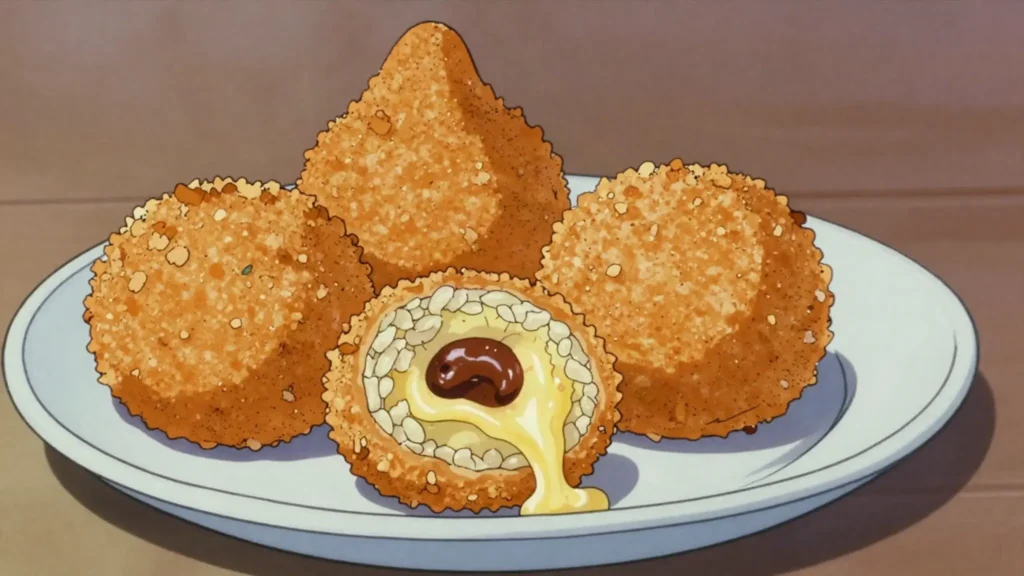
- Take a handful of cold rice, flatten it in your wet palm, put a teaspoon of ragù and a cube of cheese in the centre, then close the rice around it and shape into a ball or a cone. Seal any crack — a gap is where the oil gets in and the filling gets out.
- Roll each in flour, then beaten egg, then breadcrumbs, pressing the crumbs on firmly. For a sturdier shell, do egg and crumbs twice.
- Heat the oil to 175°C (350°F). Fry three or four at a time for 4–5 minutes, turning, until deep even gold. Crowding drops the temperature and they come out greasy.
- Drain on a rack for 2 minutes and eat hot, when the cheese inside is still molten.
Technique
- The rice must be cold, dry and stiff. Every arancino that bursts in the fryer was shaped from rice that was too wet or too warm.
- Wet your hands between each one. Rice sticks to dry palms and the ball will not close cleanly.
- Fine dried breadcrumbs, not panko. Panko gives a spiky coating that is not what a Sicilian arancino looks like.
Substitutions
- Leftover risotto, chilled overnight, is what many Sicilian households actually use.
- Ham and mozzarella (al burro) instead of ragù, which is the other classic filling.
Variations
- Arancini al burro, filled with béchamel, ham and cheese, and shaped round to tell them apart.
- Arancini con melanzane, with aubergine and tomato, common in the south-east.
- The Catania cone shape, said to echo Etna, against Palermo’s sphere.
History
Fried, breaded balls of risotto rice, most often filled with ragù meat sauce, mozzarella or peas, closely associated with Sicily, where the rice itself only became available following Arab rule over the island beginning in the 800s, since rice cultivation in Italy traces back through that Arab-introduced agricultural influence rather than to earlier Roman or Italian farming. The name arancini means little oranges, referring to the fried rice ball’s round shape and golden-orange colour after frying, which was thought to resemble the citrus fruit, itself also introduced to Sicily through the same period of Arab agricultural influence. Sicily’s eastern and western regions differ over the correct shape, round in the east and conical in the west, a distinction Sicilians themselves treat as a genuine and sometimes contentious regional identity marker.
Frequently asked questions
What is Arancini?
Arancini is a street food from Italy: sicilian fried rice balls stuffed with ragù, mozzarella. Fried, breaded balls of risotto rice, most often filled with ragù meat sauce, mozzarella or peas, closely associated with Sicily, where the rice itself only became available following Arab rule over the island beginning in the 800s, since rice cultivation in Italy traces back through that Arab-introduced agricultural influence rather than to earlier Roman or Italian farming. The name arancini means little oranges, referring to the fried rice ball’s round shape and golden-orange colour after frying, which was thought to resemble the citrus fruit, itself also introduced to Sicily through the same period of Arab agricultural influence. Sicily’s eastern and western regions differ over the correct shape, round in the east and conical in the west, a distinction Sicilians themselves treat as a genuine and sometimes contentious regional identity marker.
How long does Arancini take to make?
Arancini takes 45 min plus 4 hr chilling of preparation and 40 min of cooking. The recipe makes 12 arancini. It is rated hard to make.
What can I substitute in Arancini?
Yes, within limits. Leftover risotto, chilled overnight, is what many Sicilian households actually use. Ham and mozzarella (al burro) instead of ragù, which is the other classic filling.
What is the most important thing to get right in Arancini?
Stir in the saffron water, Parmesan and salt, spread onto a tray and cool completely, then refrigerate at least 4 hours. Warm or moist rice cannot be shaped and will burst in the oil. This wait is not optional.