
Ingredients
Sponge
- 4eggs
- 120 gcaster sugar
- 120 gplain flour
- a pinch of salt
Filling
- 800 gsheep’s milk ricotta
- 250 gicing sugar
- 100 gdark chocolate, chopped
- 50 gcandied fruit, diced
- a little cinnamon
Marzipan
- 300 gground almonds
- 300 gicing sugar
- 1egg white or a little water
- green food colouring, or pistachio paste
To soak
- 100 mlwater
- 80 gsugar
- 3 tbspmaraschino or rum
To finish
- 300 gicing sugar and a little lemon juice, for the glaze
- whole candied fruit to decorate
To serve
- cold, in thin slices, at Easter
Directions
- Drain the ricotta in a sieve lined with muslin for at least twelve hours in the fridge, with a weight on top. Sieving gives the completely smooth, silky texture that a proper cassata filling has.
- Beat in the icing sugar and let it rest for an hour, then fold in the chocolate and candied fruit. Make the marzipan by working ground almonds and icing sugar together with a little egg white or water.
- Knead it only until it comes together and no further. Roll it out between sheets of baking paper dusted with icing sugar. Cut the marzipan into rectangles and line the sides of the tin, standing them upright.
- Press the joins together so there are no gaps. Lay a disc of sponge in the bottom and brush it with the sugar syrup and liqueur. Brush the sponge rather than soaking it, since a saturated sponge collapses under the filling.
- Spoon the ricotta filling in and level it carefully. Press it into the corners so there are no air pockets. Cover with another disc of sponge and brush it with syrup. Fold the cling film over and press down gently. The filling must set completely, and a cassata turned out too early collapses.
- Mix icing sugar with a very little lemon juice and water into a thick pourable glaze. Add the liquid drop by drop, since icing goes from stiff to runny in a matter of drops. Pour it over the top and let it run just to the edge of the marzipan. The glaze should cover only the top, leaving the green marzipan sides visible.
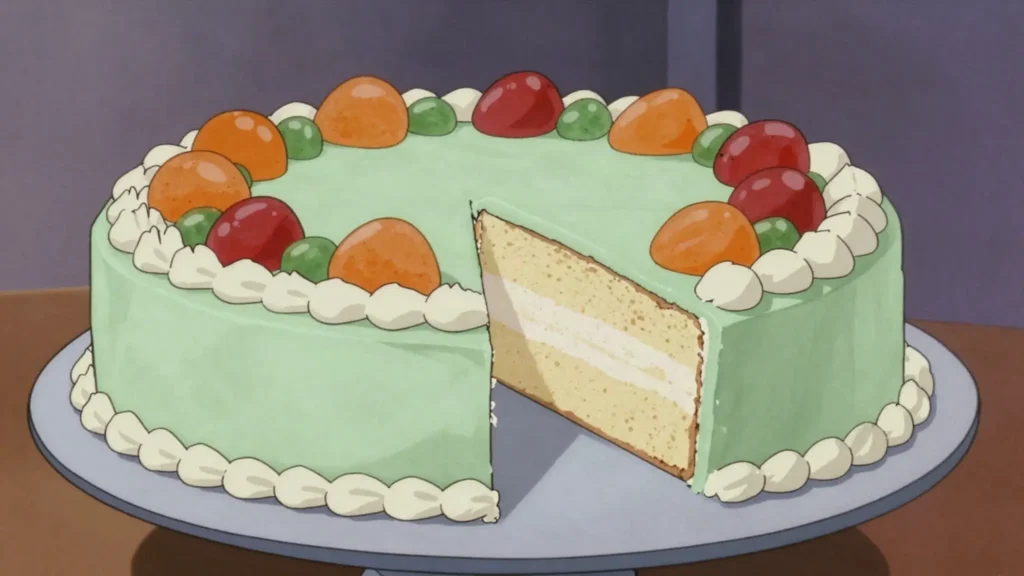
- Arrange whole candied fruit over the top in a pattern. This is the part that makes a cassata look like a cassata, so take some care over it. Serve it cold, in thin slices, since it is extremely rich. It keeps three days refrigerated and it is made for Easter above all.
Technique
- Arab rule brought sugar, citrus and almonds; Palermo convents developed the cake.
- The ricotta must be drained for hours and pushed through a sieve.
- The vivid green marzipan is coloured, not naturally that shade from pistachio.
Substitutions
- Cow’s milk ricotta, drained thoroughly, if sheep’s is unavailable.
- Shop-bought marzipan, coloured green.
Variations
- Cassata al forno, a baked version enclosed in pastry.
- Made without candied fruit in the filling.
- Made as individual small cassatine.
History
A layered sponge cake, soaked in liqueur and filled with sweetened ricotta, candied fruit and marzipan, developed in Sicily through a similarly layered history of Arab, Norman and Spanish influence over the island across many centuries, with sugar, ricotta and marzipan each reflecting different threads of that overlapping cultural and culinary history rather than a single unified origin. Its elaborate, colourful decoration, traditionally finished with a smooth layer of icing and arranged candied fruit on top, made cassata historically a dish specifically associated with celebration and special occasions, particularly Easter, rather than routine everyday dessert. It remains one of Sicily’s most iconic and visually distinctive traditional desserts, considered a defining example of the island’s genuinely layered culinary heritage.
Frequently asked questions
What is Cassata siciliana?
Cassata siciliana is a dessert from Italy: sponge and sweet ricotta cake sheathed in green marzipan and candied fruit. A layered sponge cake, soaked in liqueur and filled with sweetened ricotta, candied fruit and marzipan, developed in Sicily through a similarly layered history of Arab, Norman and Spanish influence over the island across many centuries, with sugar, ricotta and marzipan each reflecting different threads of that overlapping cultural and culinary history rather than a single unified origin. Its elaborate, colourful decoration, traditionally finished with a smooth layer of icing and arranged candied fruit on top, made cassata historically a dish specifically associated with celebration and special occasions, particularly Easter, rather than routine everyday dessert. It remains one of Sicily’s most iconic and visually distinctive traditional desserts, considered a defining example of the island’s genuinely layered culinary heritage.
How long does Cassata siciliana take to make?
Cassata siciliana takes 1 hr 30 min plus overnight chilling of preparation and 25 min of cooking. The recipe makes 10 servings. It is rated hard to make.
What can I substitute in Cassata siciliana?
Yes, within limits. Cow’s milk ricotta, drained thoroughly, if sheep’s is unavailable. Shop-bought marzipan, coloured green.
What is the most important thing to get right in Cassata siciliana?
Press the joins together so there are no gaps. Lay a disc of sponge in the bottom and brush it with the sugar syrup and liqueur. Brush the sponge rather than soaking it, since a saturated sponge collapses under the filling.