
Ingredients
Fish
- 1 kgfirm fish, in thick pieces
- or 1 kg fresh prawns
- 1 teaspoonsalt
Greens
- 500 gaibika or other leafy greens
- or pumpkin tips and taro leaves
Coconut
- 1 litrethick coconut cream
- from about 4 fresh coconuts
To season
- 1onion, sliced
- 1chilli, chopped, optional
- salt to taste
To wrap and cook
- large banana leaves, wilted
- 8to 10 smooth volcanic stones, fist sized
- a wood fire
- long wooden tongs
Directions
- Keep children well away from the whole area. Stand clear and use tongs at that moment. Have water available for the fire, never for the stones. Crack open the mature coconuts. Grate all the white flesh out of the shells. Squeeze the grated flesh hard in your hands. Work in batches over a large bowl.
- Take only the first thick squeezing. Thin milk will not cook properly with the stones. Use the thickest kind you can find. Cut the fish into thick pieces. Leave the bones in for more flavour.
- Season the fish pieces with salt. Preparing the greens takes a few minutes. Wash all the leaves thoroughly. Pick them off any woody stems. Tear them into large rough pieces. If you use taro leaves, a warning applies. Cut out the thick central rib. Heating the stones takes about an hour. Set the stones in among the burning wood.
- Let the fire burn hard for at least an hour. The stones must heat right through to the centre. Discard any that crack badly during heating. Building the parcel is done just before cooking. Line a large bowl or a shallow pit with leaves.
- Let them hang well over the sides. Lay the washed greens in first. Arrange the fish pieces over them. Scatter the onion and chilli over that. Now pour in the thick coconut cream. Season the whole thing with salt. Rake a hot stone out of the fire.
- Brush the ash off it with a leaf. Lift it with long wooden tongs. Stand well back as it goes in. Add another stone once the first has settled. Keep adding stones until the cream is bubbling. Six to eight stones is usually enough.
- Fold the overhanging leaves in over the top. Cover the whole thing with more leaves. The steam must stay trapped inside. Leave the parcel closed the whole time. The cream keeps simmering inside. Fold the leaves back from one side first.
- Let the steam clear before reaching in. The fish should flake apart easily. Lift the stones out with tongs and discard them. Serving it is done straight from the parcel. Serve boiled kaukau, taro or yam alongside. It does not keep well and is eaten fresh.
Technique
- The Tolai of East New Britain are known for this stone-boiling method, which appears in relatively few places worldwide.
- Stone boiling is an old technique for heating liquid in a container that cannot be put on a fire.
Substitutions
- The whole thing can be baked in a covered dish at 180C for forty minutes without the stones.
- That is a different dish in practice but produces something similar to eat.
Variations
- Some versions use prawns or shellfish instead of fish.
- Chicken is used in place of fish in some households.
- Adding pumpkin or green banana to the parcel makes a fuller meal.
History
A Tolai dish of East New Britain, where the stones are dropped into the cream to bring it to the boil.
Frequently asked questions
What is Aigir?
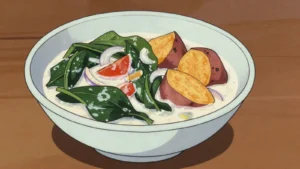
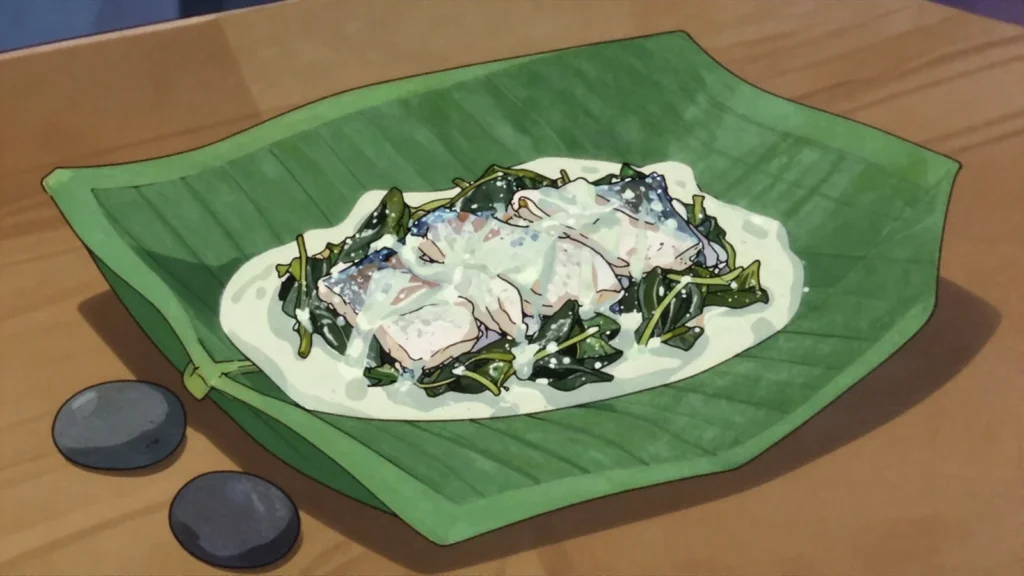
Aigir is a main from Papua New Guinea: fish and greens baked in coconut cream with hot stones inside banana leaves. A Tolai dish of East New Britain, where the stones are dropped into the cream to bring it to the boil.
How long does Aigir take to make?
Aigir takes 45 minutes of preparation and 30 minutes of cooking. The recipe makes serves 6. It is rated hard to make.
What can I substitute in Aigir?
Yes, within limits. The whole thing can be baked in a covered dish at 180C for forty minutes without the stones. That is a different dish in practice but produces something similar to eat.
What is the most important thing to get right in Aigir?
Keep children well away from the whole area. Stand clear and use tongs at that moment. Have water available for the fire, never for the stones. Crack open the mature coconuts. Grate all the white flesh out of the shells. Squeeze the grated flesh hard in your hands. Work in batches over a large bowl.