
Ingredients
Meat
- 1.5 kglamb or mutton flaps
- sheep belly, in strips
- boiling water, for the first blanch
Marinade
- 4 tablespoonssoy sauce
- 4garlic cloves, crushed
- 3cm ginger, grated
- 2 tablespoonsbrown sugar
- 1onion, grated
- juice of 2 limes
- black pepper
- 2chillies, chopped, optional
To serve
- rice
- or boiled sweet potato
- or taro
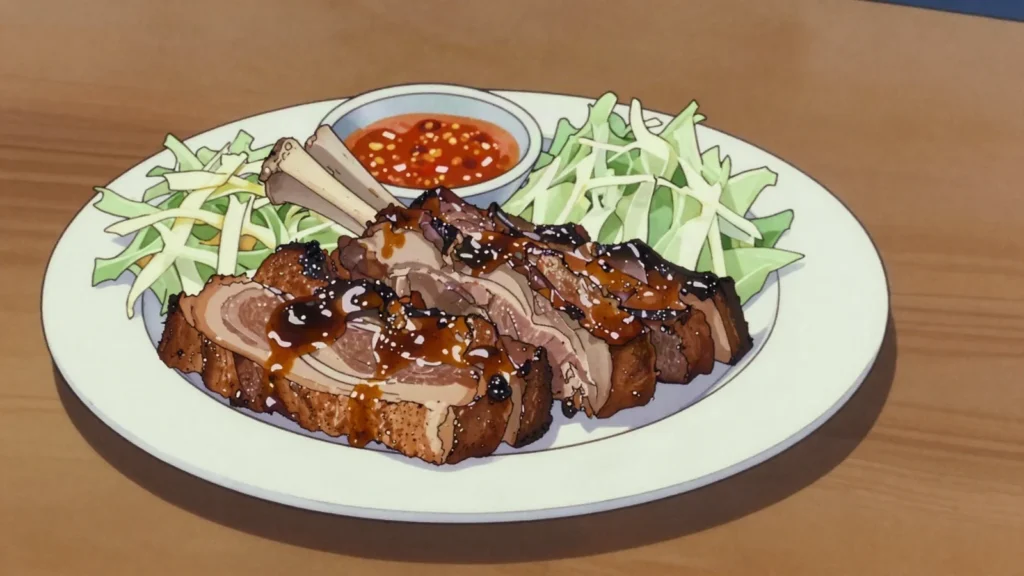
- a sharp cabbage salad
- lime wedges
- chilli sauce
Directions
- Taste before adding any salt at all. Keep the meat away from direct flame. Cut the flaps into manageable strips. Trim off any very thick fat edges. Rinse them thoroughly in cold water.
- Cover salted flaps in cold water. Let them soak for a few hours. Taste a small boiled piece to check. Put the strips in a large pot. Cover them well with cold water. Bring the pot up to a full boil. Let it boil for about twenty minutes. A thick layer of fat rises to the surface.
- Tip the pot out into the sink. Rinse the meat under hot water. Pat every single piece of it dry. Let it cool and put it in the bin. Or keep it for cooking if you want it.
- Mix the soy sauce and crushed garlic. Add the grated ginger and onion. Add the brown sugar and lime juice. Add black pepper and the chillies. Rub the marinade over the blanched strips.
- Cover them and refrigerate them. Give them at least two full hours. Keep them away from the fiercest coals. Wait until the coals are covered in grey ash. Fatty meat needs a cooler zone. Set the strips on the cooler side. Let them cook slowly for twenty minutes. Turn them every five minutes or so. Give them about three minutes a side.
- Brown them well in a heavy pot. Add onions, garlic and vegetables. Add water or stock to cover them. Simmer them gently for about an hour. Serving it is always done piping hot. Cut the strips into smaller pieces. Serve plain rice alongside them.
- Serve a sharp cabbage salad with it. Put chilli sauce on the table. It keeps two days refrigerated. Lift off the set fat before reheating.
Technique
- The flap is sheep belly, a thin layered strip that can be around half fat by weight, and one of the fattiest cuts there is; Australian and New Zealand domestic markets prefer leaner cuts, so flaps sell for very little at home and are exported cheaply to Pacific markets where they became widely eaten.
- Pacific countries have among the world’s highest rates of obesity, diabetes and heart disease, and fatty imported meat has been blamed as a factor, with lamb flaps becoming the symbol of that argument; Fiji banned mutton flap imports in the year two thousand as a public health measure. Researchers have questioned the simple story, since imported rice, sugar and tinned foods, urbanisation and less physical work all contributed, and some argue the bans are paternalistic and remove a cheap protein source. What is not in dispute is that the cut is very high in fat and eating a lot of it regularly is not good; how much it explains is what is argued about.
- The fat must be dealt with: blanching the strips in boiling water for twenty minutes and pouring the water away removes a real amount of it, and grilling over a cooler zone lets the rest render and drip into the fire. Cooking it without doing either gives a greasy dish, and the dripping fat flares up readily over direct flame.
Substitutions
- Any fatty lamb or mutton cut behaves the same way.
- Stewing renders the fat into the broth, which can be chilled and lifted off as a sheet.
Variations
- They are grilled over charcoal or stewed in a pot, and both are common.
- Salted flaps need soaking in changes of cold water before cooking.
- A sharp cabbage salad with lime and chilli is a necessary balance rather than a garnish.
History
Exported from Australia and New Zealand where the cut is unwanted, they became a Pacific staple and a public-health controversy.
Frequently asked questions
What is Lamb Flaps?
Lamb Flaps is a main from Papua New Guinea: fatty sheep belly cuts grilled or stewed; cheap and heavily salted. Exported from Australia and New Zealand where the cut is unwanted, they became a Pacific staple and a public-health controversy.
How long does Lamb Flaps take to make?
Lamb Flaps takes 20 minutes of preparation and 1 hour of cooking. The recipe makes serves 6. It is rated easy to make.
What can I substitute in Lamb Flaps?
Yes, within limits. Any fatty lamb or mutton cut behaves the same way. Stewing renders the fat into the broth, which can be chilled and lifted off as a sheet.
What is the most important thing to get right in Lamb Flaps?
The fat must be dealt with: blanching the strips in boiling water for twenty minutes and pouring the water away removes a real amount of it, and grilling over a cooler zone lets the rest render and drip into the fire. Cooking it without doing either gives a greasy dish, and the dripping fat flares up readily over direct flame.