
Ingredients
The starch
- 600 gwashed sago starch
- wet, from sago palm pith
- or dried sago flour
- moistened with water
Sometimes added
- grated fresh coconut
- a little salt
- chopped greens
- or smoked fish, flaked
The equipment
- a clay plate
- or a heavy dry frying pan
- a flat spatula
- no oil at all
To serve
- hot from the plate
- with fish or greens
- or plain, for a journey
Directions
- Heat gelatinises the starch granules. That happens within a minute or two. Oil would stop the starch fusing. The plate is used entirely dry.
- Break up all the wet sago starch. Wet starch sets into hard lumps. Break them up with your fingers. Work it into a loose even crumb. It should be much like damp sand. Squeeze a handful in your fist. It should hold together loosely.
- Sprinkle water over it gradually. Work it through with your fingers. Mix grated coconut through the starch. Heat the clay plate or pan until hot. It must be genuinely hot throughout. Heat it properly before starting. Sprinkle a little starch onto it. It should stick and set at once.
- Wait for longer before starting. Spread starch over the hot plate. Scatter it evenly across the surface. Spread it about a centimetre thick.
- Press it down lightly with the spatula. That helps the grains fuse together. Press it evenly rather than hard. A light but firm press is right. Turn the pancake with a spatula.
- Turn it in one confident movement. It should hold together entirely. Lift an edge and look underneath. It should be set and lightly coloured. Scatter greens or fish over one half. Fold the pancake over the filling. Let them cool on a rack or leaf. They firm up considerably as they cool.
- Let the air get all round them. Storing them is straightforward enough. Wrap the cooled cakes in leaves. They keep several days that way. Warm them on a dry pan to soften. One minute a side is quite enough. Serve them hot from the plate. It keeps several days wrapped.
Technique
- No oil is used at any point and the plate must be entirely dry, since oil stops the starch fusing — that fusing is the whole technique. Heat gelatinises the starch granules so they swell and stick to each other, turning loose powder into a solid sheet within a minute or two.
- The plate must be genuinely hot throughout: sprinkle a little starch on and it should stick and set at once, where a cool plate leaves it loose and the pancake falls apart entirely.
- Sago is starch from a sago palm trunk, not tapioca from cassava — entirely different plants, constantly confused in shops. This dish uses genuine palm sago, and the atlas keeps the two distinct.
Substitutions
- Dried sago flour moistened with water is the same starch and behaves much like the fresh kind — a genuine substitute, since most readers cannot process sago themselves, which needs a felled palm and real equipment.
- Grated coconut mixed through adds richness and softens the cake; smoked fish and chopped greens are scattered on before folding, sealing as the starch fuses. All are genuinely done, though plain is the everyday version.
Variations
- Break up the wet starch into a loose damp crumb like damp sand and push it through a sieve, since lumps stay hard in the finished pancake. Squeeze a handful: it should hold together loosely and crumble when poked.
- Press the spread starch lightly and evenly rather than hard, which helps the grains fuse; hard pressing makes it dense and tough. Turn it in one confident movement with the spatula fully underneath — a pancake that crumbles was undercooked.
- The pancakes keep several days and are carried and eaten cold on Sepik river journeys, which take days by canoe — that portability is the whole point, and food that keeps genuinely matters there.
History
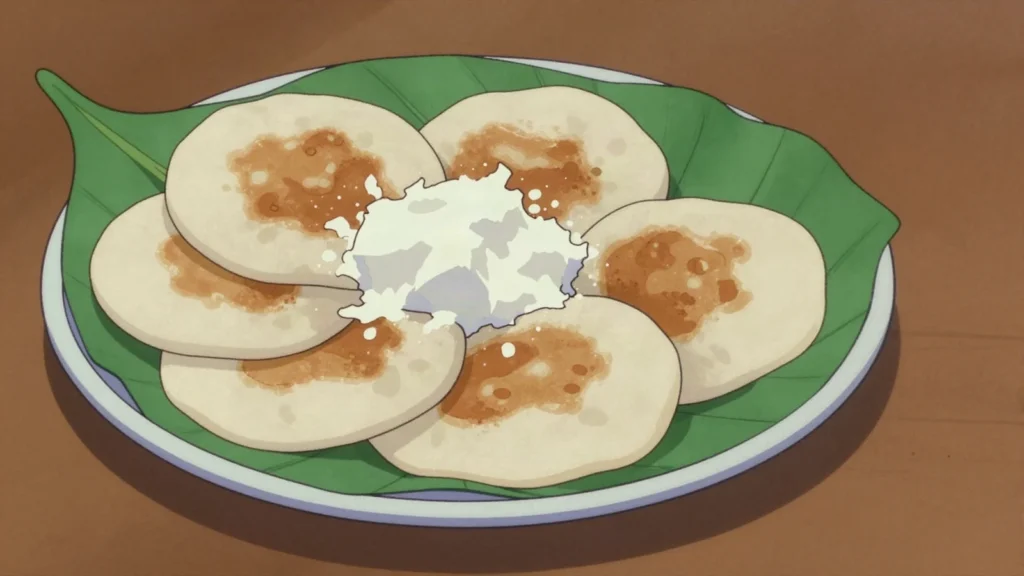
Sepik households griddle washed sago starch on clay plates into stiff pancakes that keep for days on river journeys.
Frequently asked questions
What is Sago Pancake?
Sago Pancake is a bread & pastry from Papua New Guinea: griddled starch cakes from sago palm pith, Sepik River staple. Sepik households griddle washed sago starch on clay plates into stiff pancakes that keep for days on river journeys.
How long does Sago Pancake take to make?
Sago Pancake takes 20 minutes of preparation and 20 minutes of cooking. The recipe makes about 8 pancakes. It is rated medium to make.
What can I substitute in Sago Pancake?
Yes, within limits. Dried sago flour moistened with water is the same starch and behaves much like the fresh kind — a genuine substitute, since most readers cannot process sago themselves, which needs a felled palm and real equipment. Grated coconut mixed through adds richness and softens the cake; smoked fish and chopped greens are scattered on before folding, sealing as the starch fuses. All are genuinely done, though plain is the everyday version.
What is the most important thing to get right in Sago Pancake?
Sprinkle water over it gradually. Work it through with your fingers. Mix grated coconut through the starch. Heat the clay plate or pan until hot. It must be genuinely hot throughout. Heat it properly before starting. Sprinkle a little starch onto it. It should stick and set at once.