
Ingredients
The shrimp
- 800 graw shrimp or prawns
- peeled and deveined
- shells reserved for stock
- or left shell on, traditionally
The sauce base
- 4 tablespoonsolive oil
- 1large onion, finely chopped
- 8 clovesgarlic, crushed
- 4ripe tomatoes, chopped
- or 1 tin chopped tomatoes
- 2 tablespoonstomato purée
The heat and herbs
- 3hot red chillies
- finely chopped
- or 2 tablespoons shatta
- the Gazan chilli paste
- a very large bunch of dill
- chopped, about 60 g
- 1 teaspoonground cumin
- salt and black pepper
- juice of 1 lemon
Sometimes added
- 1green pepper, chopped
- a little chopped coriander
- 1 teaspoonsumac
- a pinch of chilli flakes
To serve
- flatbread, to scoop
- lemon wedges
- a simple salad
- plain rice, optional
Directions
- Soak it in cold water for twenty minutes. The wet clay steams gently as it heats. Start it in a cold oven instead. Bring them up to temperature together. Never set a hot clay dish on a cold surface. Set it on a wooden board or a cloth. If you peel them, keep the shells. Fry the shells in a little oil until pink. Add water and simmer fifteen minutes.
- Strain that and use it in the sauce. Cut a shallow slit along the back. Lift the dark thread out with a knife tip. Larger shrimp need this more than small ones. Rinse them briefly and pat them dry. The quantity should look excessive. Chop it including the fine stems. Only the thick woody stems are discarded.
- Heat the olive oil in a pan. Add the chopped onion with a pinch of salt. Cook it slowly until soft and golden. That takes about ten minutes. Add the crushed garlic. Use a great deal of garlic here. Cook it for two minutes until fragrant. Do not let the garlic brown at all. Add the chopped chilli or the shatta. Cook it briefly to release the heat. Add the tomato purée and fry it.
- Fry it for two or three minutes. Add the chopped fresh tomatoes. Cook them down until they collapse. That takes about ten minutes. Add the cumin and season it. Add the shrimp stock if you made it. The sauce should be thick, not watery. Heat the oven to two hundred degrees. If using clay, start it in a cold oven.
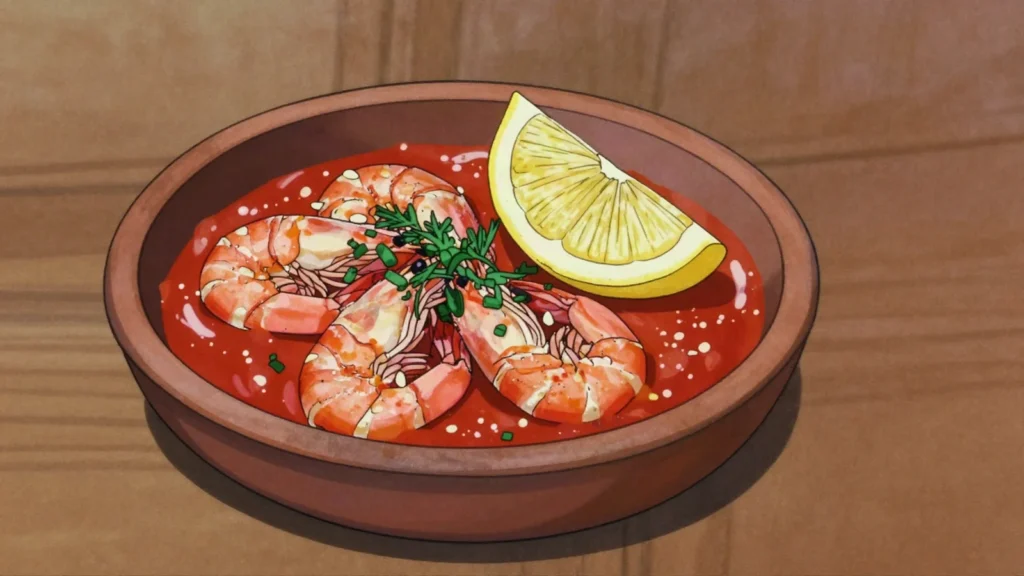
- Put the soaked clay dish in and heat together. Spoon half the sauce into the dish. Scatter half the chopped dill over it. Lay the shrimp on top in a single layer. Spoon the rest of the sauce over them. Scatter the remaining dill on top. They need only a few minutes of heat.
- Bake it for eight to twelve minutes. A loose C shape is about right. Take them out while just done. Squeeze lemon over it as it comes out. Scatter a little more fresh dill. Taste and adjust the salt if needed. Serve it in the dish it cooked in. Warn everyone that the dish is very hot.
- Set it on a board or a thick cloth. Serve flatbread to scoop it up. Tear it and use it to lift the shrimp. Serve lemon wedges on the table. Eating is done with the right hand. Freeze it without the shrimp. Add fresh shrimp when you reheat it.
Technique
- The quantity of dill should look excessive. Sixty grams into one dish is not a mistake — Gazan cooking uses it in that quantity and it is a main flavour, not a garnish. Without it this is simply shrimp in tomato sauce.
- Build all the flavour in the sauce before it goes in the oven. Shrimp cook in a few minutes and the sauce will not develop in that time; the oven is only there to cook the shrimp.
- Shrimp overcook in moments and that is the commonest failure. A loose C shape is right; a tight curl means they have gone. Watch them rather than the clock and take them out while just done.
- Unglazed clay must be soaked before use and started in a cold oven, coming up to temperature with it. Thermal shock cracks clay, and setting a hot clay dish on a cold surface does the same in reverse — put it on a board or a thick cloth.
- Keep the shrimp shells and make a quick stock: fry them until pink, add water, simmer fifteen minutes and strain. It deepens the sauce noticeably and costs almost nothing.
- Shrimp are a major shellfish allergen and there is no version of this dish without them. Tell guests.
- Gazan cooking is distinctly hotter than the rest of Palestinian cooking, and uses chilli and dill in quantities that set it apart. Shatta, a paste of fresh chillies pounded with dill, is the local chilli condiment and is worth seeking out for this dish.
- Capsaicin oil clings to skin for hours and transfers to eyes long after washing. Wear gloves when handling this quantity of chilli.
- Gaza’s fishery has been severely restricted for years, with a permitted zone that has varied and has often been very narrow, affecting catches, livelihoods and the local availability of seafood. That is documented and widely reported. A coastal cuisine depends on access to the sea, and the atlas records that plainly without turning a recipe into a report.
- Bread is the utensil here rather than a side dish. The bowl is set in the middle and everyone tears bread to lift the shrimp out.
Substitutions
- A heavy ovenproof dish or a cast iron pan replaces the clay zibdiya. The result is very good; what is lost is the vessel arriving bubbling at the table.
- Shatta, the Gazan chilli paste, replaces fresh chillies and is sold by Palestinian grocers.
- Tinned chopped tomatoes replace fresh out of season.
- Shell-on shrimp give more flavour and are traditional; peeled shrimp are easier to eat. Both are done.
- Firm white fish or squid can be cooked the same way, though the dish is named for the shrimp.
- Coriander alongside the dill is used in some households, though dill alone is the Gazan signature.
Variations
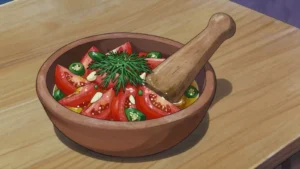
- Dagga is the pounded Gazan salad of tomato, chilli, garlic and dill, made and served in the same clay zibdiya.
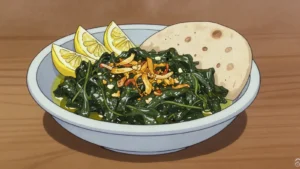
- Sumagiyya, a Gazan chard and meat stew with sumac and tahini, is the other great dish of the city.
- A version with squid or with fish is cooked the same way where shrimp are scarce.
- Some cooks add a chopped green pepper to the sauce, which sweetens it.
- Rummaniyya, lentils with pomegranate, is another Gazan speciality built on local sourness.
- A milder version with far less chilli is made for children.
History
Named after the zibdiya, the clay dish it is cooked and served in; a speciality of the Gaza coast.
Frequently asked questions
What is Zibdiyit gambari?
Zibdiyit gambari is a main from Palestine: shrimp baked with chilli, tomato and dill in a clay bowl. Named after the zibdiya, the clay dish it is cooked and served in; a speciality of the Gaza coast.
How long does Zibdiyit gambari take to make?
Zibdiyit gambari takes 25 minutes of preparation and 25 minutes of cooking. The recipe makes serves 4. It is rated medium to make.
What can I substitute in Zibdiyit gambari?
Yes, within limits. A heavy ovenproof dish or a cast iron pan replaces the clay zibdiya. The result is very good; what is lost is the vessel arriving bubbling at the table. Shatta, the Gazan chilli paste, replaces fresh chillies and is sold by Palestinian grocers. Tinned chopped tomatoes replace fresh out of season. Shell-on shrimp give more flavour and are traditional; peeled shrimp are easier to eat. Both are done. Firm white fish or squid can be cooked the same way, though the dish is named for the shrimp. Coriander alongside the dill is used in some households, though dill alone is the Gazan signature.
What is the most important thing to get right in Zibdiyit gambari?
Soak it in cold water for twenty minutes. The wet clay steams gently as it heats. Start it in a cold oven instead. Bring them up to temperature together. Never set a hot clay dish on a cold surface. Set it on a wooden board or a cloth. If you peel them, keep the shells. Fry the shells in a little oil until pink. Add water and simmer fifteen minutes.