
Ingredients
Paste
- 500 gred or green chillies, stems removed
- 1 headgarlic, peeled
- 15 gfine salt — 3% of the total weight
- 1large bunch dill, chopped
- 2 tbspground cumin
- 1 tbspground coriander
To finish
- juice of 2 lemons
- 3 tbspolive oil, to seal
Directions
- Wear gloves. Half a kilo of chillies is enough to leave your hands burning for a day, and to catch you out later when you rub an eye.
- Chop the chillies and garlic coarsely, or pound them in a zibdiyeh — the heavy clay bowl Gazan kitchens use — until they break down into a rough paste. Do not blitz them smooth; shatta should have texture.
- Weigh the pounded chilli and garlic together and take 3% of that weight in salt. Weighing rather than guessing is what makes the ferment safe and keeps it from going soft.
- Work the salt through thoroughly, along with the dill, cumin and coriander.
- Pack into a clean jar, pressing down hard so the paste sits below its own liquid, and leave a few centimetres of headspace — it will bubble up.
- Cover loosely so the gas can escape and leave at room temperature for three to seven days, pressing it back down each day. It will fizz, smell sharply sour, and darken slightly.
- When it tastes sour as well as hot, stir in the lemon juice and smooth the top, then pour over a layer of olive oil to seal it from the air.
- Refrigerate. It keeps six months and deepens as it goes. Stir it into stews, spread it on bread, or spoon it over anything at all.
Technique
- Three percent salt by weight, measured. This is a low-acid vegetable ferment and the salt is what protects it until the acidity builds.
- Keep it below its own liquid and under the oil once it is done. Paste exposed to air darkens and moulds.
- Gloves, and do not touch your face. This is the practical advice everyone ignores once.
Substitutions
- Any hot chilli — the Gazan version uses a local long red, but jalapeño, serrano or bird’s eye all work.
- Coriander leaf in place of dill, which is done in some households.
- A quick unfermented version blitzed with lemon and oil, eaten within a fortnight.
Variations
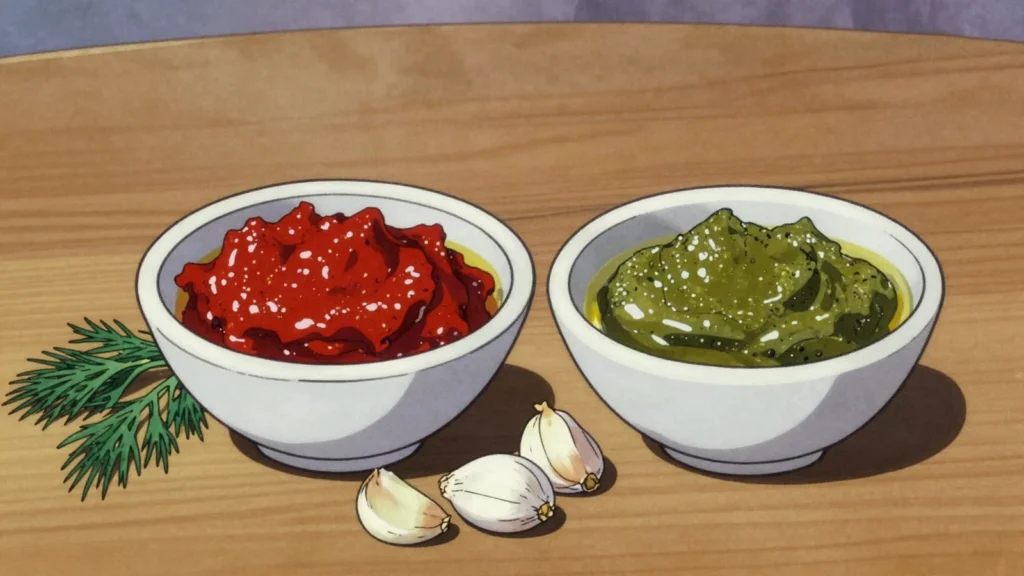
- Green shatta, made with unripe chillies, is sharper and grassier.
- Some cooks add tomato paste, which softens the heat and darkens the colour.
History
A Gaza kitchen staple, ground in a zibdiyeh clay bowl and left to sour before being stirred into almost every dish.
Frequently asked questions
What is Shatta?
Shatta is a fermented & pickled from Palestine: fiery red or green chilli paste fermented with salt, dill and garlic. A Gaza kitchen staple, ground in a zibdiyeh clay bowl and left to sour before being stirred into almost every dish.
How long does Shatta take to make?
Shatta takes 30 min plus 3 to 7 days fermenting of preparation and no cooking at all. The recipe makes fills a 500 ml jar. It is rated easy to make.
What can I substitute in Shatta?
Yes, within limits. Any hot chilli — the Gazan version uses a local long red, but jalapeño, serrano or bird’s eye all work. Coriander leaf in place of dill, which is done in some households. A quick unfermented version blitzed with lemon and oil, eaten within a fortnight.
What is the most important thing to get right in Shatta?
Chop the chillies and garlic coarsely, or pound them in a zibdiyeh — the heavy clay bowl Gazan kitchens use — until they break down into a rough paste. Do not blitz them smooth; shatta should have texture.