
Ingredients
Leaves
- 1 kgwild mallow leaves
- young and tender
- or 1 kg spinach and chard mixed
- water, for washing
The pan
- 5 tablespoonsolive oil
- 3onions, chopped
- 6garlic cloves, crushed
- juice of 2 lemons
- 1 teaspoonground cumin
- salt and black pepper
- a pinch of chilli flakes
Sometimes added
- 1 tablespooncrushed coriander seed
- 2 tablespoonsbulgur
- a handful of chopped coriander leaf
To serve
- flatbread, taboon or pita
- lemon wedges
- olives
- raw onion
- labneh or yoghurt
Directions
- Wash everything you gather very thoroughly. They are soft and slightly hairy underneath. Strip the leaves from their stalks. Discard every one of the tough stems. Take the time to remove all of them. Fill a clean sink up with cold water.
- Put the leaves in and swish them about. Lift them out rather than pouring off. Repeat it three or four times. Do it until no grit settles at all. Pile the washed leaves on a board.
- Chop them roughly with a large knife. They do not need to be very fine. Heat the olive oil in a wide pot. Add the chopped onions to the pot. Cook them slowly over a medium heat. Give them a good ten minutes to soften.
- Add the crushed garlic to the onions. Add the cumin and the chilli flakes. Add the coriander seed if using it. Cook them for a good two minutes. Add the chopped mallow to the pot.
- Add it in handfuls as it wilts down. Turn it through the onions and oil. Keep adding until it is all in. Cooking them down takes some time. Cover the pot and lower the heat. Let the greens cook down gently. Give them about twenty minutes.
- Stir them now and then as they go. Add a splash only if it catches. The dish should end up fairly dry. Oil should be visible around it. Stir in the bulgur near the end. Give it about ten more minutes.
- Squeeze in all of the lemon juice. Season it with salt and black pepper. Add chopped coriander leaf if using it. Taste it and adjust the lemon. Serving it is done warm or at room temperature. Spoon it out onto a wide serving plate. Serve taboon bread or pita with it. Put olives and raw onion alongside. It keeps three days refrigerated.
Technique
- Khubz is the Arabic word for bread and khubeizeh is built on that root, usually explained by the seed pods, which are small round flat rings that look like tiny loaves and are eaten raw by children in the fields.
- The dish is strongly associated with hard times, since mallow grows wild and costs nothing to gather, and it has been eaten during sieges and blockades and when other food was unavailable; it is also simply looked forward to as a seasonal green after the winter rains, and both things are true at once.
- Never eat a wild plant you cannot identify, learn mallow from someone who knows it, do not pick beside busy roads where traffic deposits contaminants, avoid ground that may have been sprayed or contaminated, and wash everything very thoroughly.
Substitutions
- Spinach and chard together approximate it, though without the slippery texture.
- A little bulgur stirred in near the end absorbs liquid and bulks it out.
Variations
- Some households add coriander seed and leaf and others keep it plain.
- It is eaten warm or at room temperature, and is good cold as well.
- Labneh or yoghurt alongside is common but not universal.
History
A foraged winter green whose name comes from bread, eaten across Palestine and closely tied to times of scarcity.
Frequently asked questions
What is Khubeizeh?
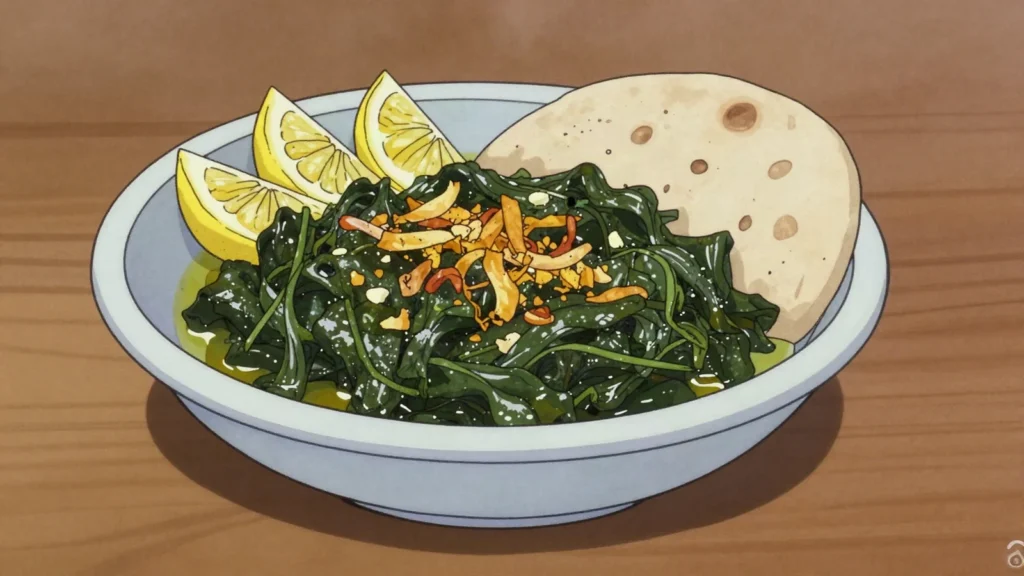
Khubeizeh is a main from Palestine: wild mallow leaves stewed with onion and olive oil, eaten with flatbread. A foraged winter green whose name comes from bread, eaten across Palestine and closely tied to times of scarcity.
How long does Khubeizeh take to make?
Khubeizeh takes 40 minutes of preparation and 30 minutes of cooking. The recipe makes serves 4. It is rated easy to make.
What can I substitute in Khubeizeh?
Yes, within limits. Spinach and chard together approximate it, though without the slippery texture. A little bulgur stirred in near the end absorbs liquid and bulks it out.
What is the most important thing to get right in Khubeizeh?
Put the leaves in and swish them about. Lift them out rather than pouring off. Repeat it three or four times. Do it until no grit settles at all. Pile the washed leaves on a board.