
Ingredients
The wine
- 1.5 litresred wine
- a simple dry red
- nothing expensive
- Frankovka or a similar light red
- or any everyday red
The spices
- 2cinnamon sticks
- 8whole cloves
- 3star anise
- optional
- 4allspice berries
- optional
- 1bay leaf
- sometimes added
The citrus and sweetening
- 1orange
- sliced into rounds
- 1lemon, sliced
- or a strip of peel from each
- 100 gsugar
- or to taste
- or honey
Sometimes added
- a splash of rum
- or slivovica
- a few slices of apple
- a thumb of sliced ginger
- a vanilla pod, split
To serve
- heatproof glasses or mugs
- with handles if possible
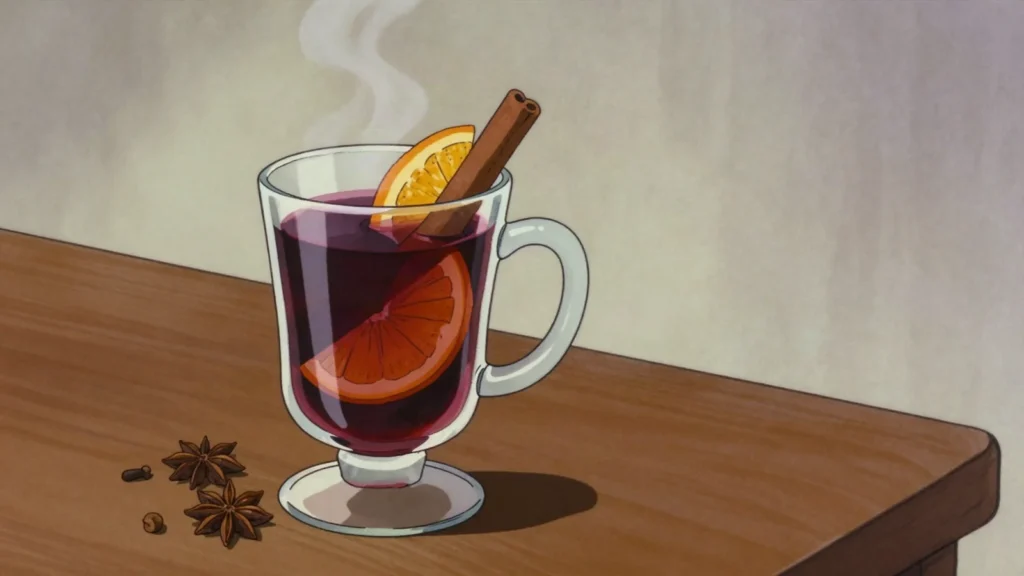
- a cinnamon stick, to stir
- an orange slice, to float
Directions
- Heat brings out tannin and makes it harsh. Do not actually boil the wine at all. Heat it gently until it steams and no further. Around seventy degrees is about right.
- Keep the heat low and never let it boil. Keep a lid nearby to smother any flames. Do not lean over the pan while heating it. Use whole spices rather than ground ones. Do not use too many spices at once.
- Wash the fruit thoroughly before slicing. Unwaxed fruit is better if you can get it. Slice the orange and lemon into rounds. Peel alone gives a cleaner, less bitter result. So use peel if you plan to keep it warm for hours. Use slices if you are drinking it soon. For the syrup method, take some of the wine.
- Put it in a pan with the sugar and spices. Add the citrus peel to the pan. Heat it gently until the sugar dissolves. Simmer it very gently for ten minutes. Warm the whole thing gently to serving heat. Add the wine, sugar, spices and citrus.
- Heat it very gently for twenty minutes. Do not let it approach a simmer at any point. Stir it occasionally to dissolve the sugar. It should be warmly spiced and clearly sweet. Add more sugar if it is too sharp. Add more wine if it is too sweet or strong. Add a squeeze of lemon if it tastes flat. Now add a spirit if you want to.
- Add it off the heat at the very end. Heat would simply drive it straight off. Warm the glasses with hot water first. Pour that water away before filling them. Cold glass cracks when hot liquid hits it.
- Use heatproof glasses or sturdy mugs. Strain the wine as you pour it out. Add a cinnamon stick as a stirrer. Serve it hot rather than merely warm. Hot drinks are also absorbed more quickly. Make it fresh, since it does not keep well. The spiced syrup keeps two weeks refrigerated. Heat it with the same spices and citrus.
Technique
- Do not boil it, despite the name. Boiling drives off the alcohol and makes the wine taste stewed and flat. Heat it until it steams — around seventy degrees, below simmering, with no bubbles. This is the single most important instruction.
- Use whole spices, never ground. Ground spices make the wine cloudy and gritty and settle in the glass, where whole ones strain out cleanly.
- Do not over-spice it. Over-spiced mulled wine tastes medicinal, and restraint gives a far better drink. Cinnamon and cloves alone make an excellent version.
- Use peel rather than whole citrus slices if you are keeping it warm for hours. Pith turns the wine bitter over long heating.
- Do not use an expensive wine. The spices and sugar dominate completely and any subtlety is lost. Avoid heavily oaked or tannic wines, since heat brings out tannin and makes it harsh.
- Making a spiced syrup with a portion of the wine first, then straining it into the rest, gives far more control than heating everything together — and the syrup keeps two weeks refrigerated, so you can warm wine to order at a party.
- Heating wine produces alcohol vapour that can ignite from a gas flame, and alcohol flames are nearly invisible in daylight. Wine is weak enough that the risk is small, but keep the heat low, keep a lid nearby and do not lean over the pan.
- Gentle heating removes only a little alcohol, and the sugar and spice disguise the strength completely. Hot drinks are absorbed faster, and alcohol dilates blood vessels near the skin so you feel warm while actually losing heat — which matters standing outdoors at a December market.
- Warm the glasses first and use heatproof ones. Hot liquid into cold thin glass cracks it.
Substitutions
- Any everyday dry red replaces Frankovka; avoid oaked, tannic or already sweet wines.
- Honey replaces sugar and gives a rounder sweetness; add it off the heat to keep its character.
- A splash of rum or slivovica added off the heat strengthens the drink and is common in the region.
- Apple slices, ginger or a split vanilla pod are all used in different households.
- Strips of pared peel replace whole citrus slices and avoid bitterness over long heating.
- Grape juice replaces the wine entirely for a non-alcoholic version that children can drink.
Variations
- Czech svařené víno, German and Austrian Glühwein, Polish grzaniec, Nordic glögg and French vin chaud are all the same idea under their own names.
- A white wine version, mulled with lemon, ginger and vanilla, is made and is lighter.
- Medovina, hot spiced mead, is sold at the same Slovak markets.
- Some stalls add a shot of rum to order, which is a common upgrade.
- A version with sliced apple simmered in it is sweeter and more like a punch.
- Nordic glögg is usually fortified and served with raisins and almonds in the glass.
History
Sold in Bratislava’s main square each December alongside the cigánska pečienka grills.
Frequently asked questions
What is Varené víno?
Varené víno is a cocktail from Slovakia: mulled red wine with cloves and citrus at Christmas markets. Sold in Bratislava’s main square each December alongside the cigánska pečienka grills.
How long does Varené víno take to make?
Varené víno takes 10 minutes of preparation and 20 minutes of cooking. The recipe makes serves 6. It is rated easy to make.
What can I substitute in Varené víno?
Yes, within limits. Any everyday dry red replaces Frankovka; avoid oaked, tannic or already sweet wines. Honey replaces sugar and gives a rounder sweetness; add it off the heat to keep its character. A splash of rum or slivovica added off the heat strengthens the drink and is common in the region. Apple slices, ginger or a split vanilla pod are all used in different households. Strips of pared peel replace whole citrus slices and avoid bitterness over long heating. Grape juice replaces the wine entirely for a non-alcoholic version that children can drink.
What is the most important thing to get right in Varené víno?
Heat brings out tannin and makes it harsh. Do not actually boil the wine at all. Heat it gently until it steams and no further. Around seventy degrees is about right.