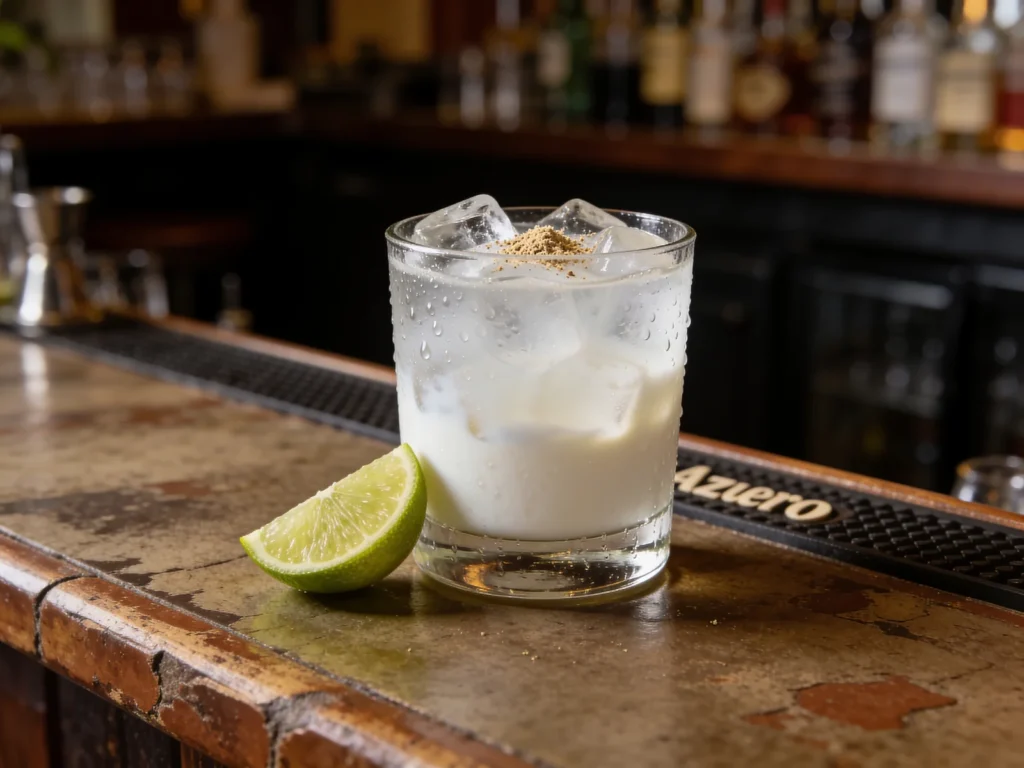

Ingredients
Build
- 60 mlSeco Herrerano
- 120 mlcold whole milk, or evaporated milk for the richer version
- 1 tspcaster sugar, or to taste (optional – many drinkers use none)
- cubed ice, to fill
Glass and garnish
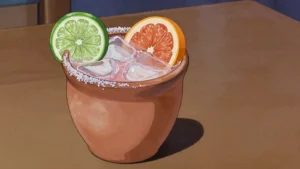
- a highball or a plain 300 ml tumbler
- a grating of nutmeg (optional)
- a wedge of lime, on the side
Directions
- Chill the glass and the milk thoroughly. This drink is served very cold and has no shaking step to chill it.
- If you are using sugar, dissolve it first in the seco in the bottom of the glass, stirring with a barspoon until no grains remain – sugar will not dissolve in cold milk.
- Fill the glass to the brim with cubed ice. Use hard, dry cubes rather than crushed, so the drink dilutes slowly.
- Pour the seco over the ice.
- Add the cold milk in a slow stream down the inside of the glass so it layers briefly before marbling into the spirit.
- Stir gently with a barspoon for 5–8 seconds, lifting from the bottom – just enough to combine and chill without whipping air into the milk.
- Taste and adjust: it should be creamy, faintly sweet and clean, with the cane spirit clearly present but softened, at roughly one part spirit to two parts milk.
- Grate a little nutmeg over the top if you like and serve immediately with a lime wedge on the side. Do not let it stand – the ice waters the milk down quickly and the drink turns thin and chalky.
Technique
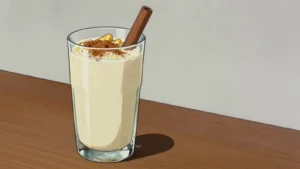
- Seco con vaca means seco with cow, and that is the entire recipe: Panama’s national spirit cut with milk. It is a countryside drink from the Azuero peninsula, drunk at festivals and rodeos, and its simplicity is the point.
- Do not shake this like a white Russian or a cocktail. Panamanians build it in the glass; shaking aerates the milk into a foam that masks the spirit.
- Evaporated milk gives the version most often served at fondas – sweeter, heavier and closer to a dessert. Fresh whole milk gives the cleaner, more refreshing version.
Substitutions
- No Seco Herrerano? A good unaged cane-juice rum (rhum agricole blanc) is the closest relative; a light white rum will do but is a little sweeter and less grassy.
- For a dairy-free version, use cold coconut milk – not traditional, but it works with the same cane character.
Variations
- Seco con leche evaporada, made with evaporated milk, the most common bar version.
- Seco con pipa, the same spirit lengthened with green coconut water instead of milk.
- Chichita de seco, seco lengthened with a chilled fruit chicha, usually pineapple or maracuya.
History
Panama’s own way with its national cane spirit; seco con leche is drunk in interior towns and at Carnival.
Frequently asked questions
What is Seco con vaca?
Seco con vaca is a cocktail from Panama: seco Herrerano poured over ice with milk, sometimes a little sugar. Panama’s own way with its national cane spirit; seco con leche is drunk in interior towns and at Carnival.
How long does Seco con vaca take to make?
Seco con vaca takes 2 min of preparation and none of cooking. The recipe makes 1 drink. It is rated easy to make.
What can I substitute in Seco con vaca?
Yes, within limits. No Seco Herrerano? A good unaged cane-juice rum (rhum agricole blanc) is the closest relative; a light white rum will do but is a little sweeter and less grassy. For a dairy-free version, use cold coconut milk – not traditional, but it works with the same cane character.
What is the most important thing to get right in Seco con vaca?
Fill the glass to the brim with cubed ice. Use hard, dry cubes rather than crushed, so the drink dilutes slowly.