
Ingredients
The dough
- 700 gfloury potatoes
- boiled in their skins
- cooled, peeled and riced
- 200 gplain flour
- plus more for the surface
- 1egg
- or 1 yolk, for a firmer dough
- half a teaspoon salt
- a pinch of grated nutmeg
- optional
The topping
- 100 gpoppy seeds
- ground, see the note
- 80 gcaster sugar
- or icing sugar
- or to taste
To finish
- 80 gbutter
- melted, and browned if you like
- extra sugar, to sprinkle
Sometimes served with
- stewed plums
- or plum jam, lekvár
- or a spoonful of soured cream
Directions
- Keep it in the freezer. Toast the seeds briefly before grinding. A dry pan for two minutes over low heat. Boil the potatoes in their skins. A wet potato dough needs more flour. Use floury potatoes. They mash dry and light.
- Boil them until completely soft. Do not undercook them, which gives lumps. Drain them thoroughly. Let them cool completely. Hot riced potato absorbs less flour. Peel the cold potatoes. Never use a processor for potato dough. Spread the riced potato out. Sprinkle the flour and salt over it.
- Bring it together quickly with your hands. Work it as little as possible. Mix only until it just comes together. Thirty seconds is about right. Start with less flour than the recipe says.
- Add more only if the dough is unworkably sticky. The right amount of flour is whatever it takes. Roll one šúľanec and boil it. If it falls apart, add a little more flour. Take a piece of dough. Roll it on a floured surface into a rope.
- Make the rope about as thick as a finger. Cut it into lengths of about four centimetres. Roll each piece between your palms. It should become a small cylinder. Keep them fairly small. Flour your hands and the board well.
- Work quickly, since it softens as it stands. Lay the finished pieces on a floured tray. Bring a large pot of salted water to a boil. Do not boil them hard. Add them in batches. Do not crowd the pot. Stir gently once so they do not stick to the base. That takes about three minutes. Cut one open. It should be cooked through with no raw centre.
- Lift them out with a slotted spoon. Drain them well. Do not tip them into a colander in a mass. Put them in a wide bowl. Pour over the melted butter. Toss them gently to coat. Heat butter until the solids turn golden.
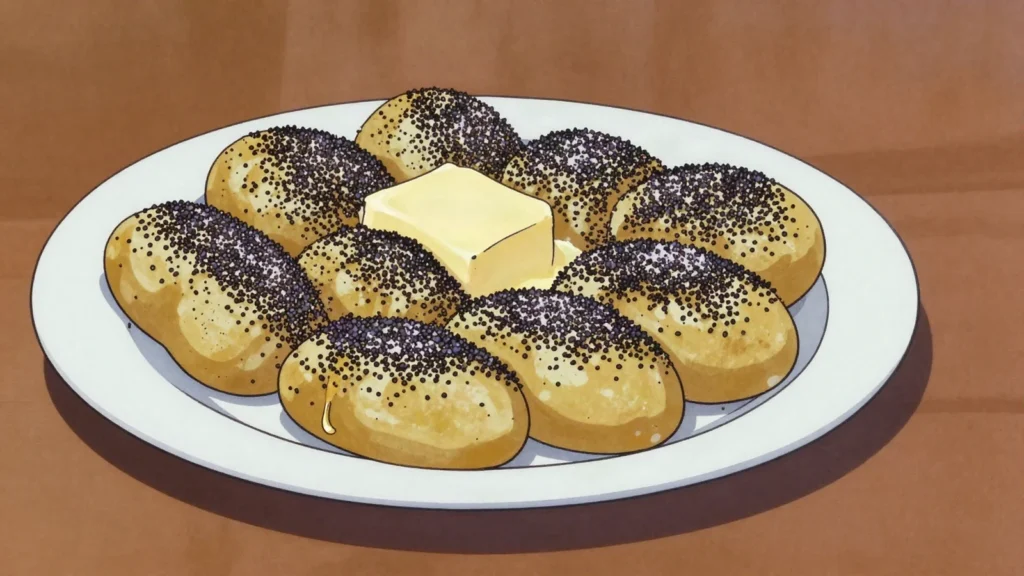
- Take it off as soon as it smells nutty. Mix the ground poppy seeds with the sugar. Scatter it generously over the buttered dumplings. Toss them again. Use more than seems right. A thin scattering is not enough. Serve them hot, immediately. They go firm and dry as they cool.
- Sprinkle over more sugar at the table. They keep two days refrigerated. Freeze them on a floured tray before bagging. Cook them from frozen, allowing an extra minute.
Technique
- Grind the poppy seeds. Whole seeds pass through largely untasted and stick in the teeth; ground, they release their oil and flavour, and the difference is enormous. A poppy seed mill or a spice grinder works — a food processor does not, since the seeds are too small and simply scatter.
- Buy ground poppy seed in small quantities and keep it in the freezer. The oil oxidises quickly and rancid poppy seed tastes sharply bitter — smell it before using it.
- Toast the seeds for two minutes in a dry pan before grinding. They should smell nutty, and it deepens the flavour considerably.
- Boil the potatoes in their skins and cool them completely. Skin-on potatoes absorb far less water; a wet dough needs more flour, and more flour makes heavy tough dumplings — the commonest failure with any potato dough.
- Use the minimum flour that holds the dough together. Potatoes vary enormously in moisture, so start with less than the recipe says and add only what you must.
- Work the dough as little as possible — thirty seconds. Working it develops gluten and releases starch, and both make it heavy and rubbery. Never use a food processor on potato.
- Boil one test šúľanec before shaping the rest. Falling apart means more flour; dense and heavy means you already have too much.
- Simmer them gently, never at a rolling boil. Hard boiling knocks them apart.
- Lift them out with a slotted spoon rather than tipping them into a colander, where they stick together and squash.
- Use more poppy seed and sugar than seems right. The dumplings themselves are plain and the topping is the whole flavour — a thin scattering is not enough.
- Browned butter is worth the extra minute, but it burns within seconds of smelling nutty. Take it off the heat immediately.
- Poppy seeds can produce a positive result on an opiate drug test from trace morphine on the seed surface — not an intoxicating amount, but enough to register. If you face a test, avoid them for several days beforehand. The atlas records this as fact and makes no medical claim.
- These are eaten as a main course at lunch, often after soup, not only as a dessert. Central European cooking has a whole category of sweet dishes that are the meal itself.
Substitutions
- Ground walnuts replace poppy seeds and are equally traditional.
- Toasted breadcrumbs fried in butter make the savoury version.
- Cottage cheese or tvaroh with sugar is another classic topping.
- Icing sugar replaces caster sugar and clings better to the seeds.
- A yolk instead of a whole egg gives a slightly firmer dough.
- Semolina can replace a little of the flour for a firmer dumpling.
Variations
- Orechové šúľance use ground walnuts instead of poppy seeds.
- Tvarohové šúľance are tossed with sweetened curd cheese.
- Strúhankové šúľance, with fried breadcrumbs, are the savoury version.
- Šúľance s kapustou serves them with cooked cabbage.
- Kopytka in Poland and noky in Czechia are the closest relatives.
- Makové rezance dresses noodles rather than dumplings in the same poppy and sugar.
Frequently asked questions
What is Makové šúľance?
Makové šúľance is a dessert from Slovakia: potato-dough rolls tossed in poppy seeds and sugar.
How long does Makové šúľance take to make?
Makové šúľance takes 40 minutes of preparation and 20 minutes of cooking. The recipe makes serves 4. It is rated medium to make.
What can I substitute in Makové šúľance?
Yes, within limits. Ground walnuts replace poppy seeds and are equally traditional. Toasted breadcrumbs fried in butter make the savoury version. Cottage cheese or tvaroh with sugar is another classic topping. Icing sugar replaces caster sugar and clings better to the seeds. A yolk instead of a whole egg gives a slightly firmer dough. Semolina can replace a little of the flour for a firmer dumpling.
What is the most important thing to get right in Makové šúľance?
Boil them until completely soft. Do not undercook them, which gives lumps. Drain them thoroughly. Let them cool completely. Hot riced potato absorbs less flour. Peel the cold potatoes. Never use a processor for potato dough. Spread the riced potato out. Sprinkle the flour and salt over it.