
Ingredients
The dough
- 500 gplain flour
- 7 gdried yeast
- 200 mlwarm milk
- 1egg
- 80 glard
- or butter
- 1 teaspoonsalt
- 1 teaspoonsugar
The crackling
- 250 gpork crackling
- škvarky, finely chopped
- or minced
- at room temperature
To season
- 1 teaspoonblack pepper
- coarsely ground
- salt, to taste
- 1 teaspooncaraway seeds
- optional
To finish
- 1egg, beaten
- for glazing
- coarse salt
- or caraway, for scattering
Directions
- Steam pushes those layers open as they bake. The crackling should be at room temperature. Warm soft crackling smears into the dough instead. Chop or mince the crackling reasonably finely. Large pieces tear holes in the thin dough. Taste it before deciding how much salt to add. Do not be shy with the pepper at all. Cut pork back fat into small even cubes. The fat melts out over an hour or more.
- Warm the milk gently until it is just lukewarm. It should feel barely warm on the inside of your wrist. Stir the yeast and sugar into the warm milk. Leave it for about ten minutes to become frothy. Start again with fresh yeast if nothing happens. Put the flour and salt into a large bowl. Mix the salt through the flour before liquid goes in.
- Salt kills yeast on direct prolonged contact. Add the yeast milk, the egg and half the lard. Keep half the lard back for the folding later. Work the rest into the dough now. Bring it together into a soft dough.
- Knead the dough for about eight minutes until smooth. It should become smooth, soft and elastic. Cover the bowl and leave the dough to rise. Give it about one hour in a warm place. Chop or mince the crackling reasonably finely. Aim for pieces about the size of a lentil.
- Mix the pepper and any salt into the crackling. Taste a small piece first to judge the salt. Add pepper generously to cut the richness. Caraway can go in here if you want it. Roll it into a large rectangle on a floured surface. Aim for about one centimetre thick to start. Keep the edges reasonably straight as you roll. Spread the seasoned crackling over the rolled dough.
- Cover two thirds of the rectangle rather than all of it. Spread it evenly rather than in patches. Fold the uncovered third over the middle third. Press the edges gently to seal them. Wrap the folded dough and rest it for twenty minutes.
- Rest it in the refrigerator if the kitchen is warm. That keeps the lard firm between the layers. Roll the dough out and fold it twice more. Rest it for twenty minutes between each fold. Do not skip those rests at all.
- Turn the dough ninety degrees before each rolling. Roll the finished dough out to two centimetres thick. These are thick little scones rather than thin ones. Cut out rounds with a small cutter. About five centimetres across is traditional. Press the cutter straight down without twisting. Twisting seals the edges and stops them rising.
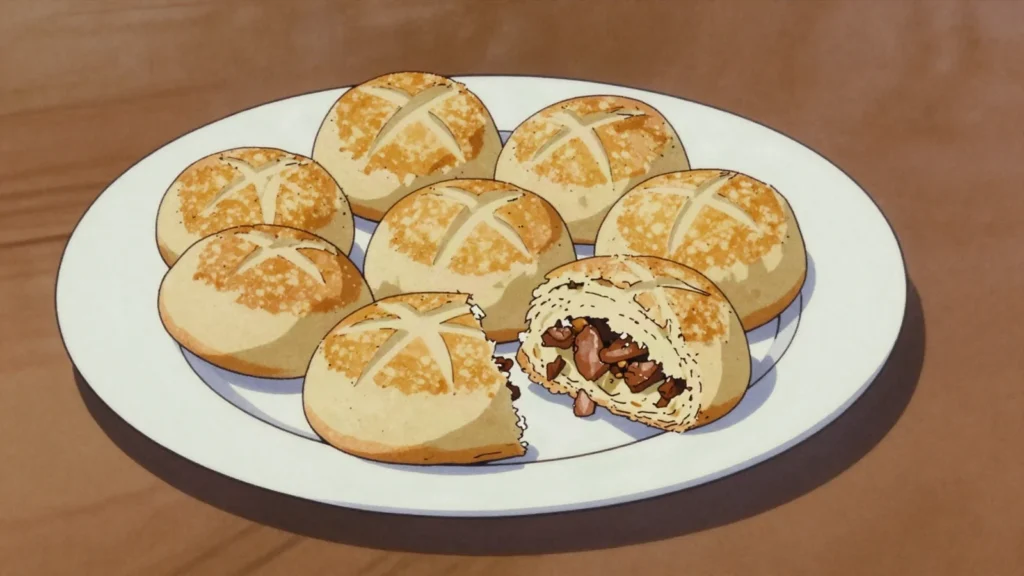
- Score the tops in a criss-cross pattern. Use a sharp knife and score only shallowly. It also helps them rise evenly in the oven. Set them on a lined tray and let them prove. Give them about twenty-five minutes to puff up.
- Brush the tops with the beaten egg. That gives a deep golden shine when baked. Brush it thinly rather than letting it pool. Scatter coarse salt or caraway over the tops. The seeds and salt stick to the wet glaze.
- Bake them in a hot oven until deep golden. About two hundred degrees works well here. Lift them onto a rack to cool a little. Cooling on a rack stops the bases going soggy. Steam escapes rather than condensing underneath. Let them cool for at least ten minutes. Serve them warm or at room temperature. They are eaten warm with the hands.
Technique
- If you render your own lard, do it over the lowest heat you can manage — high heat browns and burns the solids, and burnt crackling is bitter and ruins the batch. Hot rendered fat is as dangerous as deep frying oil, and water anywhere near it erupts violently and burns badly.
- Chop the crackling to about the size of a lentil and use it at room temperature: large pieces tear holes in the thin dough, cold hard crackling tears it as you roll, and warm soft crackling smears in rather than staying in pieces.
- These are made entirely with pork fat and crackling and there is no meaningful substitute, so they suit few dietary requirements. They also contain wheat, dairy and egg, and the lard is not obvious from looking at them — say clearly what is in them.
Substitutions
- Butter replaces the lard in the dough, though lard is traditional and gives a flakier result. Caraway seeds can go into the crackling mixture as well as being scattered over the tops.
- Škvarky are the crisp solids left after rendering pork back fat slowly for lard, and these scones exist because that byproduct existed — a way of using everything from the zabíjačka pig feast. That home slaughter tradition is far less common than it once was and crackling is now usually bought; the atlas records both realities.
Variations
- Keep half the lard back from the dough for the folding, since that reserved fat between the folds is what creates the flaky layers. Fold three times in total, resting twenty minutes between each — in the refrigerator if the kitchen is warm, to keep the lard firm — and turn the dough ninety degrees before each rolling for more even layers.
- Roll the finished dough to a full two centimetres: these are thick little scones and thinner ones bake dry and hard. Press the cutter straight down without twisting, since twisting seals the edges and stops them rising, which is a genuine and common mistake.
- Crackling is already salty from the rendering, so taste a piece before adding any salt, and be generous with coarsely ground black pepper, which cuts the richness of the pork fat. Bake hot at about 200°C: the steam is what opens the layers, and a cool oven gives flat greasy scones.
History
Baked from the crackling left after rendering lard at the pig feast, so that nothing from the slaughter was wasted.
Frequently asked questions
What is Škvarkové pagáče?
Škvarkové pagáče is a snack from Slovakia: small savoury scones studded with pork crackling, eaten with beer or wine. Baked from the crackling left after rendering lard at the pig feast, so that nothing from the slaughter was wasted.
How long does Škvarkové pagáče take to make?
Škvarkové pagáče takes 40 minutes plus rising of preparation and 20 minutes of cooking. The recipe makes makes about 30. It is rated medium to make.
What can I substitute in Škvarkové pagáče?
Yes, within limits. Butter replaces the lard in the dough, though lard is traditional and gives a flakier result. Caraway seeds can go into the crackling mixture as well as being scattered over the tops. Škvarky are the crisp solids left after rendering pork back fat slowly for lard, and these scones exist because that byproduct existed — a way of using everything from the zabíjačka pig feast. That home slaughter tradition is far less common than it once was and crackling is now usually bought; the atlas records both realities.
What is the most important thing to get right in Škvarkové pagáče?
Steam pushes those layers open as they bake. The crackling should be at room temperature. Warm soft crackling smears into the dough instead. Chop or mince the crackling reasonably finely. Large pieces tear holes in the thin dough. Taste it before deciding how much salt to add. Do not be shy with the pepper at all. Cut pork back fat into small even cubes. The fat melts out over an hour or more.