
Ingredients
The couscous
- 400 gmillet couscous
- fine or medium grain
- sold as thiacry or araw
- or 400 g fine wheat couscous
- water, to moisten
- a pinch of salt
The sour milk
- 1 litrethick sour milk
- or 800 g plain yoghurt
- plus 200 ml milk
- or 500 g yoghurt
- plus 500 g soured cream
- well chilled
The sweetening
- 150 gsugar
- or to taste
- or 150 ml condensed milk
- or honey
The flavouring
- half a teaspoon grated nutmeg
- freshly grated
- a pinch of vanilla
- optional
- a pinch of salt
Sometimes added
- raisins
- chopped pineapple
- grated coconut
- crushed peanuts
- a little orange blossom water
Directions
- Put the couscous into a wide bowl. Sprinkle over about a hundred millilitres of water. Add a pinch of salt to the water first. Rub the grains between your palms as you go. The grains should feel damp but not wet.
- Let it stand for ten minutes to absorb. Now steam it in a couscoussier if you have one. Line the basket with muslin if the holes are large. Bring the water beneath to a steady boil. Tip the couscous into the basket loosely. Do not press it down or pack it in. Steam rises through it and must be able to pass.
- Steam it uncovered for about fifteen minutes. Sprinkle over a little more water as you work. Rub it between your hands to separate the grains. Be careful, because it is very hot at this stage.
- Let it cool a little before handling it closely. Steam scalds badly and it condenses on skin. Return it to the basket and steam it again. Steam it for another fifteen minutes. It should be soft with no hard centre. Tip it out and spread it on a wide tray. Break up all remaining lumps with your fingers.
- Let it cool completely before going further. Warm couscous will curdle and thin the milk. It also spoils faster in a warm mixture. Whisk the yoghurt until it is smooth and loose. Add milk or soured cream to reach the right texture. It should pour thickly rather than sit solid. Add the sugar and whisk it until dissolved.
- Taste it and adjust the sweetness now. It should be clearly sweet, since the grain is bland. Add the freshly grated nutmeg to the milk. Grate it fresh rather than using ground nutmeg. There is a note about nutmeg worth including.
- Add a pinch of salt to the milk mixture. Salt sharpens sweetness and it should not be skipped. Add vanilla or orange blossom water if using them. Add it gradually rather than all at once.
- Stir gently so the grains stay separate. It thickens noticeably within an hour. Add more milk later if it becomes too stiff. Two hours is the minimum for a good result. Stir it again before serving to loosen it. Add fruit, raisins or coconut at this point. Serve it in bowls or in glasses with spoons. It keeps for two days in the refrigerator.
Technique
- Millet couscous must be steamed, not soaked. Uncooked grains stay hard and gritty, then swell in the milk and ruin the texture. Two steamings with a rubbing-out in between is what makes it light; skipping the second gives dense clumps.
- Let the couscous cool completely before it meets the milk. Warm grain curdles and thins the dairy and shortens how long the dish keeps.
- Traditionally this uses naturally soured raw milk, which Fula herders have made for centuries because it keeps in heat without refrigeration. Raw milk can carry harmful bacteria and souring does not reliably destroy them, so pasteurised cultured yoghurt is the safer choice for a cook working outside that tradition. That is a practical point, not a criticism of herders who know their own animals.
- Make the mixture looser than you want it. The couscous keeps absorbing milk for an hour or more and thickens noticeably; loosen it with extra milk before serving.
- Grate the nutmeg fresh. It is the signature flavour and pre-ground nutmeg fades within weeks. In very large quantities nutmeg is genuinely intoxicating and unpleasant, but culinary amounts — a fraction of a single nut — are entirely safe.
- Add fruit, coconut and nuts at serving rather than during chilling, or they go soggy. Mention peanuts to guests, since the allergy can be severe.
- The dish crosses the whole western Sahel under many names — thiacri, thiakry, chakery, dèguè — across Wolof, Bambara and Fula-speaking communities whose territories the colonial borders cut through. The atlas records the family and adjudicates no origin claim.
Substitutions
- Fine wheat couscous replaces millet couscous and needs less steaming — one pass of about ten minutes is usually enough. The flavour is blander and the texture softer.
- Plain yoghurt loosened with milk replaces naturally soured milk and is the safer everyday choice.
- A mixture of yoghurt and soured cream gives a richer result closer to full-fat herder’s milk.
- Condensed milk replaces sugar and adds richness at the same time; reduce the added milk accordingly.
- Honey replaces sugar for a different, more floral sweetness.
- Ground nutmeg replaces freshly grated, though the difference is noticeable. Use slightly more.
Variations
- Dèguè, the Malian and Senegalese name, is essentially the same dish and is sold in bottles and sachets across the region.
- A version with pineapple stirred through is popular in Guinea and Senegal and is common at celebrations.
- Some households add raisins, grated coconut and crushed peanuts together for a richer version.
- Sombi is the related Senegalese rice pudding, made with rice rather than millet couscous and served warm.
- A drinkable version, thinned with much more milk and served in a glass, is sold from cold boxes by street vendors.
- Fonio, the tiny Sahelian grain, replaces millet in some households and gives a finer, more delicate texture.
History
A cold sweet shared across the western Sahel, eaten in Guinea at celebrations and after Ramadan meals.
Frequently asked questions
What is Thiacri?
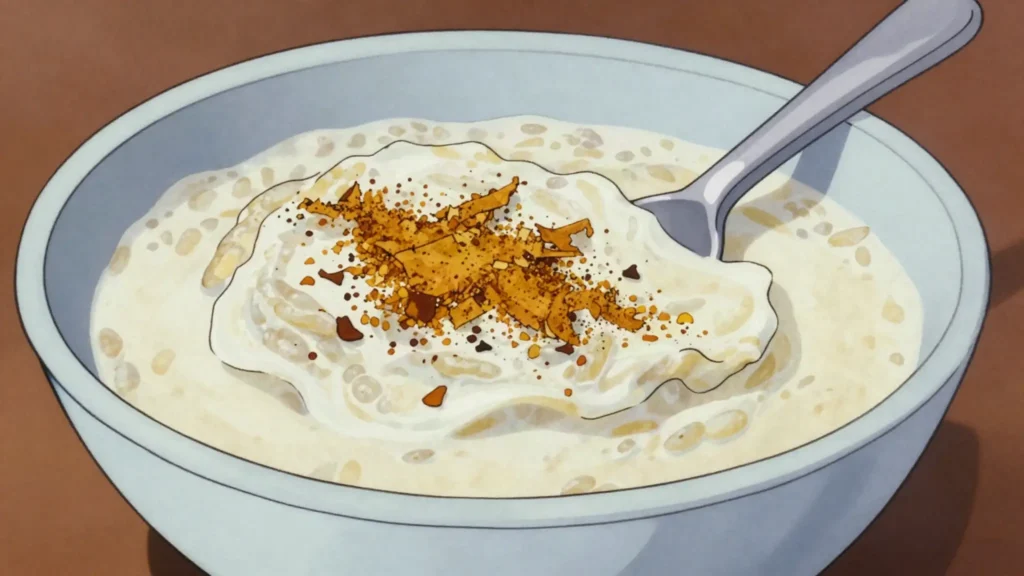
Thiacri is a dessert from Guinea: steamed millet couscous folded into sweetened sour milk with nutmeg. A cold sweet shared across the western Sahel, eaten in Guinea at celebrations and after Ramadan meals.
How long does Thiacri take to make?
Thiacri takes 20 minutes of preparation and 45 minutes of cooking. The recipe makes serves 6. It is rated medium to make.
What can I substitute in Thiacri?
Yes, within limits. Fine wheat couscous replaces millet couscous and needs less steaming — one pass of about ten minutes is usually enough. The flavour is blander and the texture softer. Plain yoghurt loosened with milk replaces naturally soured milk and is the safer everyday choice. A mixture of yoghurt and soured cream gives a richer result closer to full-fat herder’s milk. Condensed milk replaces sugar and adds richness at the same time; reduce the added milk accordingly. Honey replaces sugar for a different, more floral sweetness. Ground nutmeg replaces freshly grated, though the difference is noticeable. Use slightly more.
What is the most important thing to get right in Thiacri?
Let it stand for ten minutes to absorb. Now steam it in a couscoussier if you have one. Line the basket with muslin if the holes are large. Bring the water beneath to a steady boil. Tip the couscous into the basket loosely. Do not press it down or pack it in. Steam rises through it and must be able to pass.