The spiny South American fruit that Europe once grew in heated pits as the ultimate luxury — sharp, sweet, juicy, and the one fruit whose enzyme will tenderise meat and stop a jelly setting.
Where it comes from
The pineapple was domesticated in the Paraná–Paraguay river region of South America and had spread through the tropical Americas by the time Columbus met it in Guadeloupe in 1493. The Spanish and Portuguese carried it around the tropics within a century — to the Philippines, India and Africa — and in Europe it became the most prized fruit of the seventeenth and eighteenth centuries, grown at vast expense in heated glasshouses, rented out for dinner parties and carved in stone on gateposts as a symbol of hospitality and wealth.
Hawaii built an industry on it and canned pineapple made it ordinary; today Costa Rica, the Philippines and Brazil grow the most. The fruit’s enzyme, bromelain, breaks down protein — which is why fresh pineapple makes a marinade tenderise and why it will not set in gelatine, and why the mouth tingles after a lot of it. Cooking destroys the enzyme, so tinned pineapple sets in a jelly where fresh will not.
Varieties
- Smooth Cayenne — The classic large, tall pineapple; juicy, tangy, the traditional canning and shipping variety.
- MD-2 (Gold, Extra Sweet) — Sweeter, lower in acid, golden inside; the variety that now dominates supermarkets.
- Queen (Victoria) — Small, very sweet, fragrant, with a crisp core; grown in South Africa, Mauritius and Réunion.
- Red Spanish — Squarish, red-orange skin, fibrous, tart; the Caribbean pineapple, good for cooking.
- Sugarloaf — Pale-fleshed, very sweet, low in acid, with an edible core; Mexico and West Africa.
In the kitchen
Cut the top and base off, stand it up and slice the skin away downward following the curve, then remove the eyes with a small knife or cut the flesh into rings and core them. Fresh, it is eaten as it is, with chilli and lime in Mexico, in fruit salads and salsas; grilled or roasted, its sugar caramelises and it goes with pork, duck and rum.
In savoury cooking it is Southeast Asian and Caribbean before anything else — in Thai sour curries and fried rice, in Filipino and Hawaiian pork dishes, in Malaysian pineapple curry — and a marinade with pineapple juice tenderises tough meat in an hour (and turns it to mush in a day). Do not add fresh pineapple to a gelatine dessert.
Choosing and keeping
A ripe pineapple is heavy, smells sweet at the base, has a slight give and leaves near the crown that pull out with a gentle tug; colour is not a reliable guide. It does not ripen after picking — it only softens and ferments. Keep it at room temperature for a day or two, then refrigerate cut.
Cut pineapple keeps three or four days in the fridge in a sealed container. Tinned pineapple in juice is a decent product and is cooked, so it sets in jelly and does not tenderise.
Dishes with pineapple
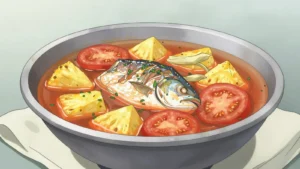 Samlor MachuSour soup of fish or beef with tamarind, pineapple and water-lily stems
 Wonjosweet crimson hibiscus juice, served chilled
 Thiakrysweet millet couscous folded into creamy soured milk
 Panty RipperCoconut rum poured over ice with pineapple juice
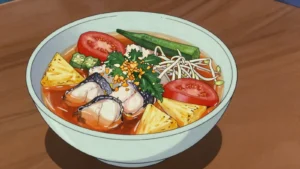 Canh ChuaSour Mekong soup of fish, tamarind, pineapple, okra and elephant-ear stem
 EnsaladaChilled fruit punch of chopped apple, pineapple and lettuce in juice
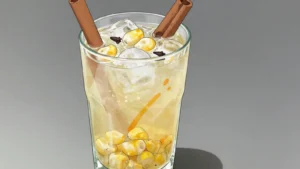 ChampúsCold maize drink with lulo, pineapple, panela, clove and cinnamon
 ClericóWhite wine punch with chopped fruit, served cold at Christmas
Pineapple is tagged on 64 dishes from 45 countries in the atlas. These notes are written from general knowledge and carry no per-fact citation — see About.