
Ingredients
Couscous
- 500 gfonio
- or 500 g fine maize meal
- about 400 ml water
- 1 teaspoonsalt
The milk
- 1.5 litreskossam
- curdled or soured milk
- or 1.5 litres buttermilk
- or plain yoghurt, loosened
Sometimes added
- sugar, to taste
- or honey
- a pinch of salt
- crushed baobab fruit powder
To serve
- in a wide communal bowl
- at Ramadan
- at ceremonies
Directions
- Put the fonio in a large bowl. Cover it with plenty of cold water. Swirl it about with your hand. Pour off the grain with the water. Leave the sand behind in the bowl. Repeat that washing three or four times. Do it until no grit settles at all. Drain it thoroughly afterwards. Spread the drained fonio in a wide bowl.
- Sprinkle a little salted water over it. Rub it between both your palms. It stops them clumping as they steam. Bring water to a boil in a pot. Set a steamer or a colander over it. Line it with a cloth if the holes are large. Tip the moistened fonio into it.
- Steam must go through the grain. It should not escape round the sides. Seal the gap with a damp cloth strip. Cooking it takes about fifteen minutes. Cover it and steam it steadily. Give it about fifteen minutes.
- Tip the fonio out into a wide bowl. Let it cool enough to handle it. Sprinkle a little more water over it. Rub it between your palms again. Break up all of the lumps in it. Return it all to the steamer again.
- Steam it for another ten minutes. Judging the fonio takes a taste. Tip it out into a wide warm bowl. Break up any remaining lumps with a fork. Let it cool to warm rather than hot. Hot couscous curdles the milk further. Let it cool before the milk goes on.
- Stir the kossam until it is smooth. Loosen it with a little water if thick. Add sugar to the milk if you want it. Plain or salted is common otherwise.
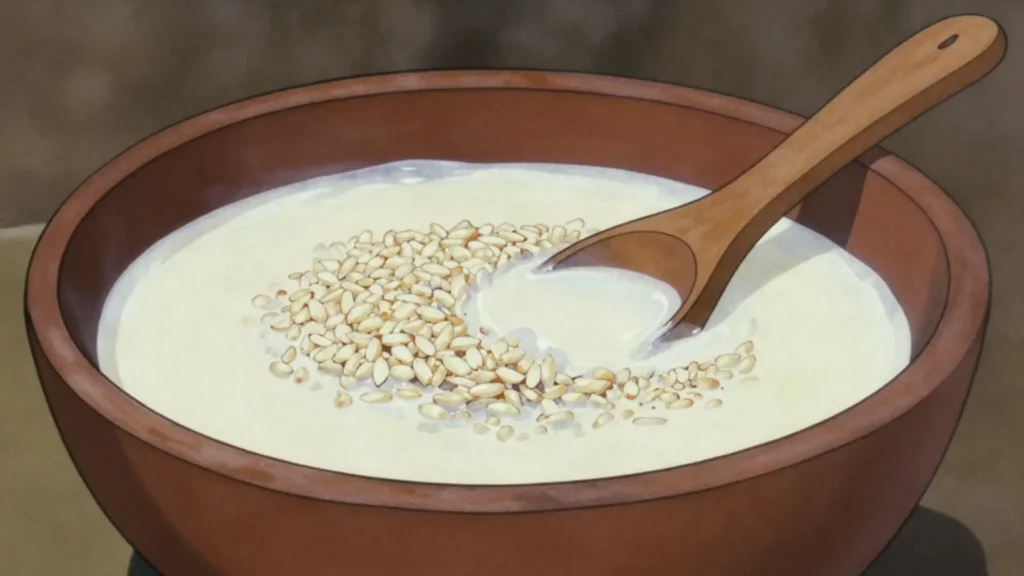
- Mound the warm couscous in the bowl. Pour the soured milk over it generously. The couscous should be drenched. Pour on more than seems right. The couscous keeps two days refrigerated. Add the milk only when serving.
Technique
- Fonio is Digitaria exilis, cultivated in West Africa for a very long time, with grains among the smallest of any cultivated cereal; it grows fast, matures in as little as two months and tolerates poor soil and drought, which made it a hunger-season crop feeding people before other harvests came in.
- Traditional kossam is unpasteurised, and while souring reduces the risk it does not remove it; pregnant people, young children and anyone immunocompromised should avoid unpasteurised dairy, and cultured buttermilk or loosened yoghurt is the safe substitute.
- Fonio traditionally carries sand from being threshed on the ground: wash it by swirling in plenty of water and pouring the grain off, leaving the sand behind in the bowl, three or four times until nothing settles. It is steamed rather than boiled, since boiling makes it claggy, and steaming twice with rubbing between gives lighter separate grains.
Substitutions
- Fine maize meal is used in place of fonio and treated identically, giving a heavier yellower couscous.
- Cultured buttermilk or loosened plain yoghurt stands in for kossam.
Variations
- It is sweetened with sugar or honey at Ramadan and often left plain or salted otherwise.
- Baobab fruit powder is stirred into the milk in some households.
- It is served drenched rather than dressed, and eaten from a shared bowl.
History
A Fula dish of the Fouta Djallon: fonio or maize couscous drenched in kossam, the curdled milk of the herds, eaten at Ramadan and ceremonies.
Frequently asked questions
What is Latchiri e kossam?
Latchiri e kossam is a main from Guinea: fula corn or fonio couscous drenched in curdled milk. A Fula dish of the Fouta Djallon: fonio or maize couscous drenched in kossam, the curdled milk of the herds, eaten at Ramadan and ceremonies.
How long does Latchiri e kossam take to make?
Latchiri e kossam takes 30 minutes of preparation and 45 minutes of cooking. The recipe makes serves 6. It is rated medium to make.
What can I substitute in Latchiri e kossam?
Yes, within limits. Fine maize meal is used in place of fonio and treated identically, giving a heavier yellower couscous. Cultured buttermilk or loosened plain yoghurt stands in for kossam.
What is the most important thing to get right in Latchiri e kossam?
Steam must go through the grain. It should not escape round the sides. Seal the gap with a damp cloth strip. Cooking it takes about fifteen minutes. Cover it and steam it steadily. Give it about fifteen minutes.