
Ingredients
Pork
- 600 gpork shoulder or belly, in 3 cm cubes
- 1 tbspShaoxing wine
- 1 tspsalt
- 1egg
- 1 tspwhite pepper
Batter
- 100 gcornflour
- 50 gplain flour
- 1 tspbaking powder
- about 100 ml cold water
Sauce
- 4 tbsprice vinegar
- 3 tbspsugar
- 3 tbsptomato ketchup
- 1 tbsplight soy sauce
- 1 tbspWorcestershire sauce, optional
- 1 tspcornflour slaked in water
- 100 mlwater or pineapple juice
Vegetables
- 1green pepper
- 1red pepper
- 1onion
- 200 gfresh pineapple, in chunks
To fry
- oil, for deep frying
To serve
- steamed rice
Directions
- Use pork shoulder or belly rather than loin. Loin is lean and it goes dry and stringy under deep frying, where shoulder has enough fat to stay juicy. Cut it into even cubes and marinate it with the wine, salt, pepper and egg for 30 minutes. Now the batter, which needs to be crisp rather than bready.
- Mix the cornflour, flour and baking powder with cold water into a thick batter. Use mostly cornflour. Wheat flour alone gives a soft, doughy coating, and cornflour is what makes it shatteringly crisp.
- Keep the water cold, which also helps. The batter should be thick enough to cling in a heavy coat rather than run off. Combine the vinegar, sugar, ketchup, soy and water in a small pan. Bring it to a simmer and taste it. It should be sharply sour first and sweet second. Adjust with more vinegar or sugar until the balance is right.
- Thicken it with the slaked cornflour, stirring, until it is glossy and coats a spoon. Add the cornflour gradually and stop while it is still pourable, because an over-thickened sauce goes gluey and dull rather than glossy.
- Set the finished sauce aside off the heat. Now the frying, which is done twice. Coat the pork in batter and fry it in batches for 4 to 5 minutes until pale golden and cooked through. Lift it out and rest it for at least 5 minutes. Now raise the oil to 190°C (375°F) and fry it again for 1 to 2 minutes until deep golden and hard-crisp.
- Drain the fried pork on a wire rack. Meanwhile stir-fry the peppers and onion in a very hot wok for a minute. Keep the vegetables crisp. They should still have real bite, since they are the fresh element against the rich pork.
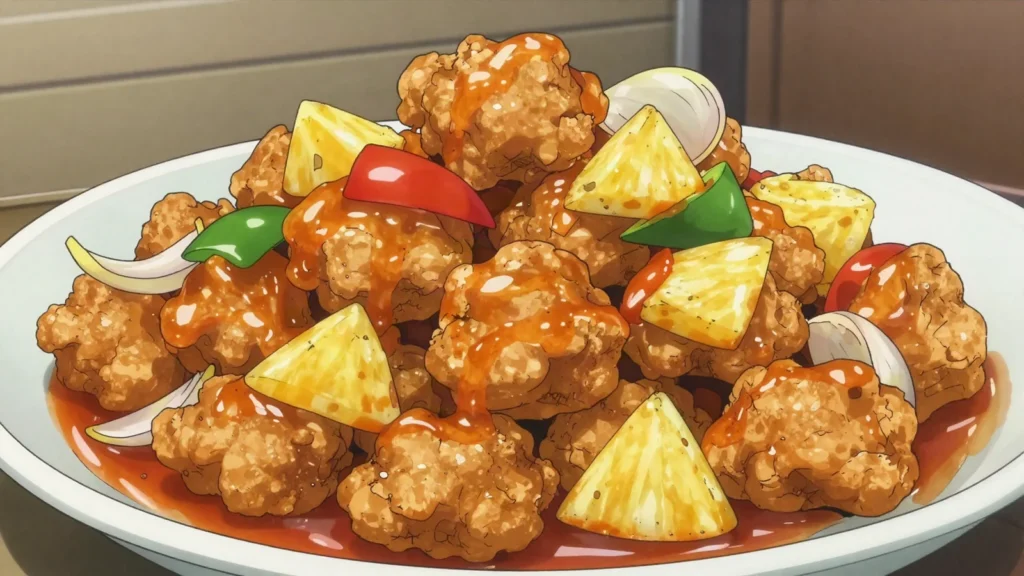
- Add the pineapple and toss briefly. Pour the hot sauce into the wok with the vegetables and bring it to a bubble. Tip in the fried pork and toss it for no more than 20 or 30 seconds. Toss it for seconds, not minutes. Turn it out onto a plate immediately.
- Serve it at once with steamed rice, before the coating has time to soften. Some restaurants serve the sauce on the side for exactly the reason above, which is sensible if the meal is not going straight to the table.
Technique
- Older Cantonese versions use hawthorn or red vinegar rather than ketchup.
- Gu lou juk with bone-in ribs is the earlier form of the dish.
- It must be eaten within minutes of being sauced.
Substitutions
- Chicken thigh in place of pork, with the same method.
- Rice vinegar and a little red food colouring for the older style.
Variations
- Made with bone-in ribs, the older version.
- Without pineapple, which some Cantonese cooks prefer.
- Sweet and sour fish or prawns, made the same way.
History
Pork, battered and fried, then coated in a sauce combining vinegar and sugar, generally traced to Cantonese cooking in southern China, with sweet-and-sour flavour combinations documented in Chinese cuisine for centuries as one of several classic flavour profiles Chinese cooks have long worked with. Its now-common bright red colour and pineapple-and-bell-pepper garnish, closely associated with the dish internationally, developed significantly through adaptation in Chinese restaurants abroad, particularly in the United States and United Kingdom, where the dish was reworked with ingredients more available and appealing to local Western customers than the version typically found within mainland China itself. It remains one of the most internationally recognized Chinese dishes, though often considerably different from more traditional Cantonese sweet-and-sour preparations.
Frequently asked questions
What is Sweet and Sour Pork?
Sweet and Sour Pork is a main from China: crispy battered pork tossed with pineapple and peppers in glossy tangy sauce. Pork, battered and fried, then coated in a sauce combining vinegar and sugar, generally traced to Cantonese cooking in southern China, with sweet-and-sour flavour combinations documented in Chinese cuisine for centuries as one of several classic flavour profiles Chinese cooks have long worked with. Its now-common bright red colour and pineapple-and-bell-pepper garnish, closely associated with the dish internationally, developed significantly through adaptation in Chinese restaurants abroad, particularly in the United States and United Kingdom, where the dish was reworked with ingredients more available and appealing to local Western customers than the version typically found within mainland China itself. It remains one of the most internationally recognized Chinese dishes, though often considerably different from more traditional Cantonese sweet-and-sour preparations.
How long does Sweet and Sour Pork take to make?
Sweet and Sour Pork takes 30 min plus 30 min marinating of preparation and 20 min of cooking. The recipe makes 4 servings. It is rated medium to make.
What can I substitute in Sweet and Sour Pork?
Yes, within limits. Chicken thigh in place of pork, with the same method. Rice vinegar and a little red food colouring for the older style.
What is the most important thing to get right in Sweet and Sour Pork?
Use pork shoulder or belly rather than loin. Loin is lean and it goes dry and stringy under deep frying, where shoulder has enough fat to stay juicy. Cut it into even cubes and marinate it with the wine, salt, pepper and egg for 30 minutes. Now the batter, which needs to be crisp rather than bready.