
Ingredients
Fish
- 2whole buka buka, Lake Tanganyika perch
- or 2 whole firm white fish, about 800 g each
- juice of 2 lemons
- 2 teaspoonssalt
- black pepper
Marinade
- 4garlic cloves, crushed
- 3cm ginger, grated
- 2 tablespoonsoil
- 1 teaspoonpaprika
- 1 teaspoonchilli powder
- 1stock cube, crumbled
To serve
- nshima, thick maize porridge
- or rice
- a tomato and onion relish
- lemon wedges
Directions
- Scale the fish from tail to head with a knife. Gut it and rinse the cavity thoroughly. Pull out the dark line along the backbone. That line goes bitter if it is left in.
- Trim the fins with kitchen scissors. Pat the whole fish dry with kitchen paper. Cut three or four deep slashes into each side. Cut right down to the bone each time. Those slashes let the heat into the thick flesh.
- Rub the lemon juice and salt all over the fish. Work it well into the slashes and the cavity. Mix the garlic, ginger, oil and spices together. Rub that paste over the whole fish.
- Let it sit for thirty minutes at room temperature. Longer than an hour and the lemon starts to cook it. Wait until the coals are covered in grey ash. Oil the grill bars well before the fish goes on. Fish skin sticks to a dry grill immediately.
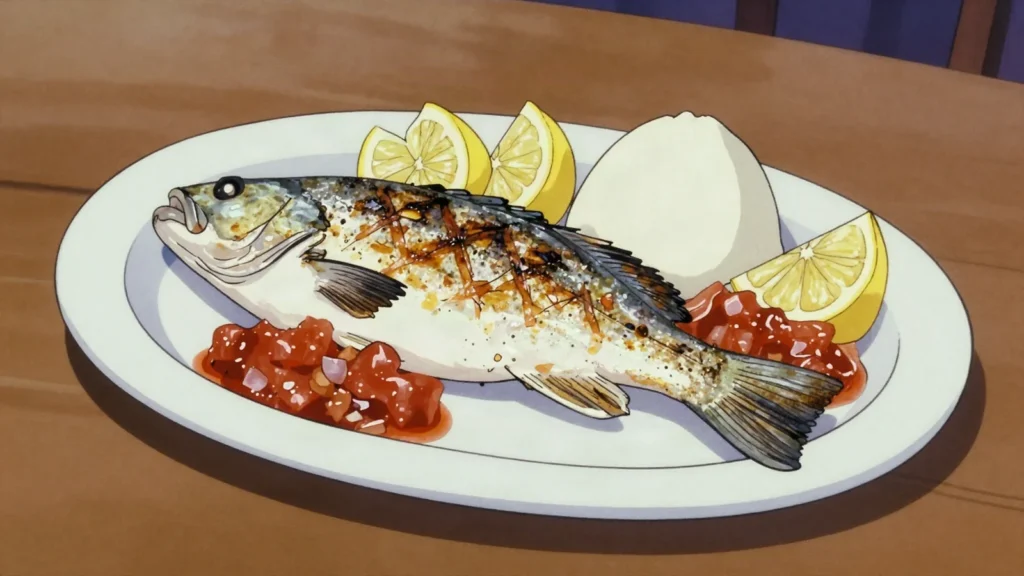
- Lay the fish on and leave it completely alone. Give it six or seven minutes on the first side. Turn it once with a wide fish slice. Give it another six minutes on the second side.
- Heat oil in a wide heavy pan to a shallow depth. Dust the fish lightly with seasoned flour. Fry it for about seven minutes a side. The skin should be crisp and deep golden. Lift it out and drain it on paper. Judging when it is done is straightforward. Fry chopped onion in oil until soft. Add chopped tomatoes and cook them down.
- Season it with salt and a little chilli. Cook it until it is thick and jammy. Serving it is done hot and whole. Set the whole fish on a platter. Serve nshima or rice alongside it. Spoon the tomato relish over or beside the fish.
Technique
- Lake Tanganyika holds four endemic Lates perch species found nowhere else, and buka buka is among the largest.
- Mpulungu is Zambia’s port on the lake, and fish landed there is trucked south on ice.
Substitutions
- Nile perch is the closest relative available, and any firm whole white fish works.
- Sea bass or bream can be grilled the same way at a smaller size.
Variations
- Some cooks fry the fish rather than grilling it over charcoal.
- A version stewed in tomato and onion is also made.
- Kapenta, the small lake sardine, is the everyday fish of the same waters.
History
Named for the sound its swim bladder makes, this endemic Lates perch is landed at Mpulungu and trucked south on ice.
Frequently asked questions
What is Buka buka?
Buka buka is a main from Zambia: lake Tanganyika perch, firm and white, grilled or fried whole. Named for the sound its swim bladder makes, this endemic Lates perch is landed at Mpulungu and trucked south on ice.
How long does Buka buka take to make?
Buka buka takes 20 minutes of preparation and 20 minutes of cooking. The recipe makes serves 4. It is rated easy to make.
What can I substitute in Buka buka?
Yes, within limits. Nile perch is the closest relative available, and any firm whole white fish works. Sea bass or bream can be grilled the same way at a smaller size.
What is the most important thing to get right in Buka buka?
Trim the fins with kitchen scissors. Pat the whole fish dry with kitchen paper. Cut three or four deep slashes into each side. Cut right down to the bone each time. Those slashes let the heat into the thick flesh.