
Ingredients
Tortilla
- 800 gwaxy or all-purpose potatoes, peeled and sliced 3 mm thick, then broken into rough pieces
- 2onions (about 300 g), thinly sliced
- 500 mlSpanish olive oil, for confiting
- 6large eggs
- 2 tspfine salt, divided
Equipment
- 1heavy 24 cm non-stick or well-seasoned frying pan
- 1flat plate slightly wider than the pan, for turning
- 1colander set over a bowl, to catch the oil
To serve
- crusty bread
- 1 handfulof green olives or piquillo peppers (optional)
Directions
- Slice the potatoes thinly and break them apart with your hands rather than cutting them cleanly; the rough edges release starch that helps bind the tortilla.
- Heat the oil in the pan to 130–140°C (275–275°F), warm rather than hot, and slide in the potatoes and onion with 1 tsp of salt.
- Confit them gently for 20–25 minutes, moving them occasionally with a slotted spoon. They should never colour or crisp: they are poaching in oil until utterly tender and collapsing at the edges.
- Drain in the colander, keeping the oil, and let them cool for 5 minutes so they do not scramble the eggs on contact.
- Beat the eggs with the remaining salt just until combined, no more, then fold the warm potatoes and onion through. Rest the mixture 10 minutes so the potato absorbs some of the egg; this is what makes the tortilla creamy rather than layered.
- Wipe the pan, return 2 tbsp of the reserved oil and heat over medium-high until it shimmers. Pour the mixture in all at once and shake the pan to settle it.
- Cook 3–4 minutes, drawing the edges in with a spatula and shaking constantly so it does not stick, until the base is set and golden but the centre is still visibly loose.
- Cover with the plate, turn the whole pan over in one committed movement, then slide the tortilla back in raw side down. Tuck the edges under with the spatula and cook 2–3 minutes more for a jugosa centre. Rest 5 minutes, serve in wedges warm or at room temperature.
Technique
- The potatoes are confited in oil, not fried crisp. Crisp potatoes make a dry, layered omelette; soft ones dissolve slightly and give the dense, creamy interior Spain is after.
- Whether to include onion (con cebolla or sin cebolla) is a genuinely heated national argument, as is how runny the centre should be. Both camps are correct in their own kitchens.
- The flip is a matter of nerve. Use a plate wider than the pan, hold it flat and tight against the rim, and turn fast in a single movement rather than tilting slowly.
Substitutions
- Sunflower oil can be used for the confit, but the flavour is noticeably flatter; the oil is reusable several times either way.
- For a smaller tortilla, use 4 eggs and 500 g potatoes in a 20 cm pan and shorten the confit to 18 minutes.
- Adding a spoon of the reserved oil to the beaten eggs enriches the set if your eggs are lean.
Variations
- Tortilla de patatas jugosa, the Betanzos style from Galicia, barely set and almost pouring in the middle.
- Served cold in a bocadillo, the standard Spanish packed lunch and picnic food.
- Tortilla with green peppers, courgette or artichoke folded through, common as a tapa.
History
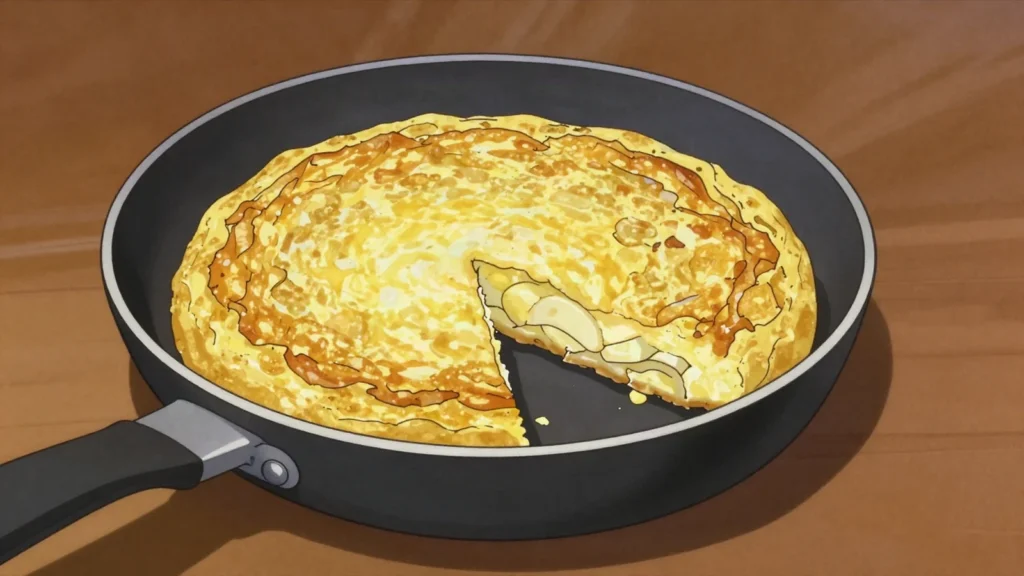
A thick omelette made from egg, potato and onion, slowly cooked and typically finished by flipping the entire omelette to cook both sides, documented across Spain as one of the country’s most essential and widely eaten dishes, known in Spanish simply as tortilla española, with its precise origin genuinely debated among food historians, several of whom have proposed competing 19th-century regional origin stories that remain unresolved. Its defining technique, slow-cooking the potato and onion in olive oil before combining with beaten egg and carefully flipping the finished omelette, requires practiced skill to achieve the dish’s characteristic moist, slightly custardy interior. Spanish omelette remains one of the most iconic dishes representing Spanish cuisine as a whole, served everywhere from tapas bars to home kitchens.
Frequently asked questions
What is Spanish omelette?
Spanish omelette is a main from Spain: thick potato-onion omelette served in wedges or bocadillos. A thick omelette made from egg, potato and onion, slowly cooked and typically finished by flipping the entire omelette to cook both sides, documented across Spain as one of the country’s most essential and widely eaten dishes, known in Spanish simply as tortilla española, with its precise origin genuinely debated among food historians, several of whom have proposed competing 19th-century regional origin stories that remain unresolved. Its defining technique, slow-cooking the potato and onion in olive oil before combining with beaten egg and carefully flipping the finished omelette, requires practiced skill to achieve the dish’s characteristic moist, slightly custardy interior. Spanish omelette remains one of the most iconic dishes representing Spanish cuisine as a whole, served everywhere from tapas bars to home kitchens.
How long does Spanish omelette take to make?
Spanish omelette takes 20 min of preparation and 30 min of cooking. The recipe makes 4 servings. It is rated medium to make.
What can I substitute in Spanish omelette?
Yes, within limits. Sunflower oil can be used for the confit, but the flavour is noticeably flatter; the oil is reusable several times either way. For a smaller tortilla, use 4 eggs and 500 g potatoes in a 20 cm pan and shorten the confit to 18 minutes. Adding a spoon of the reserved oil to the beaten eggs enriches the set if your eggs are lean.
What is the most important thing to get right in Spanish omelette?
Slice the potatoes thinly and break them apart with your hands rather than cutting them cleanly; the rough edges release starch that helps bind the tortilla.