
Ingredients
Beef
- 600 gwell-marbled beef, sirloin or ribeye, sliced 2 to 3 mm thick
Warishita, the Kanto sauce
- 150 mlsoy sauce
- 150 mlmirin
- 100 mlsake
- 60 gsugar
- 100 mldashi
Or, the Kansai method
- soy sauce, sugar and sake added directly to the pan
- a piece of beef fat, for the pan
Vegetables
- 1negi or 2 leeks, cut diagonally
- half a napa cabbage
- 200 gshiitake mushrooms
- 1 bunchshungiku, chrysanthemum greens
- 1 packetenoki
Also
- 300 gyaki-dofu, grilled tofu
- 200 gshirataki noodles, rinsed
To dip
- 4very fresh eggs, or pasteurised
- one small bowl each
To finish
- udon noodles, or rice
Equipment
- a heavy shallow cast iron sukiyaki pan
- a tabletop burner
Directions
- Rinse the shirataki noodles well and keep them away from the beef in the pan. Parboil them for a minute first, which also removes their faint smell.
- Set the pan on the tabletop burner and heat it well. Now for Kansai: rub the hot pan with a piece of beef fat until it renders and coats the surface.
- Lay in two or three slices of beef and sear them briefly. Sprinkle sugar directly over the beef in the pan, then splash over soy sauce and sake.
- Arrange things in the pan by cooking time rather than piling them in together, with the hardest at the hottest part.
- Add the beef a few slices at a time throughout the meal rather than all at once. Cook each slice briefly, 30 seconds to a minute, until it just loses its red colour.
- Take it out while it is barely done. Beef left simmering in sukiyaki sauce goes tough and grey within a couple of minutes.
- Taste as it goes and adjust the balance, since it gets sweeter and saltier as it cooks down.
Technique
- The Kanto and Kansai methods are genuinely different and both are traditional.
- Shirataki are kept away from the beef for a real chemical reason.
- Sukiyaki was a special-occasion dish for much of the twentieth century.
Substitutions
- Pre-sliced sukiyaki beef from a Japanese or Korean shop.
- Pasteurised eggs for the dipping bowls.
Variations
- The Kansai method, searing the beef first.
- Made with pork, which is common in some regions.
- With crab or chicken, which are regional variations.
History
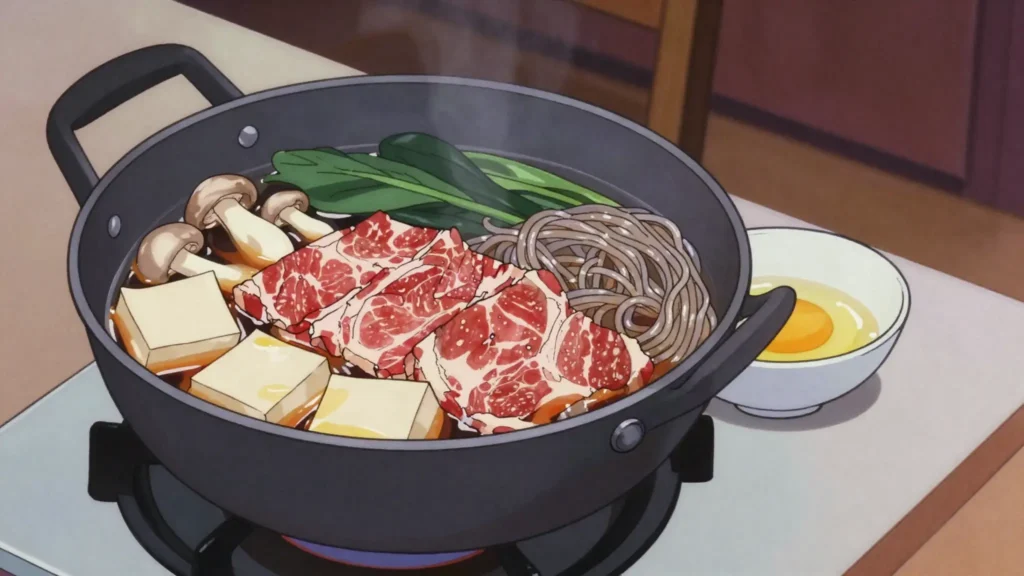
A hot pot dish, cooking thinly sliced beef along with vegetables, tofu and noodles in a shallow iron pot with a sweet soy-based sauce, traditionally cooked communally at the table and often dipped in raw beaten egg before eating, developed in Japan during the Meiji era of the late 1800s, a period when beef consumption became more widespread in Japan following centuries during which Buddhist influence had significantly limited meat-eating across the country. Its communal, at-table cooking style reflects a broader Japanese hot pot, or nabemono, tradition of shared cooking and eating, considered particularly well suited to gatherings and celebrations. Sukiyaki remains one of Japan’s most internationally recognized dishes, closely associated with special occasions and shared family meals.
Frequently asked questions
What is Sukiyaki?
Sukiyaki is a main from Japan: beef and vegetables simmered tableside in sweet soy, dipped in raw egg. A hot pot dish, cooking thinly sliced beef along with vegetables, tofu and noodles in a shallow iron pot with a sweet soy-based sauce, traditionally cooked communally at the table and often dipped in raw beaten egg before eating, developed in Japan during the Meiji era of the late 1800s, a period when beef consumption became more widespread in Japan following centuries during which Buddhist influence had significantly limited meat-eating across the country. Its communal, at-table cooking style reflects a broader Japanese hot pot, or nabemono, tradition of shared cooking and eating, considered particularly well suited to gatherings and celebrations. Sukiyaki remains one of Japan’s most internationally recognized dishes, closely associated with special occasions and shared family meals.
How long does Sukiyaki take to make?
Sukiyaki takes 30 min of preparation and at the table of cooking. The recipe makes 4 servings. It is rated medium to make.
What can I substitute in Sukiyaki?
Yes, within limits. Pre-sliced sukiyaki beef from a Japanese or Korean shop. Pasteurised eggs for the dipping bowls.
What is the most important thing to get right in Sukiyaki?
Arrange things in the pan by cooking time rather than piling them in together, with the hardest at the hottest part.