
Ingredients
Ichiban dashi
- 800 mlsoft water
- 16 gkombu, wiped but not washed
- 25 gkatsuobushi (dried bonito shavings)
Soup
- 60–70 gmiso (awase, or half red and half white)
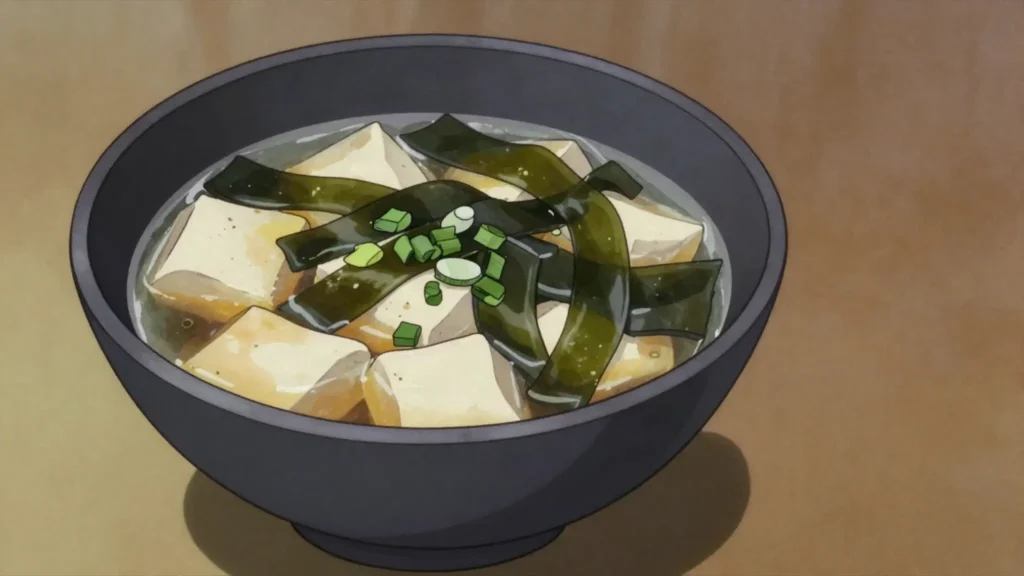
- 200 gsilken or momen tofu, cut into 1.5 cm cubes
- 5 gdried cut wakame, soaked 5 minutes in cold water and drained
- 2spring onions, sliced very thin on the diagonal
Directions
- Wipe the kombu with a damp cloth, leaving the white powder on the surface: that is mannitol and it carries flavour. Soak it in the cold water for 30 minutes.
- Heat the pan slowly, aiming to reach 60–65°C (140–150°F) and hold there for an hour, or bring it just to the point where small bubbles cling to the kombu, then lift the kombu out. Boiling kombu makes the dashi slimy and bitter.
- Bring the liquid to 85°C (185°F), take it off the heat and scatter in the katsuobushi. Do not stir.
- Let the shavings steep for 1–2 minutes until they sink, then strain through a cloth-lined sieve without squeezing. You should have a clear, golden, faintly smoky broth.
- Return the dashi to the pan and bring it to a bare simmer. Add the tofu cubes and heat through for 2 minutes; they should warm, not boil, or the edges fray.
- Add the drained wakame and cook 30 seconds only, just until it turns bright green.
- Take the pan off the heat. Put the miso in a ladle or a fine sieve, dip it into the broth and work it with chopsticks until it dissolves completely, then stir it through.
- Never let the soup boil after the miso is in: the aroma flashes off and the paste separates into grains. Reheat gently if you must.
- Ladle into lacquer bowls, top with the spring onion, and serve immediately with rice. In Japan it is drunk straight from the bowl, with chopsticks for the solids.
Technique
- Miso soup is the base of ichiju-issai, one soup and one dish, the everyday structure of a Japanese meal, and it is eaten at breakfast as often as at dinner.
- Judge quantity by taste, not the packet: roughly 1 tbsp of miso per 200 ml of dashi, less for salty red miso.
- Dashi keeps only a day or two refrigerated. The used kombu and katsuobushi make a second, weaker niban dashi for simmering vegetables.
- The solids change with the season: bamboo shoot in spring, aubergine in summer, mushrooms in autumn, daikon in winter.
Substitutions
- No katsuobushi: a kombu-only dashi with 2 dried shiitake soaked overnight gives a deep vegetarian broth used in shojin temple cooking.
- Instant dashi granules are used in most Japanese homes on a weekday; use 1 tsp per 800 ml and add no extra salt.
- Awase miso can be replaced by any single miso; white gives a sweeter, milder soup, red a sharper one.
Variations
- Tonjiru, the substantial pork and root vegetable miso soup of winter.
- Asari no miso shiru, made with clams, where the shellfish liquor replaces part of the dashi.
- Nameko and tofu with red miso, the Nagoya style.
History
A soup built on a base of dashi stock flavoured with fermented soybean paste called miso, typically containing tofu, seaweed and spring onion, documented across Japan for over a thousand years, with miso itself introduced to Japan from China via Buddhist monks sometime around the 700s before developing into its own distinctly Japanese fermentation tradition over subsequent centuries. Its dashi base, made from kombu seaweed and dried bonito flakes, reflects umami as a foundational flavour concept in Japanese cooking, a concept later scientifically identified and named by Japanese chemist Kikunae Ikeda in 1908 based specifically on the flavour compounds found in dashi. Miso soup remains an essential, near-universal part of traditional Japanese meals, commonly served alongside rice at breakfast, lunch and dinner alike.
Frequently asked questions
What is Miso Soup?
Miso Soup is a soup & stew from Japan: dashi and miso broth with tofu, wakame and spring onions, daily staple. A soup built on a base of dashi stock flavoured with fermented soybean paste called miso, typically containing tofu, seaweed and spring onion, documented across Japan for over a thousand years, with miso itself introduced to Japan from China via Buddhist monks sometime around the 700s before developing into its own distinctly Japanese fermentation tradition over subsequent centuries. Its dashi base, made from kombu seaweed and dried bonito flakes, reflects umami as a foundational flavour concept in Japanese cooking, a concept later scientifically identified and named by Japanese chemist Kikunae Ikeda in 1908 based specifically on the flavour compounds found in dashi. Miso soup remains an essential, near-universal part of traditional Japanese meals, commonly served alongside rice at breakfast, lunch and dinner alike.
How long does Miso Soup take to make?
Miso Soup takes 10 min of preparation and 20 min of cooking. The recipe makes 4 servings. It is rated easy to make.
What can I substitute in Miso Soup?
Yes, within limits. No katsuobushi: a kombu-only dashi with 2 dried shiitake soaked overnight gives a deep vegetarian broth used in shojin temple cooking. Instant dashi granules are used in most Japanese homes on a weekday; use 1 tsp per 800 ml and add no extra salt. Awase miso can be replaced by any single miso; white gives a sweeter, milder soup, red a sharper one.
What is the most important thing to get right in Miso Soup?
Heat the pan slowly, aiming to reach 60–65°C (140–150°F) and hold there for an hour, or bring it just to the point where small bubbles cling to the kombu, then lift the kombu out. Boiling kombu makes the dashi slimy and bitter.