
Ingredients
Batter
- 150 gplain flour
- 500 mlmilk
- 2eggs
- 1 tspsalt
- white pepper
Potato
- 700 gfloury potatoes
To fry
- butter, for the pan
To serve
- stekt fläsk, fried salt pork or thick streaky bacon
- lingonberry jam
Sometimes
- pickled cucumber
Directions
- Whisk the flour with about a third of the milk into a thick smooth paste first. Starting thick and beating out the lumps at that stage is far easier than chasing lumps around a thin batter. Let the batter rest for fifteen to twenty minutes, which lets the flour hydrate. The batter should be thin, like single cream, since the potato will thicken it considerably.
- Grate the potato only when the batter is ready and the pan is heating. Grated raw potato oxidises and turns grey within a few minutes of being exposed to air. Grate it on the coarse side of the grater rather than finely, for the ragged edges that give the dish its name.
- Use floury potatoes, which release starch and crisp better than waxy ones. Do not squeeze the potato dry here, unlike in a Latvian or Polish pancake, since the batter needs to stay loose. Stir it through and use the mixture immediately. Now the fat in the pan, which should be butter and plenty of it. Fry them in butter rather than oil, since the flavour is a real part of the dish.
- Use a generous knob for each batch and let it foam before the batter goes in. If you are frying the pork first, use some of its rendered fat, which is traditional and better still. Keep the pan at a medium heat rather than fierce. Raw potato needs time to cook through, and high heat browns the outside while the shreds inside stay hard and starchy.
- Butter also burns quickly over a high heat. Make them thin, about half a centimetre, and roughly the size of the pan. Thin pancakes cook through properly, where thick ones stay raw in the middle.
- Fry for three to four minutes on the first side without moving them. Leave them alone until the underside is golden and the edges look set, since moving them early tears them apart. Turn once and fry the other side for two or three minutes. They are done when both sides are golden and the potato inside is soft rather than crunchy.
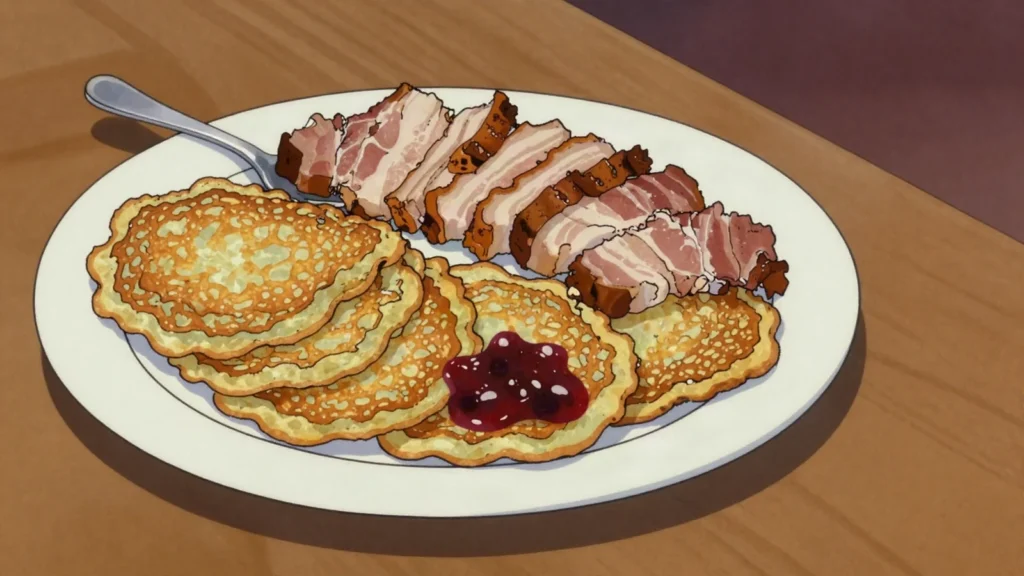
- Keep them warm on a rack in a low oven rather than stacked, which would steam them soft. Fry thick slices of salt pork or streaky bacon until crisp and browned. Serve two or three slices alongside each portion. Serve them immediately, since they soften as they stand.
Technique
- Raggmunk starts from a batter, unlike most other potato pancakes.
- Grating the potato straight into the batter slows the discolouring.
- Fried salt pork and lingonberry jam are both essential to the plate.
Substitutions
- Thick streaky bacon in place of salt pork.
- Sharpened cranberry sauce in place of lingonberry.
Variations
- Rårakor, made without batter, closer to a Latvian pancake.
- Made with a little grated onion through the batter.
- Served with soured cream instead of pork.
History
A savory potato pancake made from grated raw potato mixed with flour, milk and egg, then fried until crisp on the outside, traditionally served with fried pork belly and lingonberry preserve, developed in Swedish home cooking as a filling, inexpensive dish built around potato, which became a widely available Swedish staple crop from the 1700s onward after its introduction from South America. Its combination of savory pancake, fatty pork and tart lingonberry reflects a broader pattern in Swedish and wider Scandinavian cooking of pairing rich, fatty foods with a sharp fruit preserve to cut through the richness, a pairing found across several other classic Swedish dishes beyond raggmunk specifically.
Frequently asked questions
What is Raggmunk?
Raggmunk is a main from Sweden: crisp potato pancakes with fried pork and lingonberries. A savory potato pancake made from grated raw potato mixed with flour, milk and egg, then fried until crisp on the outside, traditionally served with fried pork belly and lingonberry preserve, developed in Swedish home cooking as a filling, inexpensive dish built around potato, which became a widely available Swedish staple crop from the 1700s onward after its introduction from South America. Its combination of savory pancake, fatty pork and tart lingonberry reflects a broader pattern in Swedish and wider Scandinavian cooking of pairing rich, fatty foods with a sharp fruit preserve to cut through the richness, a pairing found across several other classic Swedish dishes beyond raggmunk specifically.
How long does Raggmunk take to make?
Raggmunk takes 20 min of preparation and 30 min of cooking. The recipe makes 8 pancakes. It is rated easy to make.
What can I substitute in Raggmunk?
Yes, within limits. Thick streaky bacon in place of salt pork. Sharpened cranberry sauce in place of lingonberry.
What is the most important thing to get right in Raggmunk?
Grate the potato only when the batter is ready and the pan is heating. Grated raw potato oxidises and turns grey within a few minutes of being exposed to air. Grate it on the coarse side of the grater rather than finely, for the ragged edges that give the dish its name.