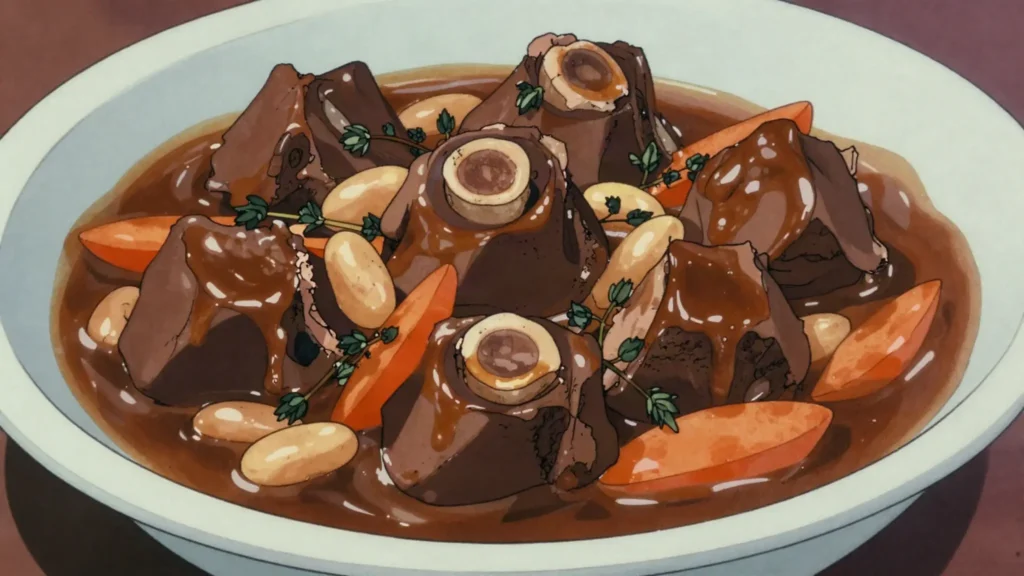

Ingredients
The oxtail
- 1.8 kgoxtail
- cut into joints
- trimmed of excess fat
- washed with lime and water
The marinade
- 4spring onions, sliced
- 6garlic cloves, crushed
- 3 sprigsfresh thyme
- 2 tablespoonssoy sauce
- 1 tablespoonbrowning
- or 2 tablespoons brown sugar
- 1 teaspoonallspice, ground
- salt and black pepper
The pot
- 2onions, chopped
- 1sweet pepper, chopped
- 3carrots, thickly sliced
- 1scotch bonnet, whole
- 2bay leaves
- 3 tablespoonsoil
- about 1.5 litres water
The beans and finish
- 400 gbutter beans
- cooked, or tinned
- 2 tablespoonsketchup
- optional
- spinners, small flour dumplings
- optional
Directions
- Stand well back and use a long spoon. The sugar must burn almost to black. Keep raw and cooked meat well apart. Lift it out before it splits in the pot. Wash your hands thoroughly after handling it. Trim the excess fat from the oxtail joints. Trim off the large hard lumps of it. Leave some, since it carries real flavour. Too much makes a greasy finished stew.
- Wash the oxtail with lime juice and water. Rub the lime over every piece thoroughly. Then rinse and pat the pieces dry. Rub the marinade into the oxtail thoroughly. Work it into every surface with your hands. That is where the flavour needs to reach.
- Take real time over that rubbing. Marinate it for at least four hours. Brown sugar burned in the pan does the same job. Heat the oil in a large heavy pot until hot. Use a genuinely heavy pot for this dish. Thin pots scorch the base badly. Add the brown sugar to the hot oil if using it.
- Let it melt and darken almost to black. Use a long spoon and hold the lid as a shield. Add the pieces one at a time rather than all at once. Never lean over the pot at that moment. Brown the oxtail well on every side. Work in batches rather than crowding the pot. Add the onion and sweet pepper to the pot. Cook them for about eight minutes until soft. Stir so that residue comes away entirely.
- Pour in enough water to almost cover the meat. It should come most of the way up the oxtail. Keep hot water ready to top it up. Add the bay leaves and the whole scotch bonnet. Leave the bonnet completely whole and unbroken. A burst bonnet makes the whole pot fiercely hot. Simmer the oxtail gently for about three hours. The meat should fall away from the bone.
- Keep it at a bare simmer rather than a boil. A pressure cooker does this in about forty-five minutes. Skim the fat from the surface as it cooks. Lift it off with a ladle every half hour. Leave a little, since it carries flavour. Too much makes an unpleasantly greasy stew.
- Add the carrots for the last forty minutes. Forty minutes softens them properly. Cut them thickly rather than thinly. They should hold their shape in the pot. Add the butter beans for the last twenty minutes. They are already cooked and only need warming.
- Stir them in gently rather than vigorously. They are soft and break up easily. Butter beans are the traditional partner here. They are large, soft and slightly floury. Roll small flour dumplings between your palms. Flour, water and salt make a stiff dough. Roll pieces into thin spindle shapes. They go in for the last twenty minutes. Reduce the sauce until it is thick and glossy.
- Take the lid off for the last twenty minutes. It should coat the meat rather than run off. Taste and adjust the seasoning near the end. Taste before adding any more at all. Add ketchup for a slight sweetness if you like. Some households use it and some do not. Serve the oxtail with plenty of the sauce. Spoon a generous amount of sauce over. It keeps four days refrigerated in a covered dish.
Technique
- If you brown the meat in caramelised sugar, that is the most dangerous step here: the sugar must burn almost to black and smokes heavily, then spits violently when meat goes in, sticking to skin and burning badly. Stand well back, use a long spoon, add pieces one at a time, hold the lid as a shield and never lean over the pot. Bottled browning sauce does the same job safely and is what most Jamaican home cooks use now.
- Oxtail needs three hours as a genuine minimum: it is full of connective tissue that only breaks down over hours, and that melting collagen is what gives the sauce its sticky gloss. Undercooked oxtail is tough and disappointing. A pressure cooker does it in about forty-five minutes and is a well established shortcut in Jamaican kitchens, giving a genuinely good result.
- Caribbean cooks wash meat with lime or vinegar, a genuine and widespread practice the atlas records plainly. Food safety guidance advises against washing raw meat because it splashes bacteria around the kitchen — if you do it, work in a bowl rather than under a tap and clean everything afterward.
Substitutions
- Bottled browning sauce, sold in Caribbean shops, replaces the burnt brown sugar and goes into the marinade rather than the pot. Lima beans are butter beans under another name.
- Spinners — small flour-and-water dumplings spun between the palms into pointed spindles, which is where the name comes from — go in for the last twenty minutes and thicken the sauce. Rice and peas, or plain white rice, are both genuinely served with it.
Variations
- Oxtail was what remained after estate butchery on Jamaican plantations built on slavery, given to enslaved people while the best cuts went elsewhere — a great deal of Caribbean cooking descends from exactly that, and the atlas records it without softening. The dish reached Britain with Jamaican migrants after the Empire Windrush arrived in June 1948, people who came at Britain’s explicit invitation and met widespread open racism, and whose descendants were caught decades later in the Windrush scandal when British people were wrongly detained and deported.
- Marinate at least four hours and better overnight, working the marinade into every crevice between the joints with your hands. Skim the fat every half hour, or cook it a day ahead and lift the set fat off in one piece — much the easiest method, and it improves overnight anyway.
- Add carrots only for the last forty minutes and butter beans for the last twenty, stirring the beans in gently since they break up easily. Take the lid off for the last twenty minutes so the sauce reduces to something thick, sticky and glossy that clings to a spoon.
History
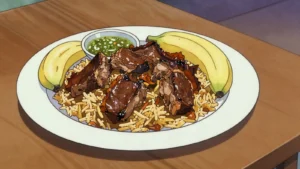
Oxtail, browned and then slow-braised for many hours with butter beans, allspice, thyme and brown sugar until the meat becomes extremely tender and falls easily from the bone, documented across Jamaica as one of the country’s most beloved comfort dishes. Its long, slow braising method reflects a broader Caribbean and West African culinary tradition of transforming tougher, less costly cuts of meat into deeply flavourful dishes through patient, extended cooking, and the dish’s characteristic browning sugar technique, caramelising sugar before adding the meat, gives stewed oxtail its distinctive deep colour and rich, slightly sweet flavour base. Stewed oxtail remains one of the most popular and widely eaten dishes across Jamaica.
Frequently asked questions
What is Stewed oxtail?
Stewed oxtail is a main from Jamaica: oxtail braised with butter beans and thyme. Oxtail, browned and then slow-braised for many hours with butter beans, allspice, thyme and brown sugar until the meat becomes extremely tender and falls easily from the bone, documented across Jamaica as one of the country’s most beloved comfort dishes. Its long, slow braising method reflects a broader Caribbean and West African culinary tradition of transforming tougher, less costly cuts of meat into deeply flavourful dishes through patient, extended cooking, and the dish’s characteristic browning sugar technique, caramelising sugar before adding the meat, gives stewed oxtail its distinctive deep colour and rich, slightly sweet flavour base. Stewed oxtail remains one of the most popular and widely eaten dishes across Jamaica.
How long does Stewed oxtail take to make?
Stewed oxtail takes 30 minutes plus marinating of preparation and 3 hours 30 minutes of cooking. The recipe makes serves 6. It is rated medium to make.
What can I substitute in Stewed oxtail?
Yes, within limits. Bottled browning sauce, sold in Caribbean shops, replaces the burnt brown sugar and goes into the marinade rather than the pot. Lima beans are butter beans under another name. Spinners — small flour-and-water dumplings spun between the palms into pointed spindles, which is where the name comes from — go in for the last twenty minutes and thicken the sauce. Rice and peas, or plain white rice, are both genuinely served with it.
What is the most important thing to get right in Stewed oxtail?
Stand well back and use a long spoon. The sugar must burn almost to black. Keep raw and cooked meat well apart. Lift it out before it splits in the pot. Wash your hands thoroughly after handling it. Trim the excess fat from the oxtail joints. Trim off the large hard lumps of it. Leave some, since it carries real flavour. Too much makes a greasy finished stew.